
Do your electronic components need waterproof protection? If so, you are not the only one who faces this problem. All design engineers deal with this issue when designing a system for installation outdoors, in a rugged industrial environment, or in a marine application. This in-depth guide contains all the information you need regarding waterproof enclosures including all the information necessary for determining your IP rating along with your materials to be used in these features. We will assist you with making quality decisions about your upcoming project.
What Are Waterproof Enclosures?
Waterproof enclosures keep sensitive electronic equipment safe from water penetration and other damage. However, the term waterproof can be vague because not all waterproof enclosures provide the same level of protection. In terms of waterproof enclosures, what you really need to know about is IP ratings, which describe the degree of protection against the ingress of solids and liquids. IDIS India manufactures I-closure enclosures rated at IP65 and IP67, and while these are simply numbers, they help illustrate how much protection your equipment will actually have.
Types of Water Ingress
Water may enter a closed space in many different ways, including:
– Direct rain or splashing – Condensation due to temperature variations – Pressure washing or cleaning – Temporary submersion – Ground moisture or flooding
Knowing these possible scenarios allows you to choose an appropriate level of protection for your application.
Our Complete Range of Waterproof Enclosures
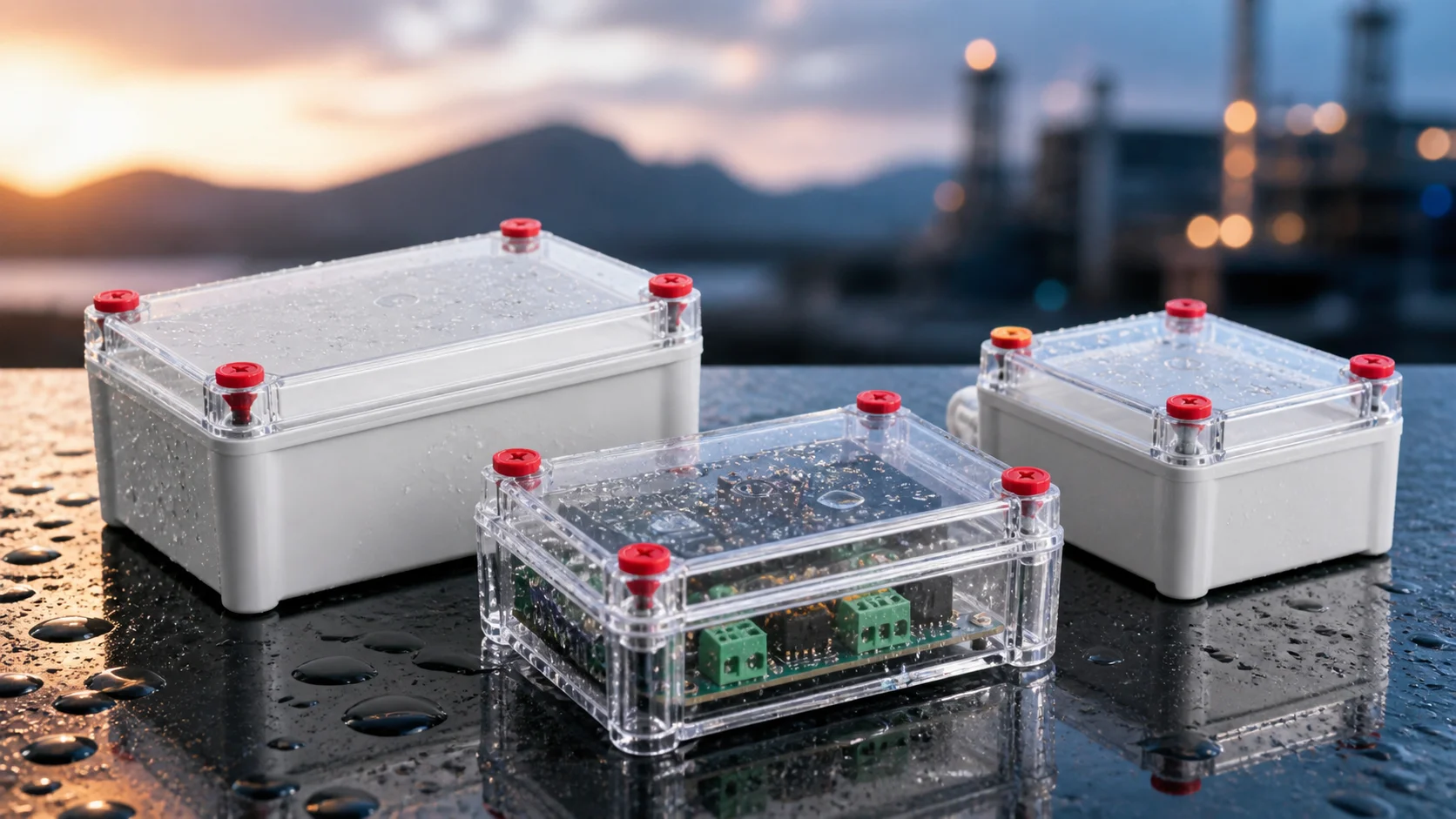
I-closure offers three main material categories, each designed for specific applications and environments.
ABS Enclosures
General-purpose ABS housings offer great overall protection due to their ability to not corrode, be lightweight, impact resistant, and cost-effective in almost all outdoor applications. The main qualities of ABS enclosures are: strong chemical resistance; UV protection for outdoor use; easy to machine or modify; operate between -40°C (-40°F) to +85°C (185°F); available in both IP65 (dust tight and splash resistant) and IP67 (water proof) rated versions. These enclosures are perfect for use as telecom installations and CCTV housings or for general industrial control panel installations.
Polycarbonate Enclosures
Polycarbonate enclosures will provide you the best possible clarity and strength when you require both of those features. The impact resistance and optical properties of polycarbonate enclosures are exceptional. The following are some of the benefits of using a polycarbonate enclosure: Incredible impact resistance (or strength), Crystal clear visibility, Good performance at different temperatures, Flame resistance, Compatibility with sterilization processes; and, Ideal for medical devices, lighting fixtures; and applications where it is necessary to visually inspect your product.
PC/ABS Combination Enclosures
Want to enjoy two kinds of features? A PC/ABS mix provides you with a combination of many different performance characteristics that can be used in various types of applications. This combination gives you the following advantages: Increased chemical resistance compared to unmodified polycarbonate A greater ability of the material to withstand shock than ABS Excellent ability to process Cost-effective way of working with these materials
Understanding IP Ratings: Your Protection Guide
Once you understand how the system works, you’ll see that IP ratings are not difficult to comprehend. IP means Ingress Protection and is followed by two numbers that provide information about the level of protection.
How IP Ratings Work
The first digit indicates protection against solid objects. The second digit shows liquid protection levels. Higher numbers mean better protection.
| First Digit | Solid Protection | Second Digit | Liquid Protection |
|---|---|---|---|
| 0 | No protection | 0 | No protection |
| 1 | Objects >50mm | 1 | Dripping water |
| 2 | Objects >12.5mm | 2 | Dripping water (15° tilted) |
| 3 | Objects >2.5mm | 3 | Spraying water |
| 4 | Objects >1mm | 4 | Splashing water |
| 5 | Dust protected | 5 | Water jets |
| 6 | Dust tight | 6 | Powerful water jets |
| – | – | 7 | Temporary immersion |
| – | – | 8 | Continuous immersion |
IP65 vs IP67: Which Do You Need?
We have developed an expertise in IP67 and IP65 for use in the vast majority of applications. Current focus is IP65 Protection: Provides for totally dust-tight application to allow for the protection of all any dust particles. Provides protection against any water projection directed to anything. Works well with pressure wash and high rain events. Current focus is: IP67 Protection: Provides for complete dust-tight application. Will withstand water for a maximum of 1M in temporary water. Will be an ideal application for flood conditions. Will work well in the underground applications.
The main concern with choosing between the two types of protection would be if your application is for an outdoor or indoor application. If you are applying an outdoor application, the majority of applications would use an IP65 rating. However, if there is any possibility of flooding or temporary immersing of water into your assembly, than your best option would be an IP67 rated product.
Common IP Rating Misconceptions
Though most engineers believe that a higher IP rating indicates superior protection from environmental damage, this is not accurate. The reason is that with the increase of rating comes an increase in cost and potential complexity of the sealing system. It should also be noted that all testing is performed in controlled laboratory conditions, so the real-life performance of any product is contingent upon its proper installation, maintenance of gaskets used with it, and environmental considerations.
Material Comparison: Choosing the Right Plastic
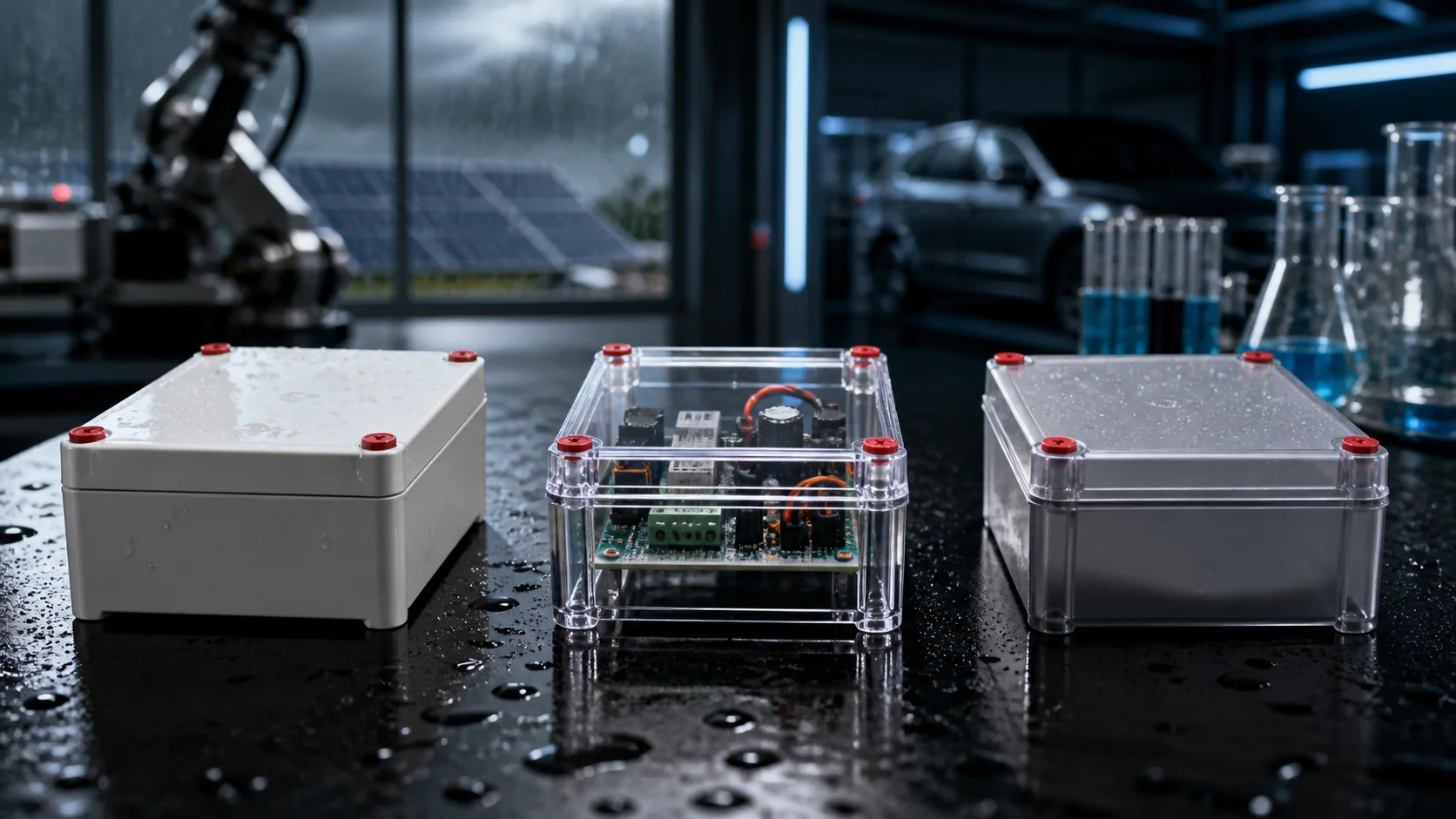
Material selection affects everything from cost to performance. Here’s how our three main materials compare across key parameters:
| Property | ABS | Polycarbonate | PC/ABS |
|---|---|---|---|
| Impact Strength | Good | Excellent | Very Good |
| Chemical Resistance | Good | Fair | Very Good |
| UV Resistance | Good (with stabilizers) | Fair | Good |
| Temperature Range | -40°C to +85°C | -40°C to +130°C | -40°C to +100°C |
| Clarity | Opaque only | Crystal clear | Limited transparency |
| Cost | Economical | Premium | Mid-range |
ABS: The Versatile Choice
ABS is the most widely used material for creating waterproof enclosure products. There are numerous reasons for this popularity. The combination of properties provided by ABS is ideal for almost all types of applications. It will stand up to most chemical substances, is easy to work with, and readily accepts many kinds of surface finishes. ABSI-closures have been used on projects such as traffic control systems as well as equipment used to monitor agriculture. In most cases, ABS will perform within acceptable temperature limits in typical outdoor situations as well. Finally, ABS has a lower price than many comparable materials; thus, the cost advantage makes it very appealing for large volume projects.
Polycarbonate: When Clarity Matters
Are you looking to have some visibility to your enclosure? Your best results would come from choosing polycarbonate as your amount of waterproof and transparent material. Additionally, polycarbonate has an impressive level of impact-resistance, which is what makes it ideal for vandal-proofing and high-traffic areas (the particular plastic used for such applications is actually used in making bullet-resistant glazing). Polycarbonate will not work in every situation since it has limitations in terms of broad range of chemicals that it can withstand (when compared to ABS) and the potential for damage due to UV exposure unless UV inhibitors are properly used.
PC/ABS: The Balanced Approach
When you want better chemical resistance compared with polycarbonate and greater impact strength than ABS, you can use the PC/ABS blend of materials. They perform particularly well in automotive applications because they can withstand large ranges of temperatures, repeated exposure to chemicals, and numerous impacts at the same time.
Industry Applications for Waterproof Enclosures
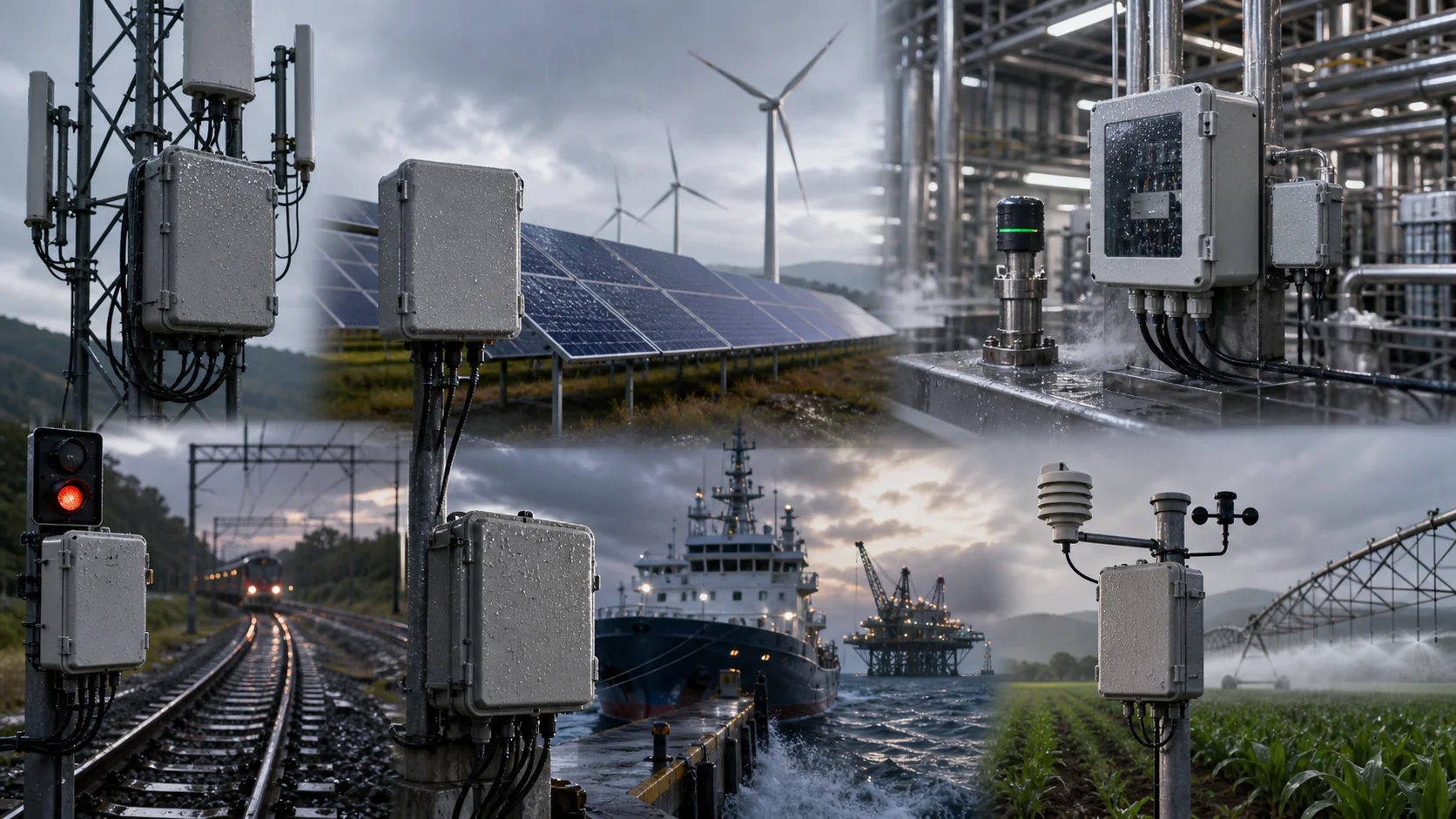
Different industries have unique requirements for waterproof protection. Let’s explore the main sectors where I-closure enclosures make a difference.
| Industry | Typical Applications | Recommended Material | Common IP Rating |
|---|---|---|---|
| Telecommunications | Base stations, repeaters, fiber optic boxes | ABS | IP65 |
| Renewable Energy | Solar inverters, wind control systems | PC/ABS | IP65/IP67 |
| Industrial Automation | Control panels, sensors, junction boxes | ABS/PC | IP65 |
| Transportation | Traffic lights, railway signaling, parking systems | Polycarbonate | IP65 |
| Marine & Offshore | Navigation equipment, monitoring systems | PC/ABS | IP67 |
| Agriculture | Irrigation controllers, weather stations | ABS | IP65 |
Telecommunications Infrastructure
Telecom Installations Are Putting Up With Their Own Set Of Challenges… They Have Equipment That Needs To Work No Matter What The Elements Are, And Usually In Remote Areas With Almost No Maintenance. ABS Enclosures Work Well For This Type Of Application Due To Their Ability For Large Deployments At A Low Price, And Also Because They Are Excellent For Radio Frequency Transparency. So, ABS Will Not Hinder The Transmission Of Signals, Which Is A Very Important Requirement For Antenna Applications. We Have Sent Several Containers (I-closures) To Support The Deployment Of 4G Base Stations In Rural India Where The Monsoon Season Will Push The Limits For The Enclosure Waterproof Featuring To Its Limits.
Renewable Energy Systems
Environmental challenges are extreme for solar and wind installations. All equipment will be exposed to UV, endure cycle temperature changes, and be subject to puncture from severe weather events. In such situations, combinations of PC and ABS generally perform better, as they are less sensitive to extreme temperatures than pure ABS, while both maintain good impact strength and UV resistance. Most solar inverter manufacturers will use IP67 and flood-resistant ratings when `mounting’ solar inverters to an as-built grid system.
Industrial Automation
Factories have many obstacles, including chemical exposure, mechanical stress, and maintenance cleaning, as well as electrical safety. When deciding which of the two materials (ABS & polycarbonate), ask your technical department at IDIS India to determine the compatibility of materials based on the chemicals around your facility. Also, do not forget about cleaning; in food and pharmaceutical facilities, regular washdowns and aggressive detergent use will be necessary.
Transportation Systems
Polycarbonate is ideal for use in railways and traffic management where impact resistance and clarity are needed. Because of the stability of polycarbonate’s optical properties, the amount of light transmitted via electronic displays and signals will remain constant over time. Furthermore, polycarbonate has an impact resistance to protect against flying objects and to resist vandalism.
Marine and Offshore Applications
The combination of salt spray, humidity, and possible pool immersion makes the marine environments some of the worst for enclosure materials. Enclosurs made from PC/ABS blends exhibit good corrosion resistance to salt spray while maintaining structural integrity. To meet marine applications, enclosures should possess an IP67 rating. Caution should be taken when selecting a gasket and cable gland type to use in marine applications.
Complete Selection Guide for Engineers
Choosing the right waterproof enclosure involves multiple factors. Here’s our systematic approach to specification.
Step 1: Define Environmental Requirements
Determine the worst environmental conditions that your enclosure will be exposed to, including: environmental temperature (low, high); humidity; chemical exposure; UV light exposure time; flooding or submersion potential; and vibration and impact requirements. Be realistic about these requirements, as additional specifications drive up cost.
Step 2: Determine IP Rating Needs
Use the following decision tree: If the equipment is mounted above flood level and has adequate rain and pressure washing protection, as well as a significant consideration regarding cost effectiveness and access for normal routine maintenance, choose IP65. If there is any risk of temporary immersion (submersion) and the installation is below ground level or the level of access to maintain it is limited and you require the maximum possible level of protection choose IP67.
Step 3: Select Material Based on Priorities
If the main thing influencing your decision is cost, then you should choose ABS. If you need general outdoor protection, RF transparency, or the ability to easily modify the item are all very important factors when deciding between materials. If you have a desire for visual access to your items, maximum impact resistance, high heat performance or need to protect against vandalism then polycarbonate would be the best option for your needs. If chemical resistance, balanced performance, or moisture cycling are critical for your application then PC/ABS would be the best choice. Also, if long-term durability is the most important aspect of your job then PC/ABS would work best.
Step 4: Size and Configuration Selection
Generally, standard sizes range between small junction boxes & large control panels. To determine a standard size for your needs, you need to consider: Internal component size and required clearances; Cable entrance requirements; Cooling & ventilation requirements; Expected future expansion capabilities; Access to install/maintain the final assembled product; Availability of custom modifications (lead times and additional costs).
Step 5: Sealing System Evaluation
If sealing practices fail, the most excellent enclosure materials will not help. Therefore, you should consider the following factors: Gasket material compatibility, cable gland specifications, mounting hardware sealing, drain and vent requirements.
Installation Best Practices
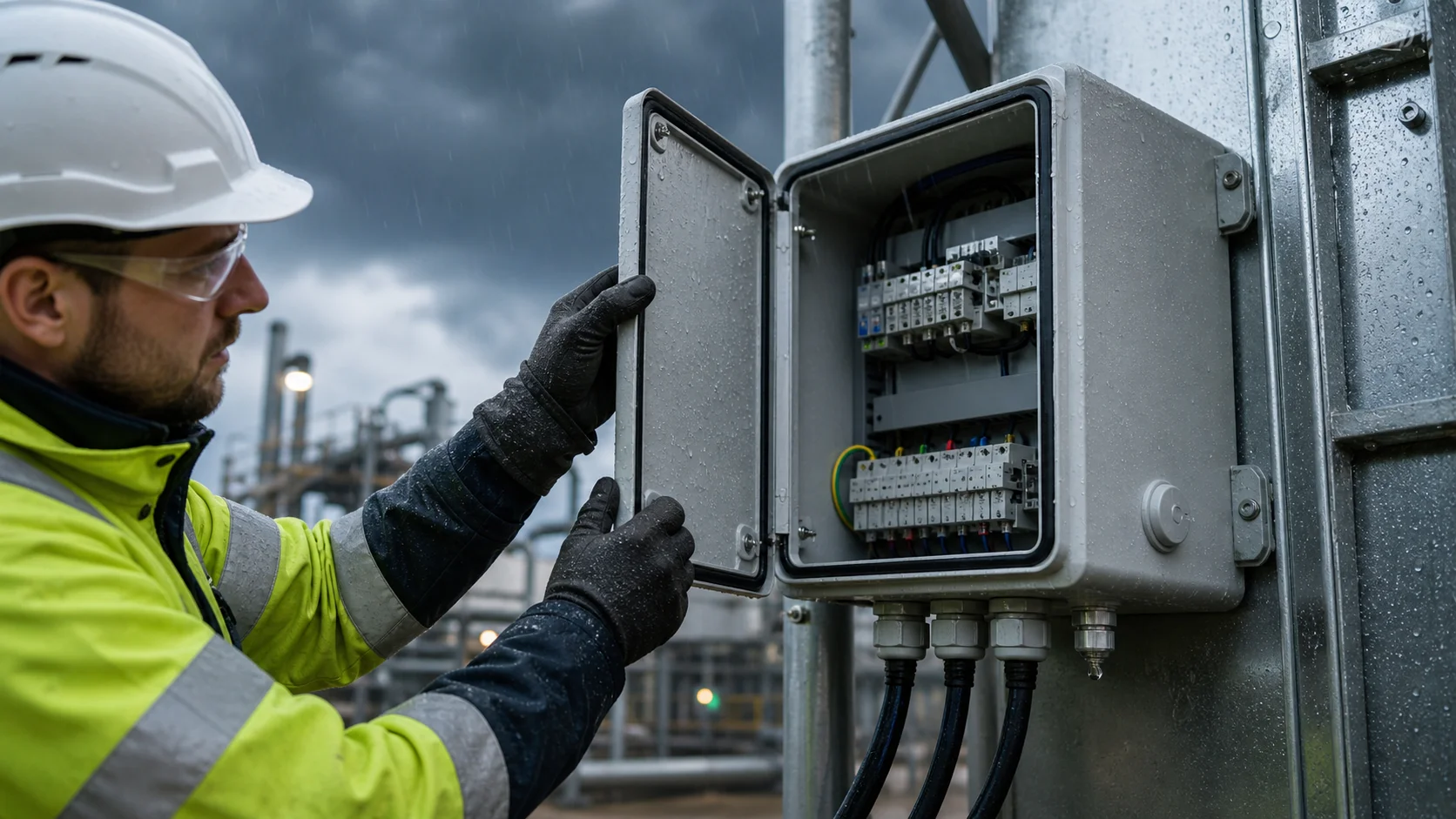
Even an ideal waterproof enclosure may fail due to improper installation. Here, then, are essential factors to maintain the IP rating of equipment while in the field.
Gasket Installation
Gaskets serve as the primary protective barrier to prevent water from entering your home; they can also be the most susceptible to failures in this capacity. The following guidelines will help to ensure your success with regard to installing gaskets: Make sure that the gasket grooves are free from moisture and debris prior to installation; do not overstretch your gasket during the installation process; employ a uniform application of force when assembling panel(s); check for pinched corners; replace damaged gaskets.
To help maintenance personnel and contractors perform routine maintenance, it is recommended to stock extra gaskets in your facility’s inventory.
Cable Entry Sealing
Cable Glands are an important part of the installation; they often get overlooked by an installer. The wrong cable gland or an incorrect installation can have a serious negative effect on an entire enclosure. The following criteria should be addressed when selecting cable glands: Cable diameter range compatibility Material chemical compatibility Matching or exceeding the appropriate IP rating for the enclosure Temperature rating commensurate with that of the environment in which it will be installed Unused cable entries must have blanking plugs that are rated at the appropriate IP level, or equivalent.
Mounting Considerations
The way that the enclosure is mounted determines how well the program will perform in water resistance. Use a slight forward slope so that water can run off; don’t use mounting screws that are capable of retaining (holding) water; select a proper sealant at the time of mounting; and, keep in mind thermal expansion will affect the performance of seals.
Drainage and Ventilation
At times, balancing waterproofing and other needs (like cooling and pressure equalization) requires the use of drain plugs to help eliminate condensation while keeping total IP Rating intact. To continuously perform as intended, drains must be serviced on a regular basis.
The ventilation systems used for waterproof enclosures are individualised parts or pieces of equipment that allow for the free exchange of air but prevent liquid water from entering. Gore vents and other similar devices are examples of this type of product.
Testing and Certification
To make sure their products have the declared IP ratings, at IDIS India, the I-closure enclosures are subjected to thorough assessments of durability and performance. But how do they verify their accuracy?
IP65 Testing Procedures
Talcum powder is placed under vacuum for several hours to test dust in the enclosure. An internal inspection will verify that no dust got into the enclosure. Water jet testing uses 12.5 mm nozzles forcing out at a rate of 12.5 liters per minute while maintaining a 3-meter distance from the enclosure being tested and will test the enclosure in all directions for several minutes.
IP67 Testing Requirements
The entire enclosure is submerged in 1 metre of water for at least 30 minutes during immersion testing. Some tests will be performed over a number of hours. Temperature conditioning may be performed prior to immersion, so that the seals will be tested in terms of thermal stress.
Quality Certifications
The certifications we possess are ISO9001 (Quality Management Systems), CE Marking (European Conformance). ROHS Conformance on Material Restrictions, and NABL Certification on Testing Capabilities. All of these certifications provide assurance with a consistent level of quality and international compliance for your projects.
Maintenance and Long-term Performance
Waterproof enclosures are not “install & forget” products; regular inspections and preventive maintenance will extend the life of your enclosure while eliminating most potential problems.
Preventive Maintenance Schedule
Once a year, conduct the following: visually examine gaskets for any visible damage; inspect the cable glands to assure they are properly sealed; clean out the drain plugs and vents, and verify the integrity of the mounting hardware. On a quarterly basis, you may perform the following: remove any accumulations of debris; check the enclosure(s) for any signs of condensation; ensure that door(s)/cover(s) are securely closed; and test any active ventilation systems.
Common Failure Modes
Learn from how waterproof enclosures can fail to avoid future issues by studying the various ways they fail:
1. Gasket Degradation – Gaskets can harden and crack as a result of exposure to UV relief, ozone, and cycling through different temperatures over time.
2. Mechanical Damage – Damage can occur to gasket sealing surfaces through maintenance activity impact and other environments.
3. Installation Issues – Cable glands that are improperly selected and/or installed are common reasons why enclosures experience water ingress (i.e. leaks).
4. Thermal Cycling/Shrinking – Multiple/constant expansion and contraction of the gasket due to thermal changes will cause a loss of seal integrity over time.
Extending Service Life
Following these straightforward practices could greatly improve enclosure longevity: Use appropriate UV-resistant materials when used in very high UV exposure applications; use the correct size enclosure to limit internal heat increases; design cable routing to limit stress on cable entry points; ., have spare seals and gaskets on hand; and/or train M&T to perform proper inspection techniques.
Cost Considerations and ROI
Selecting a waterproof enclosure involves many things to consider other than the initial cost. Next, we will find out what the total cost of ownership will be.
Upfront Costs
The initial price of the product is greatly influenced by the selection of materials used. If you want to have a low initial cost for your enclosure, consider using ABS; it is usually the least expensive of the available options. The combination of PC and ABS will likely be around the mid-range for pricing. The use of polycarbonate will generally incur a higher than average pricing level.
Enclosures that have received an IP67 rating will cost more than enclosures that received an IP65 rating, due to the fact that in order for the enclosures to meet the more stringent IP67 specifications, they are manufactured with additional features that provide enhanced protection from moisture. Also, you should take into consideration other costs that need to be included in the overall project costs such as customizing the enclosure, quantity discount pricing, and estimated delivery dates.
Operational Costs
Long-term expenses such as maintenance, replacing gaskets, downtime and access costs incurred while waiting for equipment to be fixed may exceed the lower cost of an enclosure. Purchasing a higher quality enclosure (but not by much) provides a more favorable return on investment than a cheaper enclosure.
Value Engineering Opportunities
By collaborating with IDIS India at the beginning of your design phase, you might discover cost-saving opportunities. Examples of these include: – Tooling costs can be minimized through the use of standardized or similar sizes – Volume commitments allow negotiating price lower than those available for smaller quantities – Designing to manufacture will help to decrease custom work – Optimizing your material selection will balance the performance you need and the cost you want
Future Trends in Waterproof Enclosures
The enclosure industry continues evolving with new materials, manufacturing techniques, and application requirements.
Material Innovations
The rise of bio-based plastics has stimulated interest in their use out of consideration for sustainability. Bio-based plastics are improving in their performance characteristics, but they are not yet suitable for the vast majority of industrial waterproof applications. Nano-charged materials provide additional value by improving durability (for example, UV resistance and heat dissipation). These materials are used as high-performance enclosures for electronic products. Recycled contents provide a compromise between environmental and functional performance characteristics, and there are increasing amounts of interest in producing enclosures using high quantities (of recycled material).
Manufacturing Advances
Rapid prototyping and small-volume custom enclosures are enabled by 3D printing. 3D printing is not well suited for mass production, but it helps to speed up development times. In-mold electronics provide the ability to insert circuits directly into the walls of an enclosure, which saves internal space and increases overall reliability.
Application Trends
There has been a strong increase in the need for smaller cost effective waterproof enclosures for IoT installations, which usually have a different type of requirement than traditional industrial installations. There is still expanding renewable energy industry generating a strong need for enclosures able to function properly under extremely harsh environmental conditions. Electric vehicle infrastructure is growing at a high rate also causing a growing need for enclosures that can provide a combination of high IP ratings and the ability to meet appropriate electrical safety related requirements.
Frequently Asked Questions
What’s the difference between waterproof and water-resistant?
Waterproof indicates total prevention of liquid penetration from water under defined parameters. Water-resistant will prevent liquid penetration from water but not all ways or conditions. There are specific definitions in IP rating: IP65/IP67 would be considered waterproof (based upon test conditions outlined in the IP standard) under their specific criteria.
Can IP65 enclosures be upgraded to IP67?
Typically not. A specific set of design elements, including gasket improvements, will be needed for an enclosure to be able to meet the IP67 rating. Therefore, the best course of action is to specify the required IP rated enclosure from the very beginning.
How long do waterproof seals last?
The service life of a gasket depends on many factors, including the material type as well as any applicable environmental factors and maintenance performed. Gaskets typically have a usable lifetime of between three (3) and seven (7) years when using good quality gaskets in an average outdoor setting. Performing regular inspections allows the user to determine when replacements should be made before failure occurs.
Do waterproof enclosures require special mounting?
Properly mounting enclosures is an extremely important part of maintaining an enclosure’s IP rating (Ingress Protection). Enclosures should typically be mounted so that there is a slight forward tilt to assist in water runoff; the penetrations used to mount the enclosure must also be properly sealed.
What happens if condensation forms inside waterproof enclosures?
Temperature cycling can cause naturally occurring condensation. Excessive condensation could mean a seal is failing, or there is inadequate vapor barrier material. You can use drain plugs or desiccants to help manage moisture inside the container.
Are there size limitations for waterproof enclosures?
When it comes to larger enclosures, thermal expansion and seal complexity make it more difficult to maintain an IP rating. The design of large waterproof enclosures must be done correctly; however, it may require a more reliable means of sealing.
Can waterproof enclosures be recycled?
Generally speaking plastic enclosures are recyclable provided they are properly separated from other types of plastic. ABS, polycarbonate and PC/ABS are all recyclable provided they go through the right channels to recycle them. Be sure to remove any metal components and gaskets prior to putting them in the recycle bin.
What’s the typical lead time for custom waterproof enclosures?
The amount of time it takes to lead a project will vary based on how complex the customization is and what the current production schedule is. Typical modifications made to standard products take additional weeks to complete, while custom-designed products may take longer. Contact IDIS India for your latest lead-time estimate.
Do different colors affect waterproof performance?
Although colour doesn’t have an effect on the IP Ratings of a product, it may affect the thermal performance of a product. For example, lighter colours reflect more heat than darker colours, which can lower the product’s internal temperature and amount of thermal stress on seals.
How do you specify cable glands for waterproof enclosures?
Cable glands should have at least as high an IP rating as the enclosure in which they are installed. Take into account cable diameter, environmental conditions and materials when selecting cable glands. Also, always use the correct blanking plugs on any unused openings.
Contact IDIS India for Your Waterproof Enclosure Needs
Finding a waterproof enclosure that meets all of your project requirements means balancing many different features – including environmental considerations, performing well at a reasonable price, and providing reliability over time. At IDIS India, our engineers have over 7 years experience providing customers with guidance on selecting I-closure enclosures to meet their project requirements. We’ve successfully supplied 1200+ customers in various industries from telecommunications to renewable energy. Our enclosures available in ABS, polycarbonate and PC/ABS can meet most projects requirements, whether they require standard IP65 rated or heavy-duty IP67 rated enclosures. Additionally, our ISO9001, CE, RoHS and NABL certifying agencies guarantee that the enclosure will perform with reliability over the course of the project. Contacting our technical team to discuss your project requirements will help to guide you through the selection process and ensure that your equipment receives the proper waterproofing protection from the very start of your project, which reduces the amount of time, money and hassle that can occur later in the project.
Need Help Choosing the Right Enclosure? Get in Touch!