
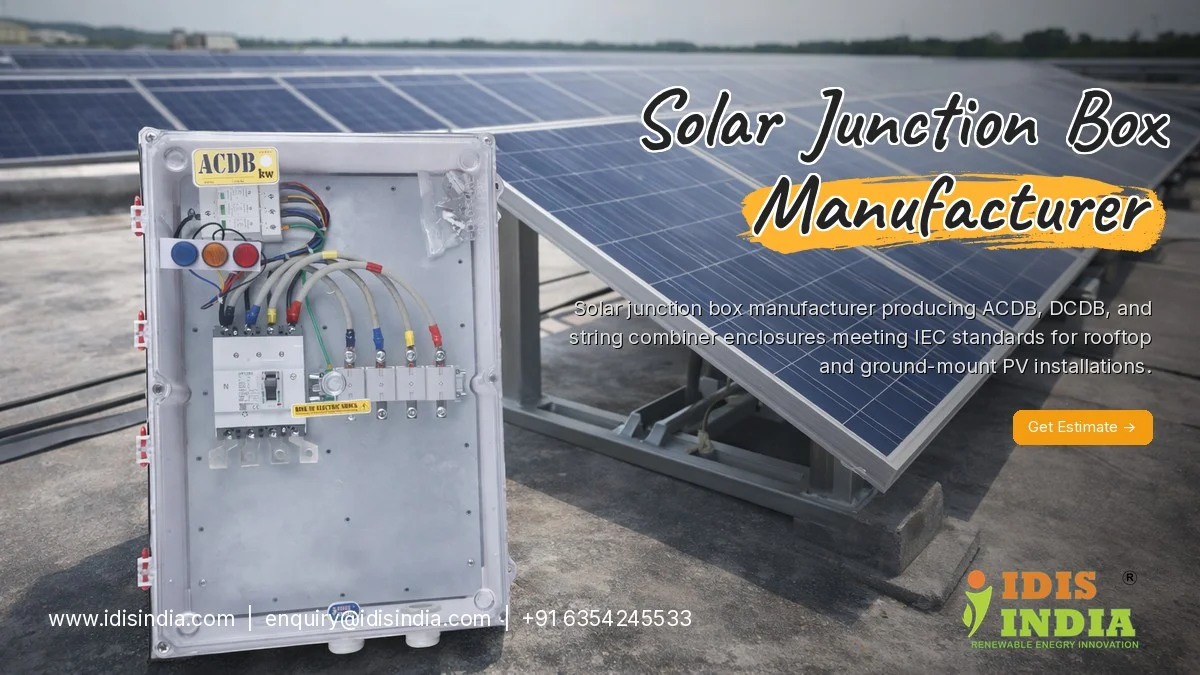
In India, solar projects face extreme weather conditions. From blistering summer temperatures reaching 50 degrees Celsius in Rajasthan to torrential monsoon rains in Kerala, your electrical components require superior protection from the elements. At IDIS India, we’ve got your back. We’ve been providing our modular junction boxes since 2017, and our I-Closure product line is now recognized as the leading choice for reliable PV enclosures by over 1,200 customers. So what makes solar EPCs and installers come back to us again and again? Simple! All our enclosures not only meet the necessary performance standards but exceed them. Every single junction box receives extensive testing against UV exposure, extreme temperature cycling, and IP67 ratings for ingress protection. You can’t afford to have any failures when your solar project is located 30 feet above on a factory roof!
Solar Cell Protection Standards You Need to Know
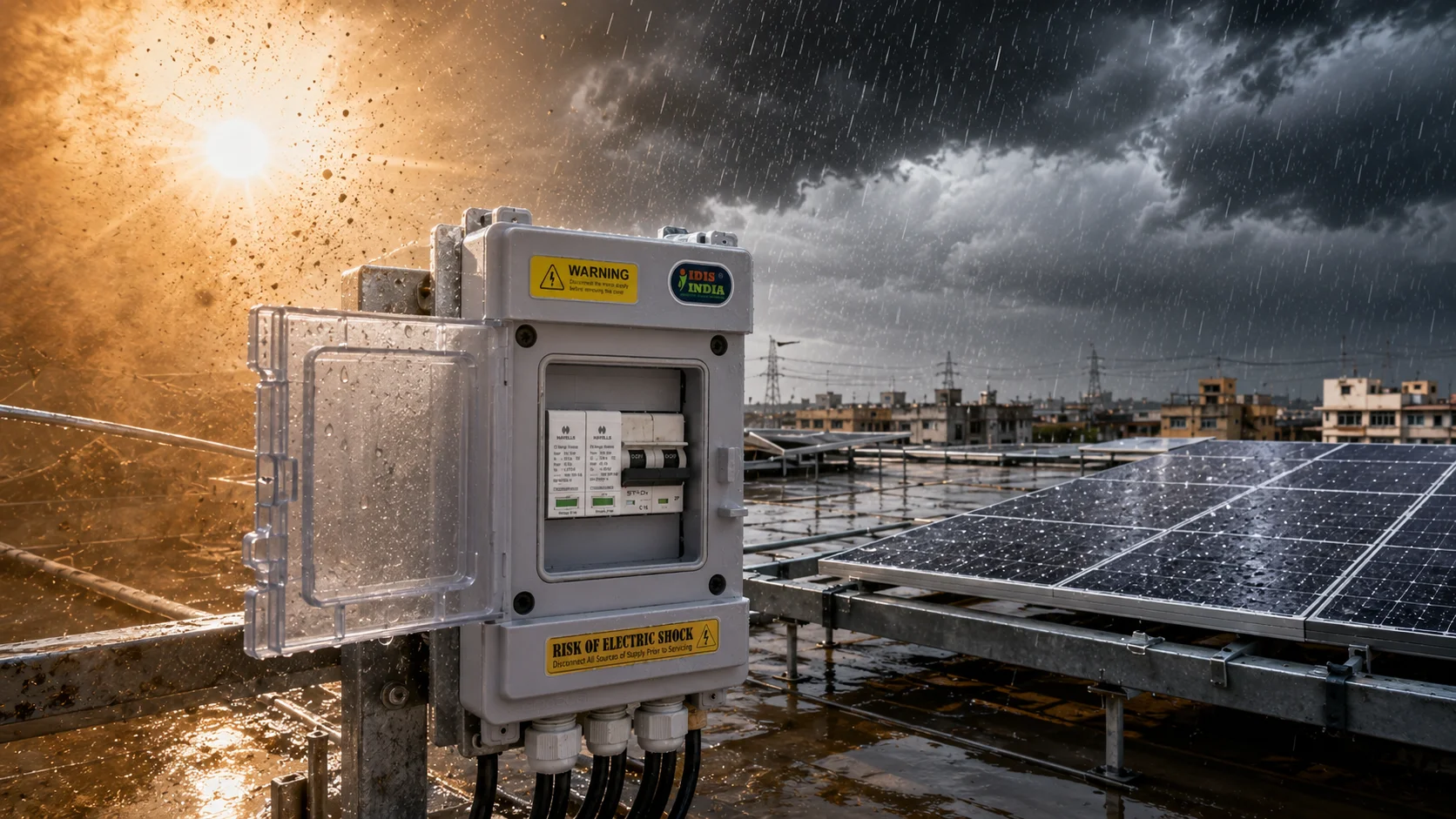
Solar junction boxes face unique challenges that indoor enclosures never encounter. UV radiation breaks down plastic polymers. Thermal cycling creates expansion stress. Dust ingress can cause arc faults.
Thats why we manufacture our solar enclosures using UV-stabilized polycarbonate. This material maintains structural integrity for over 10 years under direct sunlight without yellowing or cracking. And our IP67 rating? It means complete dust protection plus 30-minute submersion capability – perfect for those unexpected flash floods.
Our manufacturing process includes accelerated aging tests that simulate 20 years of outdoor exposure in just 6 months. Every batch gets tested. No exceptions.
| Standard | IDIS India Compliance | Application |
|---|---|---|
| IEC 62208 | Fully Compliant | DC Junction Box Requirements |
| IEC 61439 | Tested & Certified | Low Voltage Switchgear |
| IS 16103 | BIS Approved | Solar Combiner Box Standards |
| MNRE Guidelines | Pre-approved | Government Solar Projects |
DC Voltage Rating Systems for String Combiners
String combiners deal with very high DC (direct current) voltage systems such as those using up to 600 volts or more virtually all of the time so a single insulation failure could wreck an entire string, if not worse create a potential safety problem. The following enclosure sizes fit 4-string combiner systems perfectly: 300 × 200 × 150 mm. Enclosures for 8-string systems also exist, measuring 400 × 300 × 200 mm, with enough room for surge protection devices as well. Our larger enclosures measuring 500 × 400 × 250 mm are model types for complete central AC distribution boards (ACDBs) as well as central DC distribution boards (DCDBs) for utility-sized projects. All enclosures come equipped with pre-molded entry locations for cabling via PG glands which have an IP68 rating; no drilling is needed, just select M20 or M25 based on your cable diameter. Dedicated mounting rail areas within the enclosure allow you to mount SPDs (surge protection devices) in close proximity to the DC isolator cutouts for improved cooling in your system when the sun is shining and generating DC electrical power.
Temperature Performance That Matters
In Gujarat, rooftop mountings can reach surface temperatures of around 70°C during peak summertime conditions. Your junction box must be operational at these high extremes of surface temperature. Our polycarbonate enclosures can withstand temperatures ranging from -40°C to +85°C and maintain their structural integrity. This is due to the virgin-grade PC (polycarbonate) resin we use, which has integrated UV stabilizers; as opposed to using recycled material that soon deteriorates.
Weatherproof Seal Technologies
It’s important to have an IP rating number, but even more important is how your enclosure actually performs in real life. There are examples of junction boxes rated IP66 that have failed during a monsoon (poor gasket design is often to blame). Our enclosures provide IP67 rating through the use of multiple seals including: Primary seal – Continuous silicone gasket in the lid groove Secondary seal – Overlapping lid design that sheds water Cable entries – Separate IP68 glands for each cable Hardware – Corrosion-resistant stainless steel 304 screws Here are some things that most manufacturers will not tell you – that it’s important to keep a certain amount of compression on the gasket. If you compress it too much you will crack the enclosure; if you don’t compress it enough then water will come in. The way we designed our lids will automatically maintain the optimum compression.
Bypass Diode Integration Solutions
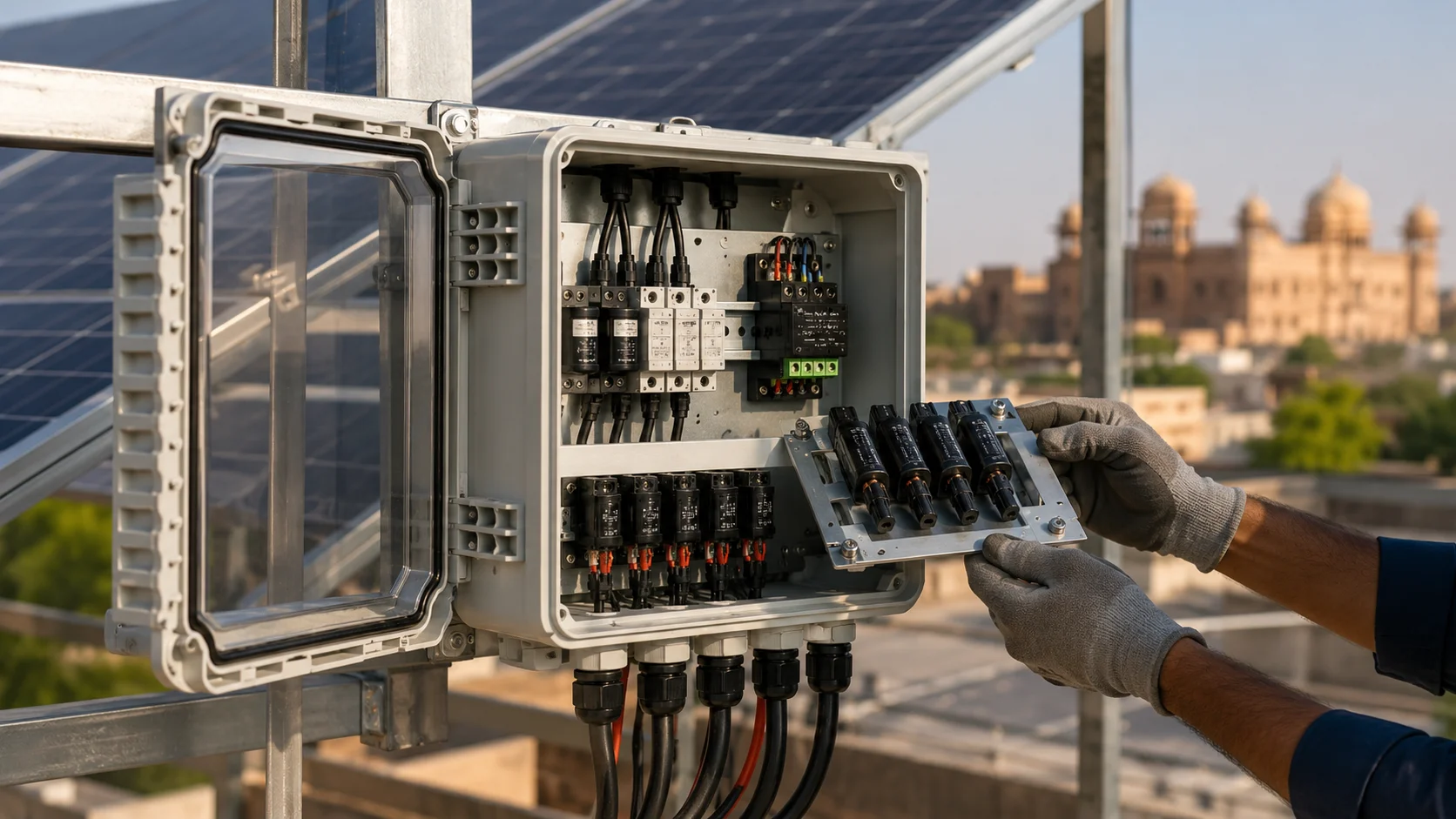
Current solar energy developments require bypass diodes to be easily accessible without compromising the weatherproof properties of the installation. Using traditional junction boxes has always required the installer to make a choice between accessibility or protection. The I-closure solar box permits the installer to utilize removable internal mounting plates which allow him/her to mount the bypass diodes, fuses, or monitors on the plate and then slide the plate to its desired location, maintaining an accessible connection for maintenance while still providing complete IP67 protection. The internal area of the box will accommodate typical 35mm DIN rail components. No matter if you are installing Schottky diodes for string protection or monitoring systems for performance tracking, the I-closure will hold everything correctly.
Heat Management Features
When bypass diodes operate under partial shade conditions they can produce significant amounts of heat which can lead to premature failure due to inability to dissipate the heat generated. The larger enclosures offer optional ventilation louvers located to provide natural convection airflow. In this manner, the hot air produced will rise and be discharged out of the top venting on the enclosure while the cool air will be drawn from the bottom of the enclosure with the weatherproof enclosure intact.
String Combiner Configurations
Every solar installation is unique. Rooftop arrays need different combiner configurations than ground-mount farms. And solar pumping systems have their own requirements.
For rooftop installations, our wall-mount brackets position junction boxes away from roof surface heat while maintaining easy access. The bracket design accommodates both concrete walls and structural steel mounting.
Ground-mount solar farms typically use pole-mount installations. Our mounting brackets clamp directly to standard solar structure rails – no welding required. The box position remains adjustable for optimal cable routing.
Solar pumping applications often need remote monitoring integration. Our larger enclosures provide dedicated space for GSM modules, data loggers, and communication equipment alongside standard combiner functions.
| Application | Recommended Size | Mounting Type | Special Features |
|---|---|---|---|
| 4-String Combiner | 300x200x150mm | Wall/Pole Mount | Standard SPD Rail |
| 8-String Combiner | 400x300x200mm | Pole Mount | Ventilation Ready |
| ACDB Panel | 500x400x250mm | Wall Mount | Extended SPD Space |
| Inverter Housing | Custom Sizes | Floor/Wall Mount | Cooling Integration |
UV Degradation Testing Protocols
Outdoor enclosures are silently damaged by UV light. While many manufacturers will claim to use “U.V. resistant” materials, they often do not mention any specific testing or time frames associated with those claims. At IDIS, our materials undergo accelerated weathering using ASTM G154 standards to determine if the materials meet our specifications. This is done by exposing the materials to a Xenon Arc lamp, which replicates the full solar spectrum including harmful U.V. B radiation. The exposure to the Xenon Arc lamp is for a minimum period of 2000 hours, which equates to over 5 years of exposure in Gujarat. The criteria measured during the exposure is: colour retention, impact strength, and dimensional stability. After testing, our polycarbonate materials will maintain over 90% of their original characteristics. In terms of cheaper ABS material, the majority will fracture or become brittle after 1000 hours.
Field Performance Data
While laboratory testing is valuable, field performance delivers proof; we have recorded the installation of enclosures from 2018 throughout the different climates of India and seen the following: 1. Rajasthan Desert: No UV failures. 2. Salt Corrosion on Hardware: None for all coastal Gujarat projects (hardware types). 3. Karnataka Rooftops: All Gasket Seals Working Perfectly. 4. Maharashtra Ground Mounts: No Cracks or Discoloration on All Mounts.
Field Installation Techniques
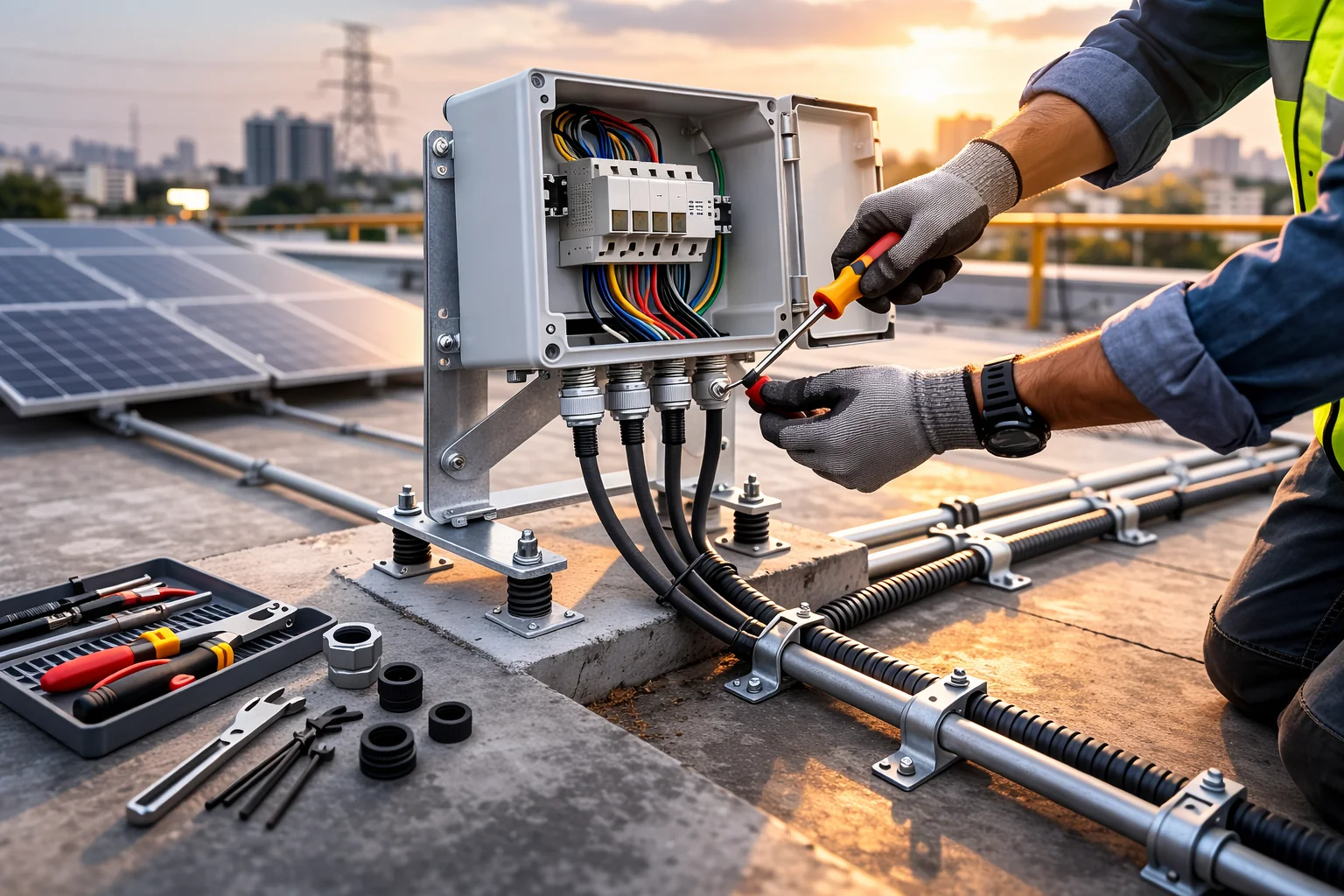
While a perfectly sealed junction box is great, installation is just as important. I’ve seen junction boxes fail due to poor mounting. First, do not mount directly onto a hot surface. When mounting on roofs, allow for a 50mm gap between the bottom of the box and the surface of the roof. Our mounting brackets have spacers built in that keep proper clearance. Second, use the correct size PG gland for cable entry. M20 glands should be used for cables between 6mm and 13mm in diameter. M25 glands should be used for cables between 13mm and 18mm in diameter. Using an oversized PG gland will compromise the ingress protection of the junction box. Using an undersized gland will damage the insulation of the conductors inside the cable. Third, consider the future maintenance of the junction box. Junction boxes should be located where technicians can safely access them. When ground mounting, install junction boxes at chest level. Avoid placing junction boxes on the ground as they may be flooded and become inaccessible.
Common Installation Mistakes
With 1200+ customers and still counting; we have experienced most of these recurring installation issues: Overtight lid screws (which will crack the housing – not fixable) Failure to inspect gaskets (which will permit water ingress) Poor strain relief on cables (which will loosen all of the connectors) Insufficient grounding (results in unsafe installations). Our Installation Instructions provide detailed drawings demonstrating these items to prevent rapid failure during use. Since it’s less expensive to prevent a problem than to repair one, we insist that you follow these guidelines to avoid unnecessary losses.
Why Solar EPCs Choose IDIS India
The margins for solar projects are very small, as are the deadlines. You need suppliers who fully understand both the technical specifications and the realities of the projects. IDIS India has built enclosures for more than 500MW (Megawatts) of installed solar energy in India. The company has a facility located in Ahmedabad with stock items available for immediate shipment. They can also produce custom production within 2-3 weeks, depending on how the specifications are outlined. The team at IDIS India includes experienced electrical engineers who understand your project, not just salespeople who read a specification sheet. We provide both phone technical support and the capability to visit your site to assist with any installation issues. Your success is our success! To start a conversation with IDIS India regarding your solar junction box needs, please contact us today. Let’s protect your investment in solar by providing an enclosure that will withstand the rigors of India’s environment.
Need Help Choosing the Right Enclosure? Get in Touch!