
If your critical electronic devices are likely to get submerged in water, then you need a waterproof enclosure that is more than just water resistant. IP67 enclosures provide temporary immersion protection from the elements and are necessary for use in flood-prone locations, underground utility installations, and maritime adjacent areas. What does IP67 really mean for your infrastructure? How do you implement and protect your installations against unplanned events of submersion? This article takes a look at how to meet the technical requirements for IP67 enclosures and the applied use of IP67 enclosures by I-closure. By doing so, we help ensure that you are able to keep your systems operational in the event of water ingress.
Temporary Immersion Depth Limits
IP67 rated enclosures are designed to provide protection from temporary water immersion for a maximum depth of 1 meter, for up to 30 minutes. This does not mean that you can permanently install the enclosure below water; rather it indicates that the enclosure will survive from the effects of water entering through unexpected flooding or groundwater infiltration, or from the effect of splash from the ocean, etc., which would damage your equipment.
The 1m water depth is measured from the highest point of that enclosure. For example, if you are installing an enclosure that is 200 mm tall, you can install the bottom of that enclosure up to 800 mm, below the level of water, and it will still retain its IP67 rating. Therefore, the IP67 enclosure model provides a wide variety of options for water table (underground installation) variations. In addition to the above, IDIS India conducts hydrostatic testing on their IP67 enclosure models to ensure that they meet the required standard. They don’t just test to the standard; they build their enclosure models to withstand real-world conditions where the amount of time the product may be immersed will be longer or may be repeated multiple times.
Understanding Hydrostatic Pressure
You will notice that your seal’s experience with a 0.1 bar of added pressure at one meter deep in your enclosure may seem small, however, it could develop into a pressure that could force water through improperly sealed openings and joints or into entry points for cables. Our sealing system has been made to keep out all water due to this pressure differential, providing total protection to your equipment at the maximum rated depth of each seal.
IP67 Test Duration Standards
The standard 30-minute immersion test represents minimum protection, but real flood events dont follow laboratory schedules. Infrastructure installations may face hours of submersion during major weather events or utility failures.
Our testing protocols extend beyond minimum requirements. While we cant guarantee infinite submersion time, I-closure enclosures typically maintain integrity well beyond the 30-minute standard when properly installed and maintained.
| Test Parameter | Standard Requirement | I-closure Testing |
|---|---|---|
| Immersion Depth | 1 meter maximum | 1 meter confirmed |
| Duration | 30 minutes minimum | Extended duration tested |
| Water Temperature | Ambient | Varied temperature range |
| Pressure Cycles | Static immersion | Dynamic pressure testing |
Remember that repeated immersion cycles can stress sealing systems more than single extended events. If your installation faces regular flooding, consider inspection intervals to verify continued protection.
Cable Entry Submersion Sealing
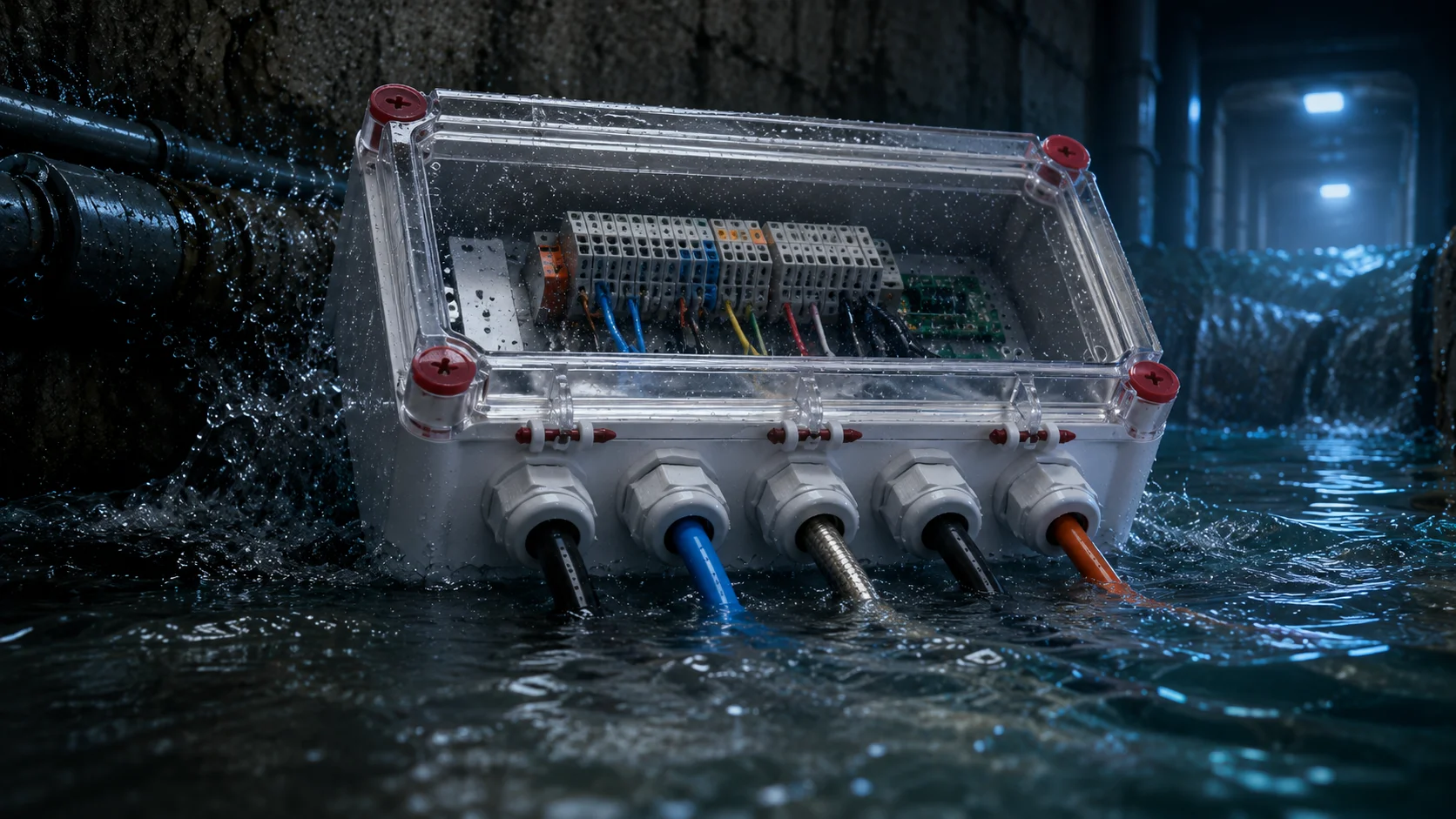
Cable entry points are often referred to as being the most susceptible to failure (that is leaking) with respect to the IP67 enclosure. Water will always find any gaps (no matter how small) to leak through. Hydrostatic pressure makes water entry more likely in those areas as well. The I-closure IP67 enclosure has several different sealing methods for the cable entry: Compression Glands With Two O-Ring Seals, Membrane Sealed Cable Entries for Permanent Cables, Potting Compound for Temporary Cables and Unused Cable Entries, Blanking Plugs for Temporary Cable Entries. The most important part of the installation of the IP67 enclosure is to match the sealing system to the type of cable used (and/or available) for the installation and the type of installation. For instance, flexible cables are not able to be sealed like rigid conduit connections; and temporary cable installations are not suited for permanent buried cable systems.
Common Cable Entry Failures
The majority of instances of failure at either a complete IP67 rating or partial IP67 rating, where either the entire enclosure is rated or only areas corresponding to cable entry points on the enclosure are rated (e.g., insufficient or missing sealing means for cable entries) can be attributed to improper installation practices versus an inherent defect with the actual product. As such, it is extremely important that proper gland installation practices and cable preparation are confirmed prior to installation/deployment of the enclosure.
Underground Installation Flood Recovery
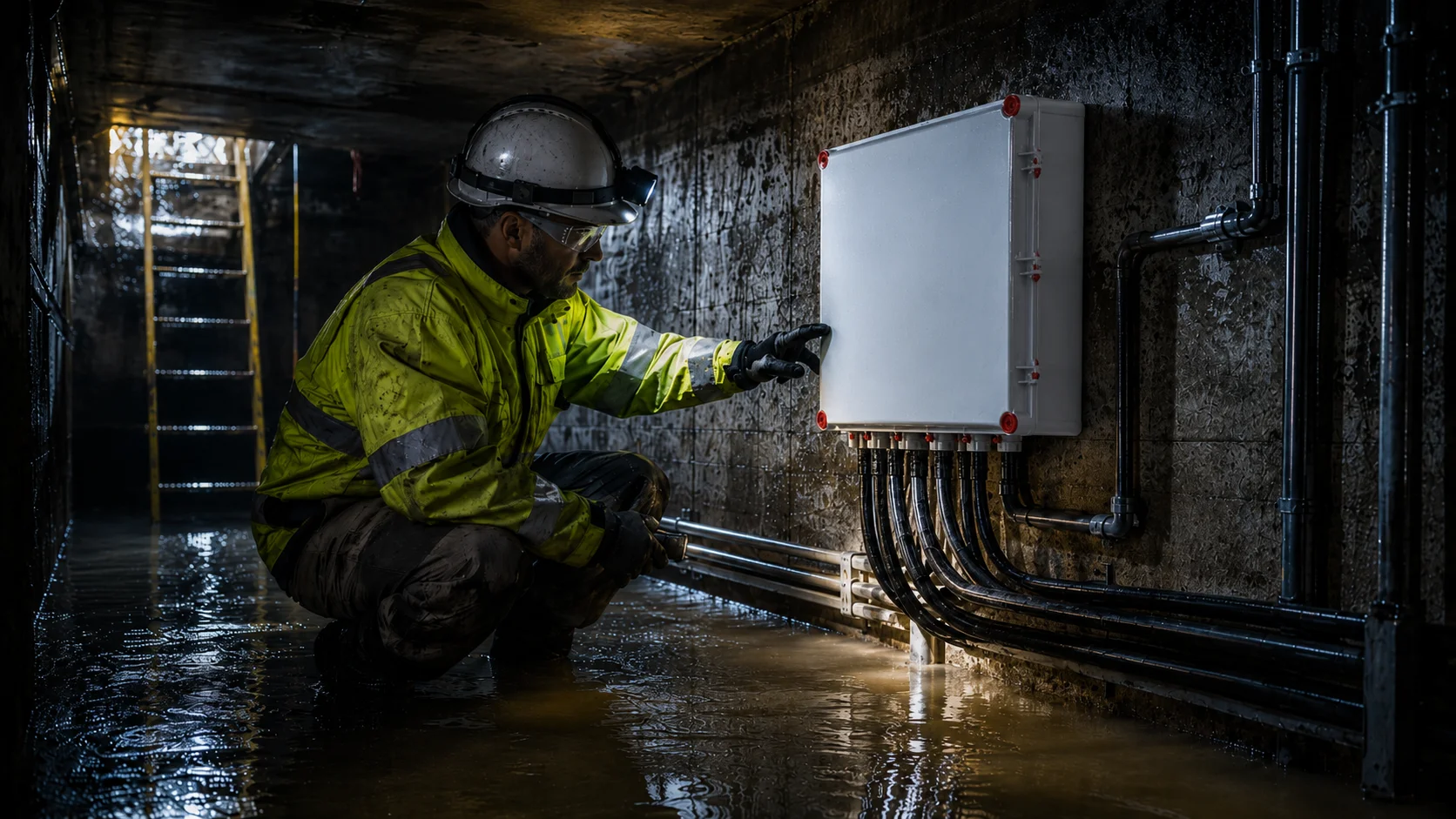
Underneath ground-based infrastructures, utility installations encounter their own challenges. Equipment is susceptible to failure when exposed to conditions such as groundwater infiltration, surface flooding and flooding of utility vaults.
IP67-rated enclosures offer the appropriate degree of protection from these conditions. When planning for the design/installation of underground utility installations, ensure that you evaluate the entire flood scenario for a given site, including:
1. The maximum expected water level during an extreme event, 2. The duration that equipment will be submerged, 3. The type/quality of any water that will contact the equipment, 4. The level of contamination of any water that may contact the equipment, 5. Access needs for the facility (during and immediately after flood conditions).
IDIS India manufactures IP67-rated enclosures specifically for the above demanding conditions, with materials resistant to most common groundwater contaminants, plus sealing systems which are designed to remain sealed through multiple flooding cycles.
Post-Flood Inspection Requirements
Be sure to check your installations after any submerging event for signs of water infiltration. Look for condensation inside of your enclosure, corrosion on any of the connectors, or performance changes in your equipment. The sooner you detect problems, the less likely catastrophic failures will occur.
Marine Splash Zone Applications
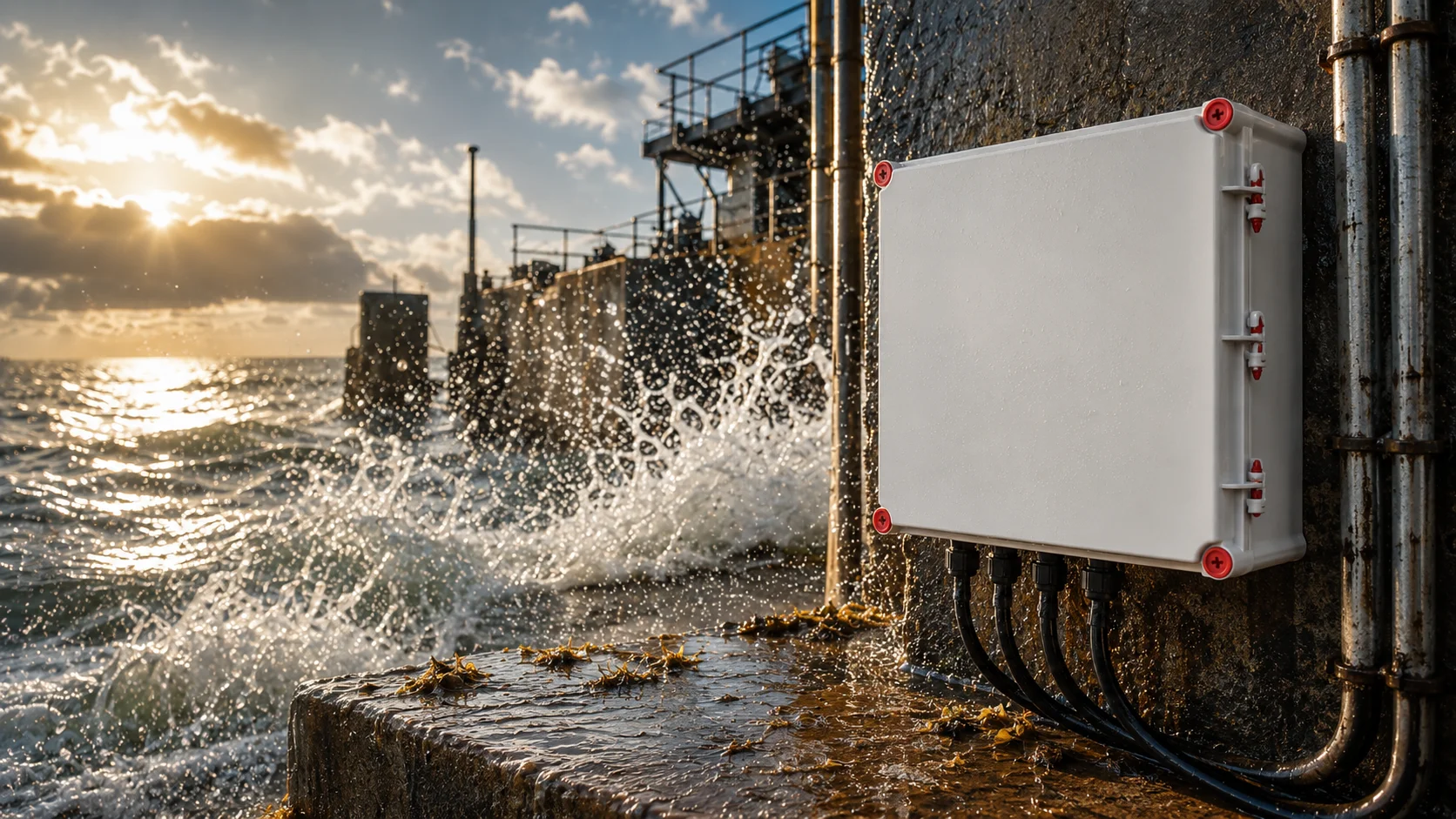
Coastal facilities are always subject to continual moisture exposure and then subject to wave action that can completely submerge the equipment for a short period of time. The IP67 protection provides machines with the protection against both the constant relative humidity and the intermittent submergence provided by the coastal environments in which they exist. The marine application presents unique challenges in material type. Marine materials experience accelerated corrosion from salt spray, degradation of plastics from sunlight, and stresses from thermal cycling on seals. I-closure enclosures are made from materials specifically selected for marine use. Our polycarbonate and PC/ABS combinations have superior resistance to UV degradation than the standard ABS materials used in coastal environments. The enhanced impact strength is also beneficial in resisting the effects of wave action and debris impact that commonly occur in marine installations.
Salt Water Considerations
When submerging equipment in either saltwater or fresh water, saltwater will cause significantly more damage (both through immersion and spray contact) than will fresh water. If your installation will be subject to saltwater submersion, expect to perform more frequent inspections and replace seals more often. The additional maintenance for the increased protection will be well worth the effort.
Hydrostatic Pressure Relief Design
For some applications of IP67, when deep submersion or severe pressure changes occur, the pressure relief feature is necessary to avoid damage to the enclosure. IP67 enclosures are usually sealed, yet certain applications require a controlled method of equalizing pressure in the installation. Pressure relief becomes essential when the installation is deeper than one meter, the internal heat has built up enough pressure to create a problem, the installation experiences rapid changes in depth during operation, or the installation has to remain submerged for extended periods of time. IDIS India can provide pressure relief solutions that will allow for the protection of the IP67 enclosure while preventing damage due to over-pressure caused by a buildup of pressure from within. These pressure relief systems utilize specialised membranes or valves which allow for pressure equalisation while preventing water from entering the enclosure.
Post-Immersion Integrity Verification
If you have experienced a submersion incident with your IP67 enclosure, how can you verify that protection was maintained to an acceptable level? A simple visual inspection may be inadequate because there may be some delay in identifying any water ingress. For these reasons, establish procedures to verify the integrity of your enclosure after an immersion incident has occurred: Look for visible condensation and/or water droplets; Confirm equipment is operational and performing as intended; Inspect the integrity of seals and any cable entry points; Record any observed changes from conditions prior to immersion; Consider the use of humidity sensors placed within critical enclosures so that you will receive “real time” notification of seal integrity without having to open the enclosure (which may compromise protection while wet).
Preventive Maintenance Schedules
Regular maintenance is necessary for IP67 protected installations located in difficult locations, like IP67 protected installations that provide continued protection. It is recommended that you develop prevention schedules based on your unique exposure conditions. Coastal installations require a higher level of maintenance than inland flood zones.
If you need assistance determining which specific IP67 enclosure will work for your specific application, you can reach out to IDIS India so we can discuss your criteria. Our technical support team will work with you to assess your immersion risk levels and develop a protection solution to maintain functionality for your critical assets, even in the most difficult situations. Our team comprises over 100 dedicated employees, and we’ve currently worked with over 1200 customers all around the world. We have encountered nearly every potential challenge related to IP67 applications. Let our team provide their experience to assist you in selecting the right solution for your capital facility investment.
Need Help Choosing the Right Enclosure? Get in Touch!