
Selecting the correct level of protection (IP) rating is critical to the success of your project. Choosing the wrong rating will result in equipment failure, warranty claims, and disappointment from the customer. How can you determine which rating you need? This article provides detailed information about IP65, IP66, and IP67 to assist you in purchasing your equipment with assurance. At IDIS ¬- India, we produce enclosures rated at IP65 and IP67 and are aware of the differences between these ratings based on actual use.
Quick IP Rating Comparison
| Rating | Dust Protection | Water Protection | Best For | Available at I-closure |
|---|---|---|---|---|
| IP65 | Dust-tight | Water jets from any direction | Indoor/outdoor general use | Yes |
| IP66 | Dust-tight | Powerful water jets | High-pressure washdown areas | No |
| IP67 | Dust-tight | Temporary immersion (up to 1m) | Flood-prone or wet environments | Yes |
What IP65 Really Means in Practice
The IP65 rating provides total dry particulate protection and enable water jetting capability in any direction. This means that the protection is similar as would be experienced when spraying your garden hose and not from the fire department hose material. The enclosure stays dry when subjected to water at 12.5 liters per minute (2.65 gpm) from a 6.3 mm (0.25 inch) outlet.
Real-World IP65 Performance
The IP65-rated enclosure will withstand: Rain and storms, Power washers (with water pressure up to 2,5 gallons per minute), Heavy-duty environments, Year round outdoor use, but they cannot withstand submersion in water or power washing at high-water pressures. If dropped in a puddle for short period of time? More than likely will be okay. Flood conditions not likely to be able to handle.
When IP65 Works Best
In most cases, outdoor electrical equipment does not require an IP rating higher than IP65; we see the IP rating being utilised on: HVAC (heating, ventilation and air conditioning) control panels, outdoor lighting control panels, security device enclosures and general industrial control panel use.
IP66: The High-Pressure Specialist
The IP66 rating means extra water-proofing. It can withstand strong water sprays, such as a spray with a flow rate of 100 litres per minute from a nozzle with a diameter of 12.5 mm. That’s a lot of force!
Where IP66 Becomes Necessary
If you require regular cleaning with high-pressure water hoses (e.g., cleaning food processing facilities, using chemical plants with industrial washdown procedures, working on decks in marine environments, or using sanitizing protocols) you should consider using IP66. However, the downside to using IP66 is that they tend to be more expensive than other types of enclosures, as well as needing more robust seals to ensure proper operation. There are also some applications that could function safely without having an enclosure rated as IP66 or higher.
IP67: Built for Temporary Submersion
IP67 transforms the entire game! No longer do you simply protect against an onslaught of water – you can withstand temporary submersion (up to 1 meter) for 30 minutes; a drastic difference when testing for jets.
Why IP67 Matters
Certain environments have specifically defined requirements for external water ingress protection, such as basements that may be flooded, equipment located outdoors at ground level, coastal locations subject to storm surge events and underground utility applications; however, it is important to note that IP67 is not rated to better withstand high-pressure jets than IP65 due to the difference in testing methodology.
The Pressure vs Immersion Trade-off
This confuses many engineers: A higher number does not necessarily provide superior overall protection. An IP67 rating outperforms an IP66 rating when measuring against submersion but may not be as effective as an IP66 for protection from high-pressure water sprays.
Key Technical Differences
With the sixth digit (water resistance), there are many testing techniques used: 5 : 12.5 litres per minute spray, nozzles which are 6.3mm and spray distance is 3 meters, 6 : 100 litre per minute spray, nozzles which are 12.5mm and spray distance is 3 meters above IP67 should leak during pressure washing,while IP66 may fail when submerged for short periods (<30 sec).
Real Installation Challenges
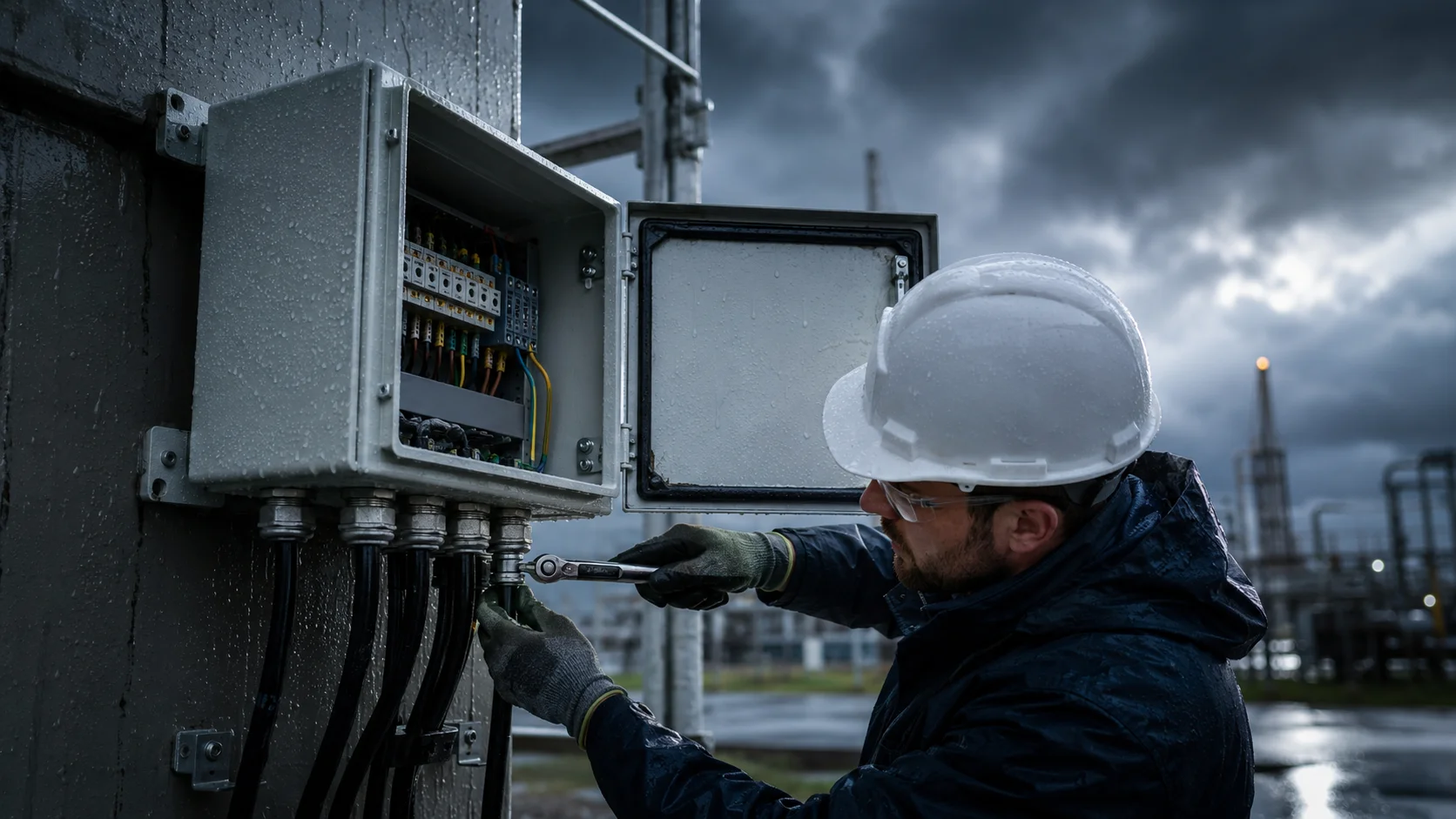
When installing enclosures, theory can come into conflict with reality. We’ve observed perfectly designed enclosure products being rendered ineffective due to incorrect installation methods.
Cable Entry Points
The IP rating of your enclosure doesn’t matter if you don’t make sure your cable gland fittings are sealed correctly! Be sure to always use the correct type of cable gland and follow the manufacturer’s torque specifications.
Mounting Orientation
In some cases, specific orientations can restrict how an enclosure maintains its rating – consult the relevant certification documentation, as not all IP67 rated enclosures will operate effectively when mounted in the inverted position.
Gasket Maintenance
Even the best gaskets will break down eventually. You should take this into account when planning and schedule replacing your gaskets, particularly in UV-optimised outdoor applications.
Industry-Specific Requirements
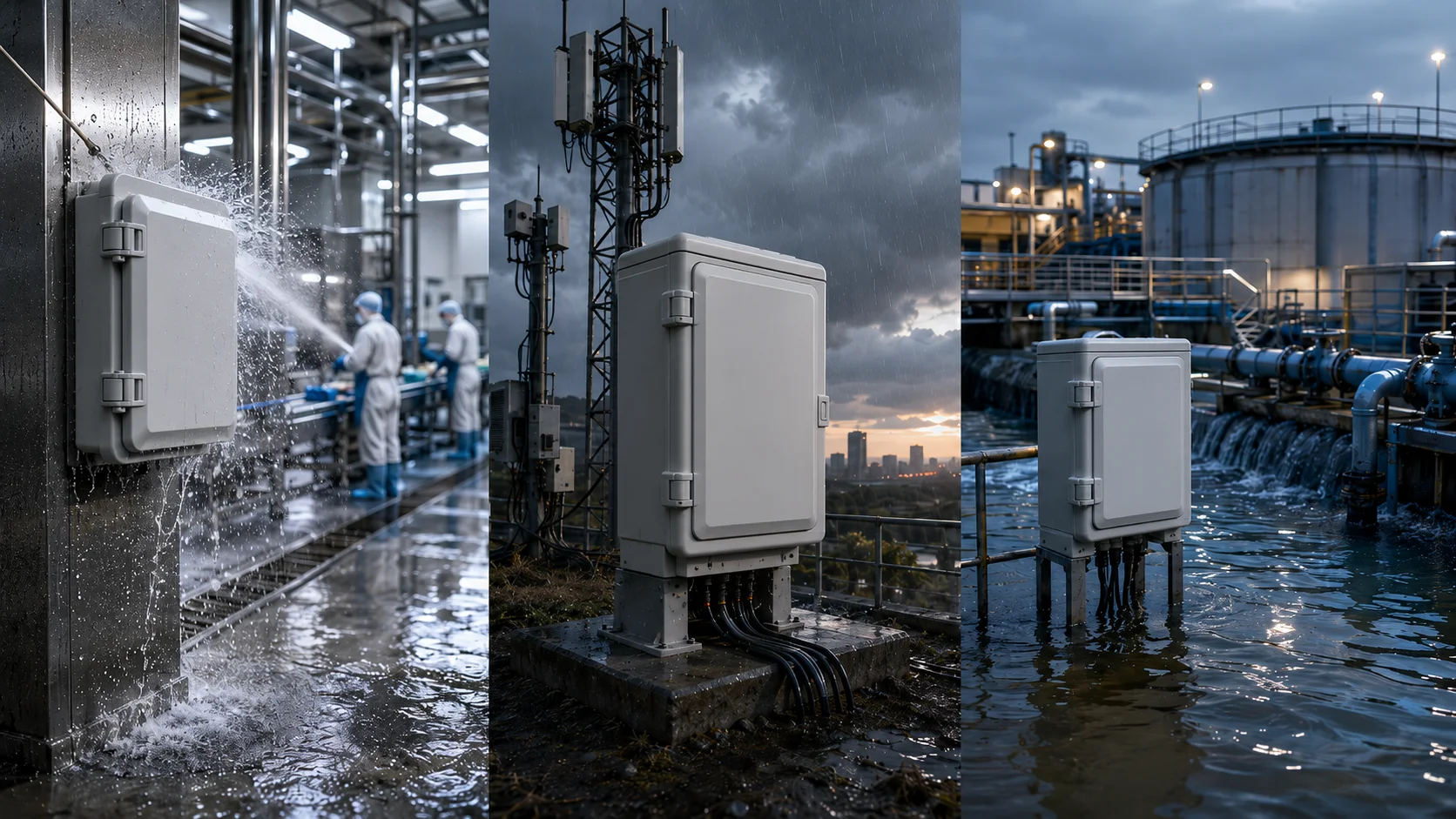
Different industries have evolved different preferences based on real-world experience.
Food Processing
There are a few processors which have flood concerns offering IP67 rated devices. However, when there are washdown requirements, either IP66 or IP67 rated processors are needed to successfully secure an environment against flood damage.
Telecommunications
Most of the telecommunications industries that fall under the IP65 specification will be at least partly exposed to weather or air borne contaminants. For example, outdoor telecommunications equipment is more commonly subject to some level of water exposure. However, most outdoor telecommunication equipment will see little to no damage due to high-pressure washing as well as submersion.
The majority of telecom equipment that complies with the IP65 standard will mainly experience some type of weather-related moisture exposure, however, the equipment itself is usually not in direct contact with water for significant amounts of time.
Most often, water exposure is limited to rain or snow that has accumulated on the outside of the enclosure before being removed as part of the normal operation of the equipment.
Thus, for most of these kinds of devices, they will rarely see any significant risks associated with directly spraying or submerging the device in water.
Water Treatment
Having an IP67 rating should apply when working near water processing equipment, which may be submerged at times during maintenance or flooding.
Making Your Specification Decision
Begin with your worst-case scenario first. Will your enclosure be submerged underwater? The answer is to use IP67. What about using a high-pressure washer? Then, you need to go with IP66. For general outside exposure, IP65 should cover most applications.
Cost vs Risk Analysis
The higher cost of higher IP ratings is associated with initial and maintenance costs. In determining which is the best option, look at the level of protection compared with the price you will be required to pay. At i-closure, we see many projects that are over-specified where IP65 would have been okay, as well as projects that have been under-specified where IP67 would have prevented some issues or failures.
Future-Proofing Considerations
When considering requirements, imagine if an installation that is indoors may become an outdoor installation. If it doesn’t cost that much more, consider adding 1 rating.
IDIS India’s IP Rating Capabilities
We utilize an IP65 and IP67 rating to manufacture enclosures within our Ahmedabad facility. A separate laboratory has been established to conduct tests on these enclosures and help validate that we meet required protection levels. We achieve an IP65 and IP67 rating on our ABS and Polycarbonate enclosure products by utilizing proven sealing technologies. Throughout the years we have tested thousands of enclosures and continue to develop new ways to improve our enclosure designs. However, we do not manufacture IP66-rated enclosures; therefore, if you are looking specifically for an enclosure with IP66-rated protection, you will need to seek another manufacturer.
Getting Your Specification Right
Choose the right IP rating for your requirements. Overspecifying costs you money, and underspecifying puts your equipment at risk for failure. Consider: The conditions in which the IP-rated item will be installed The cleaning and maintenance methods How often you will have to submerse the equipment Whether flooding may occur Budget constraints The amount of time that you require reliability For further assistance in matching the IP rating to your unique application, please contact IDIS India for technical assistance. Our engineering team will evaluate your requirements and recommend the right protection level from our IP65 and IP67 product series. Our engineers’ experiences across industries will help ensure that you can avoid over-specifying or under-protecting. Obtaining the correct IP rating on your installation from the beginning saves everyone time and money.
Need Help Choosing the Right Enclosure? Get in Touch!