
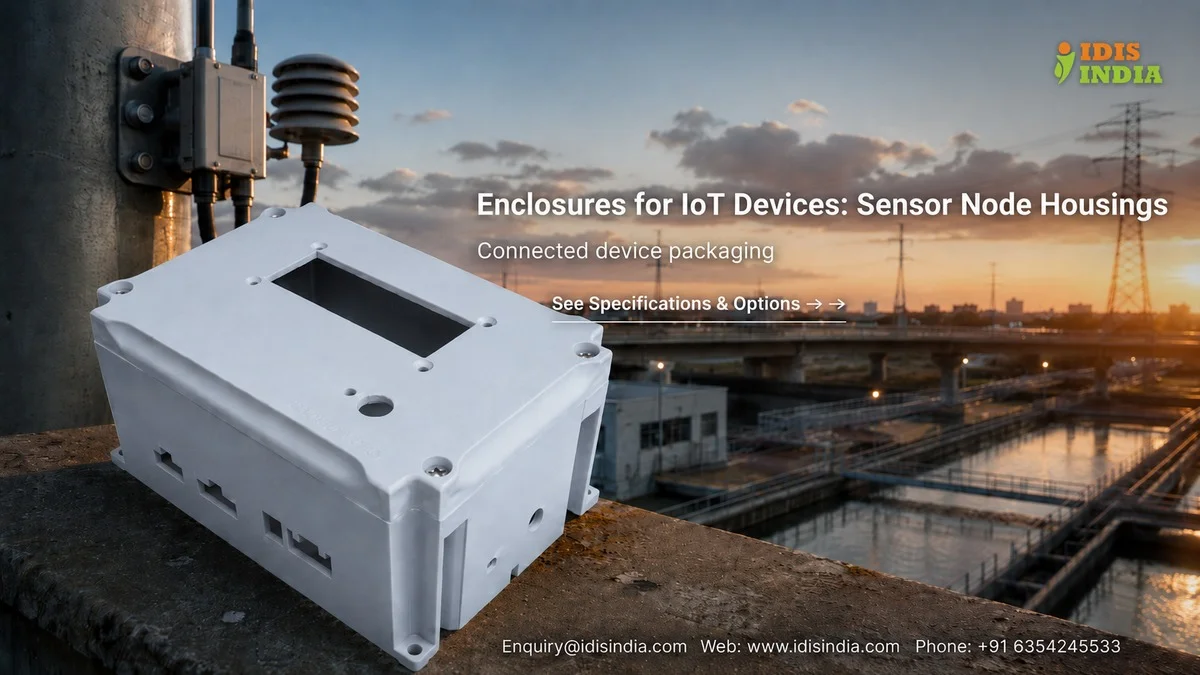
Your device works great in the lab; but what happens to it when you put it in real-world conditions? Rain, dust, temperature change, or electromagnetic interference may take your perfectly engineered sensor and turn it into an expensive piece of scrap metal! Smart, connected devices require more than just basic protection; they require a customized housing that allows for wireless connection while at the same time protects delicate electronic equipment from harsh environments. I-closure has seen too many promising IoT projects fail because enclosure selection was viewed as an afterthought. The right enclosure provides protection for your IoT device and will also help to improve its performance. In fact, poor enclosure selection can reduce the radio operating range of your IoT device by 50% or more! IDIS India’s high-quality IoT enclosures are designed to work in conjunction with your electronic devices, not against them.
Wireless Signal Penetration Solutions
If your sensor data cannot reach the gateway, it is useless. Conventional enclosures made of metal act as Faraday cages and completely block radio transmissions; some plastic enclosures also contain metallic additives that will impact their ability to transmit signals. IDIS India has utilized only pure ABS and pure polycarbonate to build our enclosures because both of these materials are RF transparent. IDIS enclosures allow between 85% and 95% of the signal to penetrate them at all common IoT frequency ranges, including those found at 2.4 GHz, 5 GHz, 868 MHz, or 915 MHz. However, simply using the correct materials does not guarantee successful transmit/receive operations; the placement of the antenna has become very important when designing compact IoT enclosures. IDIS creates antenna windows on our enclosure by designing specific areas of the walls with the least amount of wall thickness to maximize the signal being transmitted/received. The designer of the enclosure is able to position the antenna window(s) wherever needed according to the deployment method (i.e., top, bottom or side). Need an antenna to be mounted externally? IDIS enclosures support multiple antenna mounting methods such as SMA connectors, magnetic mount bases and integrated whip antennas, all while remaining within the parameters of IP65/IP67 at the same time providing optimal RF paths through our enclosures.
Battery Compartment Design
Most IoT devices are powered by batteries and can last months or years before requiring a battery replacement. A protective enclosure for an IoT device needs to allow for battery replacement while maintaining the rating for the protection of the device. Standard enclosures require removal of multiple screws to expose the internal electronics, which will then expose electronic sensors and the main electronics of the device when the batteries are changed. The I-closure has been designed to have separate battery compartments that allow independent access without opening any of the main box electronics or sensor connections, allowing technicians to complete battery changes easily. The battery compartments can also maintain an IP rating through the use of double-seal designs, while other battery types will require different housing considerations, such as spring contacts to accommodate AA/AAA batteries with clear polarity markings; secure retention (with no risk of crushing) for lithium coin cell batteries; ventilation and management of thermal properties for rechargeable battery packs; and sufficient cable routing and controller space for solar charging systems. The battery compartments can be located independently of the main electronics, allowing for lower heat transfer and extended battery life. This separation will also facilitate different levels of access, allowing technicians to change batteries while engineers can access the main boards.
Sensor Port Integration
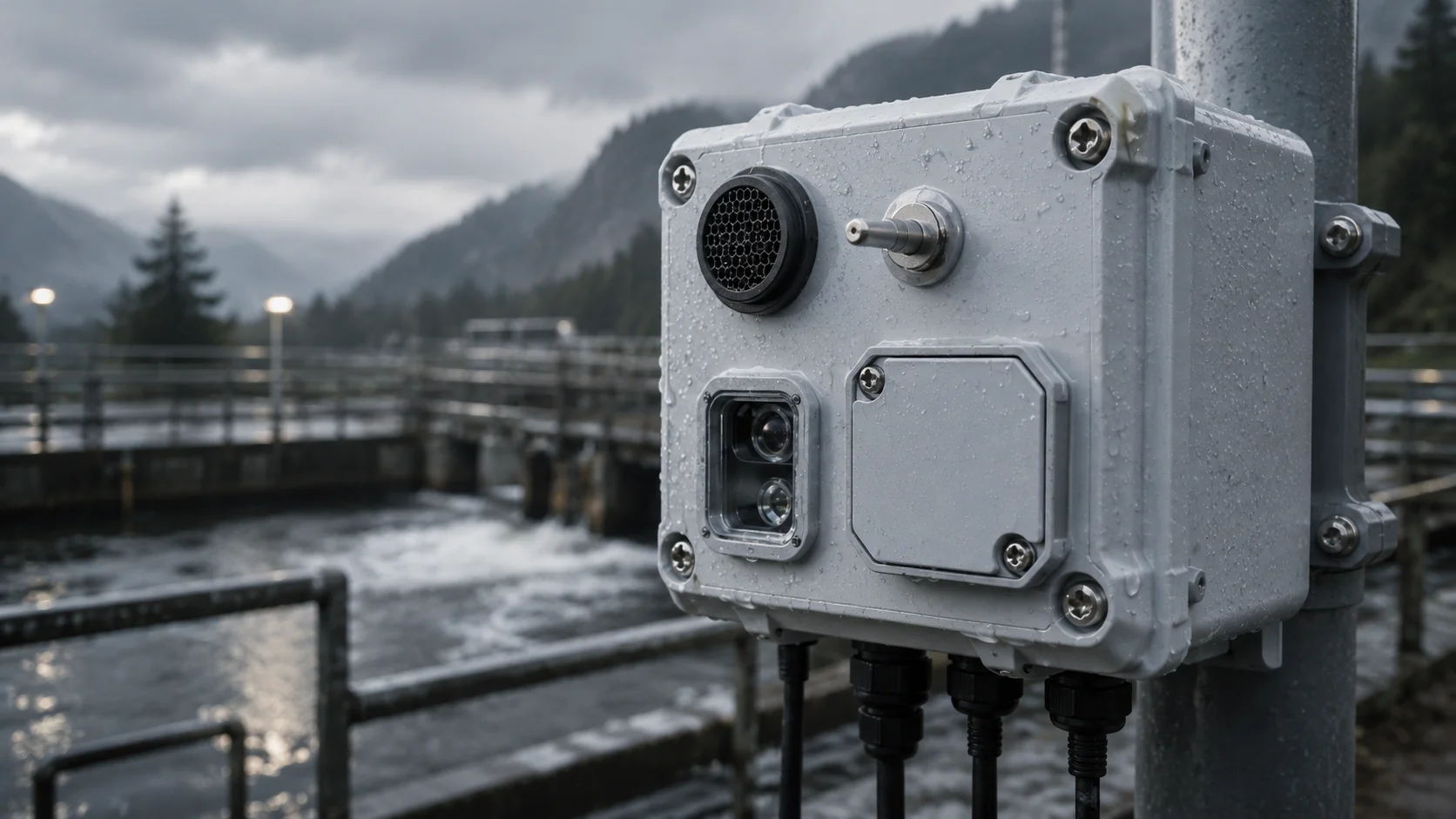
All environmental sensors depend on contact to get accurate readings by sensing environmental conditions. For example, temperature sensors will not function correctly in sealed boxes (i.e. closed off from the environment); humidity sensors require air to pass through them; and pressure sensors need to be connected to the outside atmosphere. However, openings create potential failure points for these environmentally sensitive sensors. IDIS India has designed sensor ports that maintain the necessary protection needed for the sensors, while allowing the required access to the environment. For instance, Gore-Tex ventilation allows the sensors to equalize pressure and sense humidity, but also prevents any ingress of water. Your own temperature sensor wells should transfer heat quickly and easily into the sensing elements while providing an IP67 environment. Optical sensors are also unique and come with their own challenges. The transparent windows of these sensors must remain unaffected by the sun’s harmful UV rays, scratches, or fogging up. Therefore, we use specially designed polycarbonate windows that have anti-reflective coatings and drainage channels to prevent any water from accumulating on them. Some of the sensors may need to be maintained periodically (cleaned/calibrated), so we can use removable port covers to allow maintenance access without removing the entire enclosure. They can be secured with O-ring seals and have capture screws to ensure they do not get lost when being serviced in the field.
Gateway Heat Management
The data processing capacity of IoT gateways is greatly more extensive than that of a simplistic sensor. With multiple radio systems, processors and multiple types of communication interfaces generating a substantial amount of heat, they can produce a large amount of heat in a very small area. If using standard sealed enclosures, the heat will be trapped and eventually will lead to a thermal shutdown of the system. I-closure’s gateway enclosures include passive cooling characteristics which allow for IP protection to be maintained. Internal heat sinks effectively distribute thermal loads to the internal wall surfaces. By using strategically varied wall thicknesses, we provide thermal conduction paths while maintaining the integrity of structure. When designing ventilation for high power systems, we must maintain the IP65 level of protection utilizing labyrinth seals and hydrophobic membranes. An airflow space is provided to allow for heating and an airflow system to transfer heat away while moisture is retained inside. The layout of the components within the enclosure will significantly affect the operational performance; therefore, each enclosure has mounting systems which separate the heat producing devices while locating them close to the cooling features. By using DIN rail mounting, we can provide flexibility in the mounting location for the component within the housing.
Edge Computing Ventilation
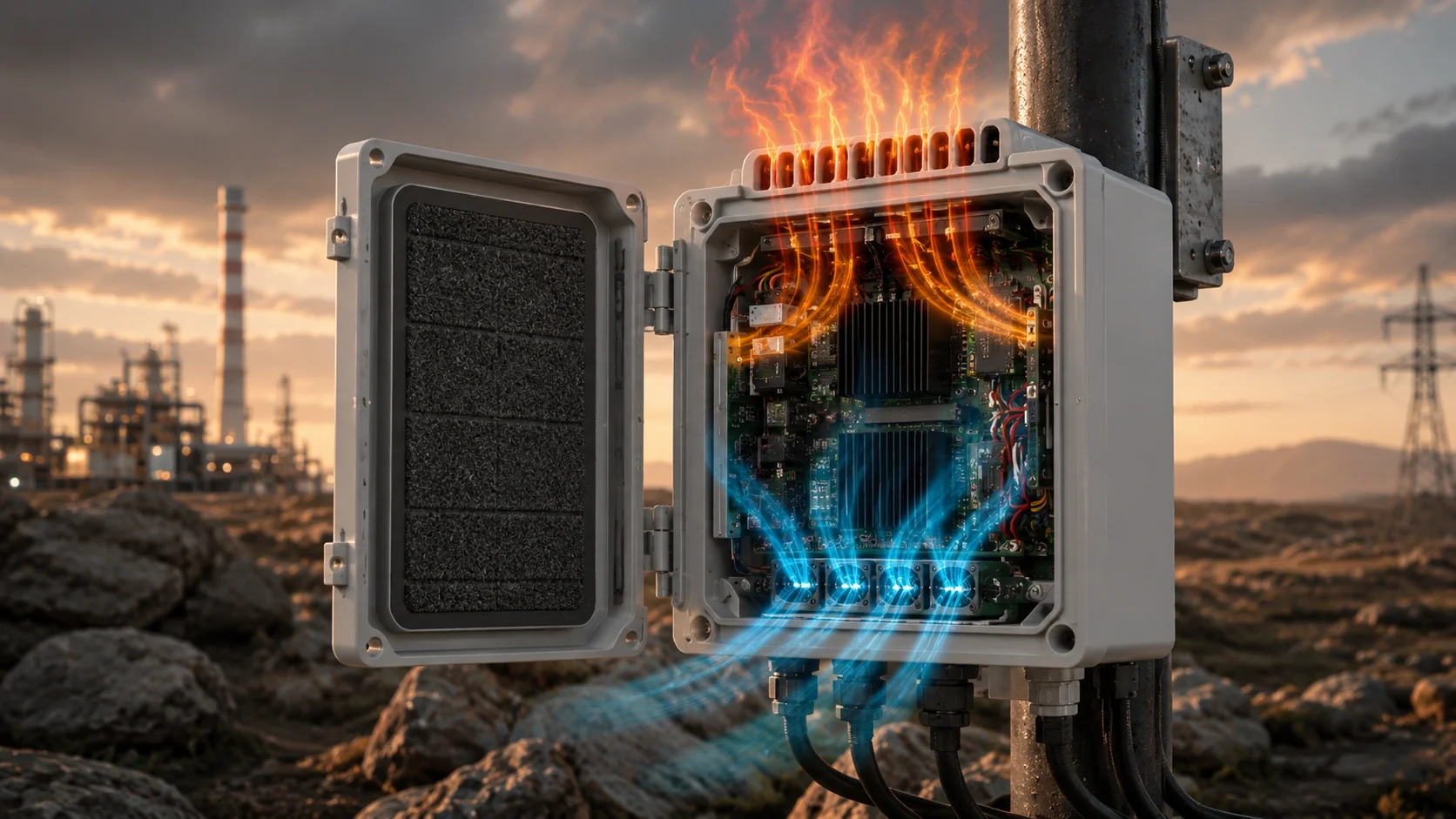
Field deployments require server amounts of computing power; it therefore becomes necessary to provide a means to cool the high heat loads generated by these systems. Traditional approaches to cooling require the use of Fans or Air Filters, both of which add additional maintenance requirements and increase the risk of failure. Natural Convection through intelligent ventilation design will greatly reduce the cooling requirements. The Chimney Effect will pull the hot air from the top of a cooling system while bringing the Cool Air into the bottom of the enclosure through ventilation holes. This approach will work reliably in a field setting, with no moving parts, when an active means of cooling is required. To ensure IP protection, fans must be designed and integrated into the enclosure while providing some form of backup passive ventilation path in the event of a fan failure. IDIS India uses a design that incorporates fan mounts with integrated filtration and drainage systems. This design will ensure that any fan failure does not compromise the enclosure protection levels through the use of backup passive ventilation. Dust can cause components on electronic devices to fail very quickly. Filters that can be removed will allow for easy cleaning of the components without removing the entire enclosure. The use of filter indicators will provide notice of when cleaning is required, thereby eliminating potential oversights in maintenance that could lead to system failures.
Remote Access Mechanisms
Fast and easy access to diagnosed problems or maintenance by field technicians is essential; however, access control and security are critical in order to prevent unauthorized access and tampering of equipment. Existing physical locks (padlocks) can be easily compromised, and represent a single point of failure to gain access by an unauthorized individual. The ability to create electronic (IoT managed) locking mechanisms will enable the creation of an access log with the ability to control the electronic lock from a remote location. Instead of carrying around physical keys, technicians would receive unique one-time access codes to enable them to gain access through an electronic lock. Access events would be recorded electronically, thereby providing an audit log that can be reviewed for security purposes. Mechansism, which provide for tool-less opening, enable field techs with quicker service while keeping the equipment secure. Mechansim such as quarter-turn latches with integrated locking capabilities will provide rapid access through simple hand tools. These mechansims are resistant to vibration and temperature cycling compared to threaded fasteners. The way a cable is managed has impacts regarding how accessible and how secure the cables are. The utilisation of external service loops prevent the cables from being mechanically stressed when internal connections are being accessed. The use of cable identification allows field technicians to quickly identify and locate the proper internal connections while working on service calls.
Field Deployment Mounting
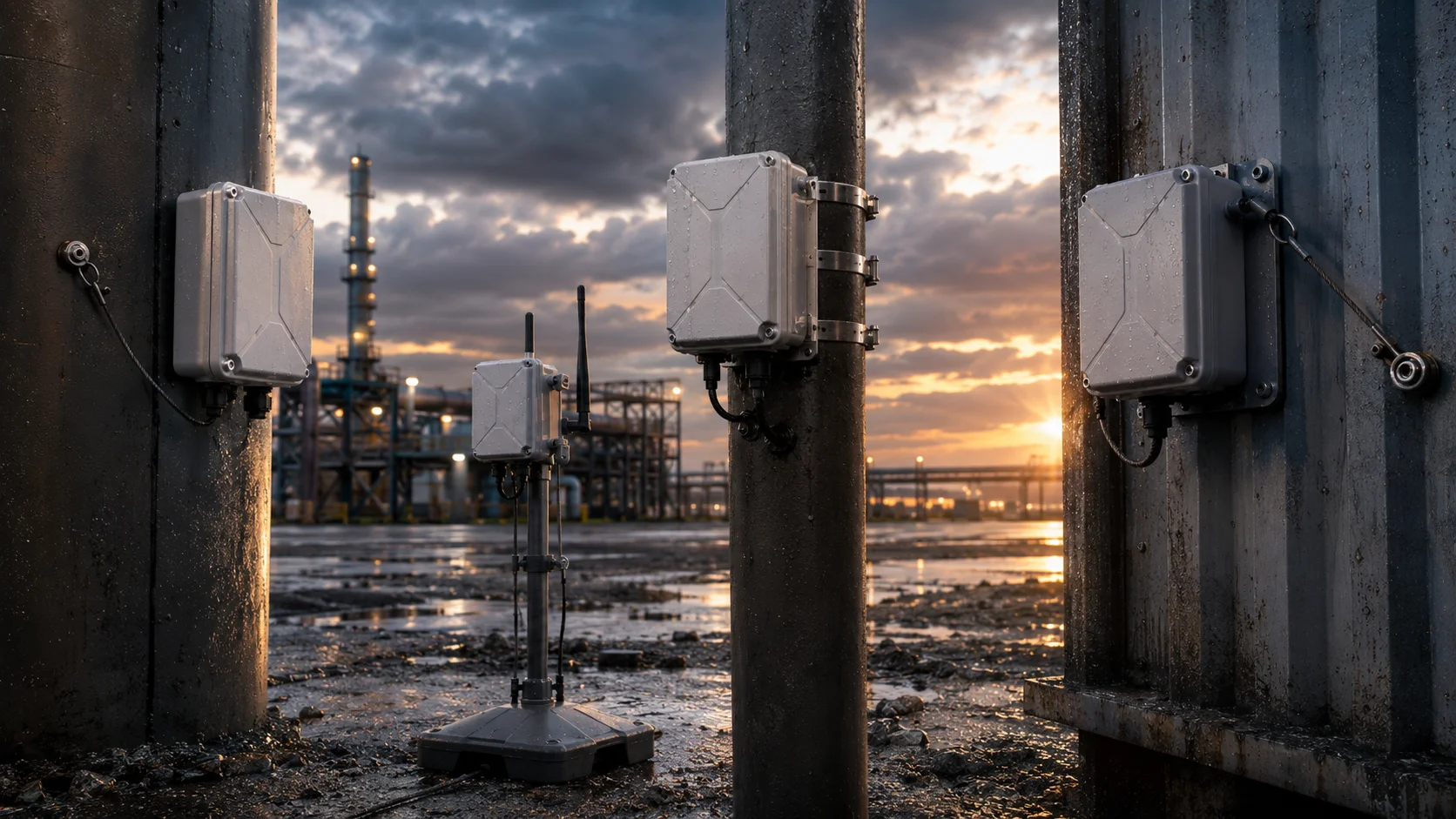
IoT devices must mount securely in challenging locations. Utility poles, building walls, industrial equipment, and outdoor structures each present unique mounting challenges. Standard mounting brackets often fail when exposed to weather and vibration.
Pole mounting systems from I-closure accommodate various pole diameters and materials. Stainless steel hardware resists corrosion while providing secure attachment. Anti-rotation brackets prevent device movement during wind loading.
Magnetic mounting provides quick installation on steel surfaces but requires strong magnets that maintain holding force across temperature ranges. Our magnetic mounts include safety cables as backup attachment in case magnetic failure occurs.
Wall mounting must consider different wall materials and access requirements. Universal mounting plates work with concrete, wood, metal, and composite surfaces. Adjustable positioning allows fine-tuning during installation without remounting.
Some applications require temporary or portable mounting. Weighted bases provide stable platforms without permanent installation. These systems work well for temporary monitoring or areas where permanent installation isnt permitted.
| Application | Typical Size (mm) | Material | IP Rating | Mounting |
|---|---|---|---|---|
| Sensor Node | 100x100x50 | ABS | IP65 | Pole/Wall |
| IoT Gateway | 150x100x75 | Polycarbonate | IP67 | DIN Rail |
| Edge Device | 200x150x100 | PC/ABS | IP67 | Wall Mount |
| BLE Beacon | 80x80x40 | ABS | IP65 | Adhesive |
Ready to protect your IoT deployment? IDIS India provides enclosures starting from compact sensor nodes to full edge computing systems. Our engineering team helps match housing features to your specific device requirements.
Contact us for samples, technical specifications, and custom modifications. With over 1200 successful IoT deployments, we understand the real-world challenges your devices will face.
Need Help Choosing the Right Enclosure? Get in Touch!