
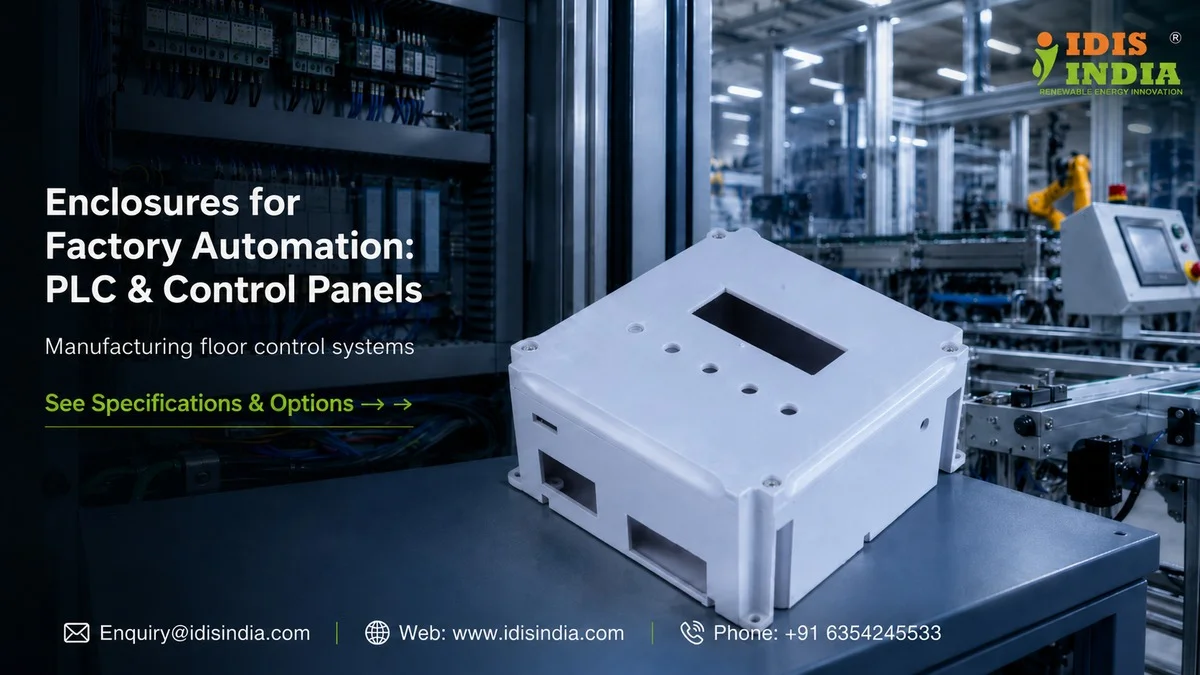
Automation equipment on factory floors requires solid protective measures. Each piece of equipment, no matter how it is used, requires secure housing to ensure it can continue to perform its task without interruption. I-Closure focuses specifically on creating automation enclosures designed to keep your control systems performing at optimal levels within a demanding industrial setting. However, when selecting an enclosure, size is only one consideration when it comes to the installation of your automation equipment. When determining which size enclosure will best serve your needs, there is also the consideration of thermal management, EMI shielding, and ease of access for maintenance. Our enclosures are IP65 rated (weather-resistant) and made of durable ABS material; they will provide the level of protection your control systems require and will accommodate the possibility of future expansion.
PLC Module Thermal Management
Thermal build-up has been identified as the primary cause of premature failure for programmable logic controllers (PLCs). Today’s controller technology generates extremely high thermal loads, particularly when installed in compact control panels. What measures can you take to maintain acceptable operating temperatures? In addition to providing standard features in their automation enclosures designed to provide thermal management built into their products, IDIS India also incorporates specific features into their ABS housing that help to promote passive movement of heat away from sensitive components through the use of venting channels. The UL94-V0-rated flame retardant material in the enclosure provides thermal protection through handling temperature variations from -10 °C to +55 °C without undergoing deterioration due to alternate temperature levels. Consider taking some additional steps to protect your PLCs from thermal build-up by: locating heat producing components as close as possible to venting ports; using clear covers to provide easy access to status LEDs without removing covers on the control panel; installing optional vent fan kits when installing PLCs in high density locations; leaving expansion space in between adjacent PLCs to promote improved air circulation; and ensuring proper cable management in order to provide unobstructed airflow pathways throughout the enclosure.
Control Panel Shock Absorption
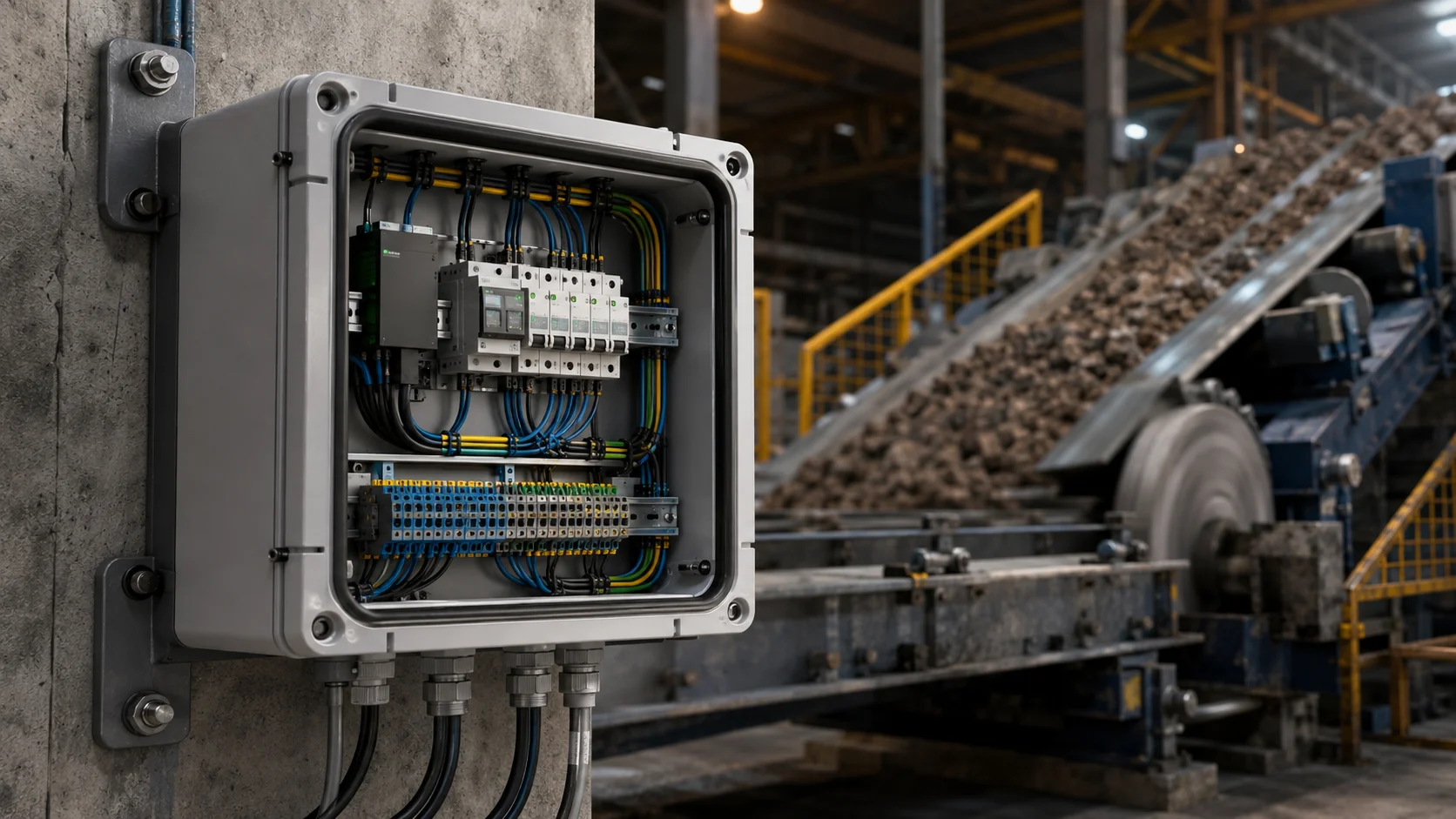
There are industrial vibrations in factory equipment. Equipment like conveyor systems, large transporters, and material-lifting machines are always in motion, which causes movement to be transmitted to the mounting surfaces. Control panels can tolerate the force of these movements without ever loosening connections or injuring internal components on the control panel. Our automation enclosures use hardened mounts specifically designed for industrial application. The underlying housing materials, made of ABS, tend to absorb very little vibration during normal operation while also holding form and function under mechanical pressure. Even when installed to wall brackets, you should ensure that the weight of I-Closure is evenly distributed across all mounting points. An item installed directly to a machine may require more careful consideration for mounting; in this case you will want to use a vibration dampening gasket between the I-Closure and your mounting surface. When using DIN rails, ensure that each rail is secured with a properly attached second or third clip when applications experience high amounts of vibration. It is also advisable to periodically check the condition and tightness of all terminal blocks that are in locations with high incidences of heavy machinery. Finally, ensure that cables entering the enclosure cannot be subject to fatigue due to being too rigid or short-circuited from lateral movement in your vertical direction. I-Closure has multiple mounting configurations to meet your specific installation requirements through the use of conventional brackets and/or custom machine-mounting adapters.
HMI Touch Screen Protection
Human-machine interfaces (HMIs) are subject to particular challenges on the shop floor. Operators are continuously using these display devices and, in the process, introduce a number of damaging hazards; namely, dirt, liquid, and extreme temperatures potentially jeopardizing the electronics of the display device. Consequently, it is important to provide HMI stations with protection that allows operation of the HMI while still maintaining its functionality. One way to accomplish this is by utilizing transparent access doors on HMI enclosures so that operators can view the building’s operating status without having to open the enclosure. This reduces the amount of contamination that can occur and also prevents physical damage to the display device. In addition to preventing penetration of dust and liquid splashes through the housing due to day-to-day operations, the use of IP65 protection is highly effective.
Some of the common protection features found in HMIs are as follows:
– Clear polycarbonate viewing windows for status monitoring – Recessed mounting of HMIs to prevent damage to the screen surface – Sealed cable entry points to eliminate any moisture ingress – Easy access to hinged doors to facilitate maintenance tasks
The ergonomic position of HMI enclosures is also very important. Positioning HMIs at the correct height will also minimize operator fatigue and increase safety during long-term use.
Motor Drive EMI Shielding
When variable frequency drives create electromagnetic interference, it will alter the operation of sensitive control circuits. If your automation systems are not shielded correctly, communication failures, false signals and unpredictable operations can be experienced by the automation systems. This makes the design of the enclosure critical to the effectiveness of your automation system’s performance. IDIS India has integrated EMC shielding into the design of automation enclosures used to house motor drives and power electronics.
IDIS utilizes conductive gaskets to create a continuous path for ground continuity around the door perimeter of an enclosure. All cable entry points include provisions for strain relief and grounding of the conductors feeding into the enclosures. The following practices must be adhered to in order to be effective in managing EMI:
Isolate high-power devices from low-power devices inside enclosures Ground all metal objects to the same ground reference point Use shielded conductors with appropriate terminations Ensure that there are sufficient clearance distances between the drive and control modules
Although shielding will prevent interference from leaving an enclosure, it also prevents additional noise from entering into systems and affecting their operation. Grounding is one of the most critical components to effectively protect your systems against EMI.
Factory Floor Cable Routing
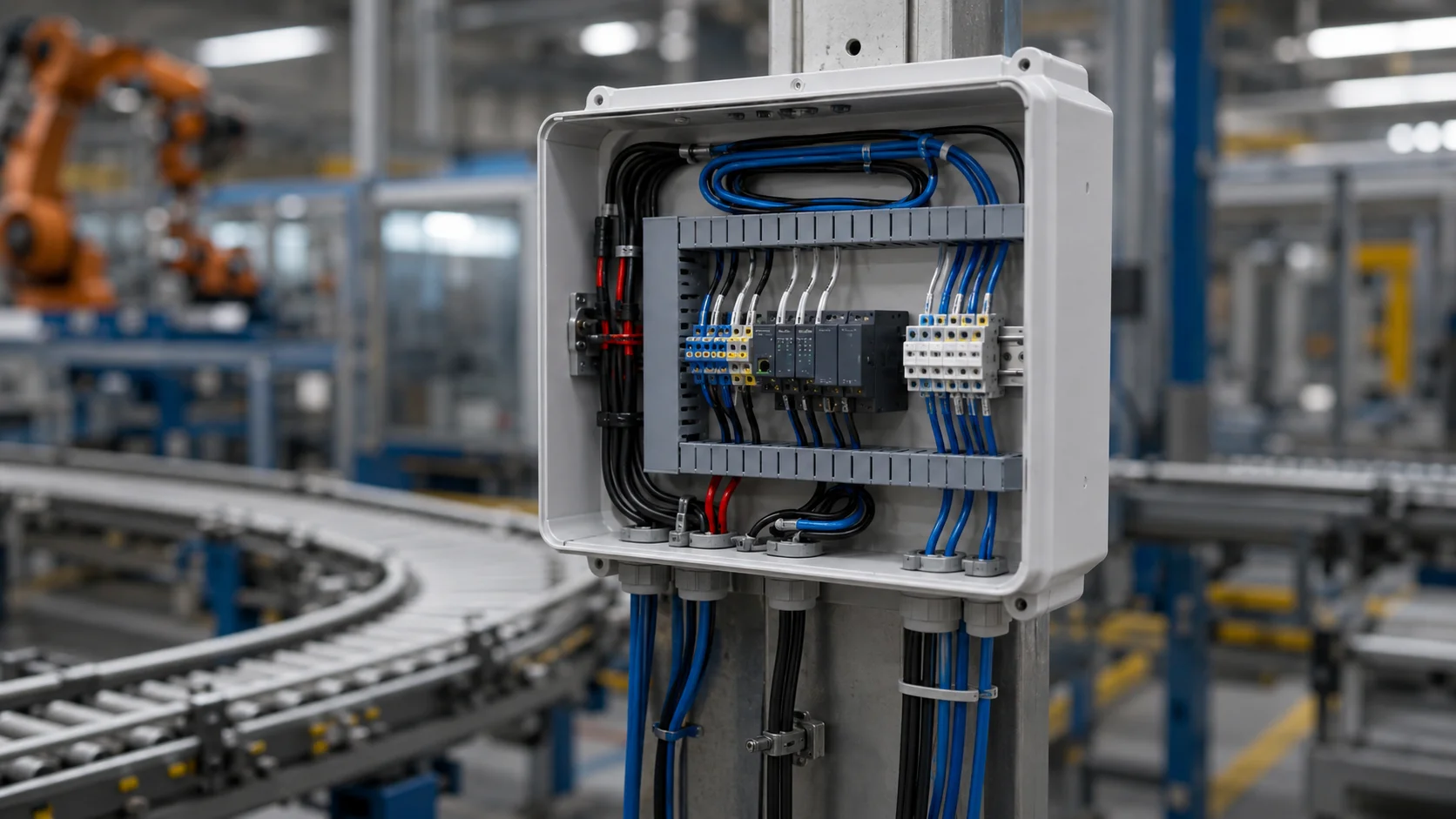
The differentiation of professional installations as opposed to amateur attempts on professional installations can be the quality of cable management. The result of poorly routed cable creates maintenance nightmares, raises failure rates, and complicates troubleshooting processes. The first step towards an organized automation enclosure is to ensure that the automation enclosures provide organized cable management beginning at commissioning. The I-closure family of enclosures provides integrated cable management features. The pre-molded cable ducts are designed to assist in guiding wires along optimal paths. Multiple access points allow you to accommodate different cable types without jeopardizing IP ratings. Strain relief mechanisms will help to eliminate connection failures due to cable movement. The following best practices for professional cable routing have been established: 1. Separate power and signal cables by a minimum of 3 feet. 2. Utilize different entry points for different voltage levels. 3. Label all connections for future maintenance. 4. Leave service loops within the enclosure for potential future additions. 5. Plan for future growth. When initial installation is completed, use a cable duct that is 50 percent larger than your current utilization, this will further assist with adding additional cables to the installation.
Automation System Expandability Planning
Factory automation evolves constantly. New sensors, additional I/O points, upgraded controllers – your enclosures must accommodate these changes without complete replacement. Smart planning during initial installation saves significant costs later.
Our modular enclosure approach supports systematic expansion. Standard sizes connect together seamlessly. Common mounting systems simplify additions. Standardized cable entry methods maintain consistent installation practices across multiple panels.
Consider these expansion strategies:
| Enclosure Size | Typical Application | Expansion Capability |
|---|---|---|
| 300x200x150mm | PLC Station | Basic I/O additions |
| 400x300x200mm | I/O Panel | Module doubling capacity |
| 600x400x250mm | Control Cabinet | Major system upgrades |
But dont over-size initially. Larger enclosures cost more and waste space. Plan for logical growth patterns based on your automation roadmap.
IDIS India supports factory automation projects with reliable enclosure solutions. Our IP65-rated ABS housings protect PLC panels, HMI stations, and motor control systems in demanding industrial environments. With ISO9001 certification and comprehensive testing, I-closure delivers the quality your automation systems deserve.
Ready to protect your factory automation equipment? Contact IDIS India for specific sizing, pricing, and delivery information tailored to your application requirements.
Need Help Choosing the Right Enclosure? Get in Touch!