
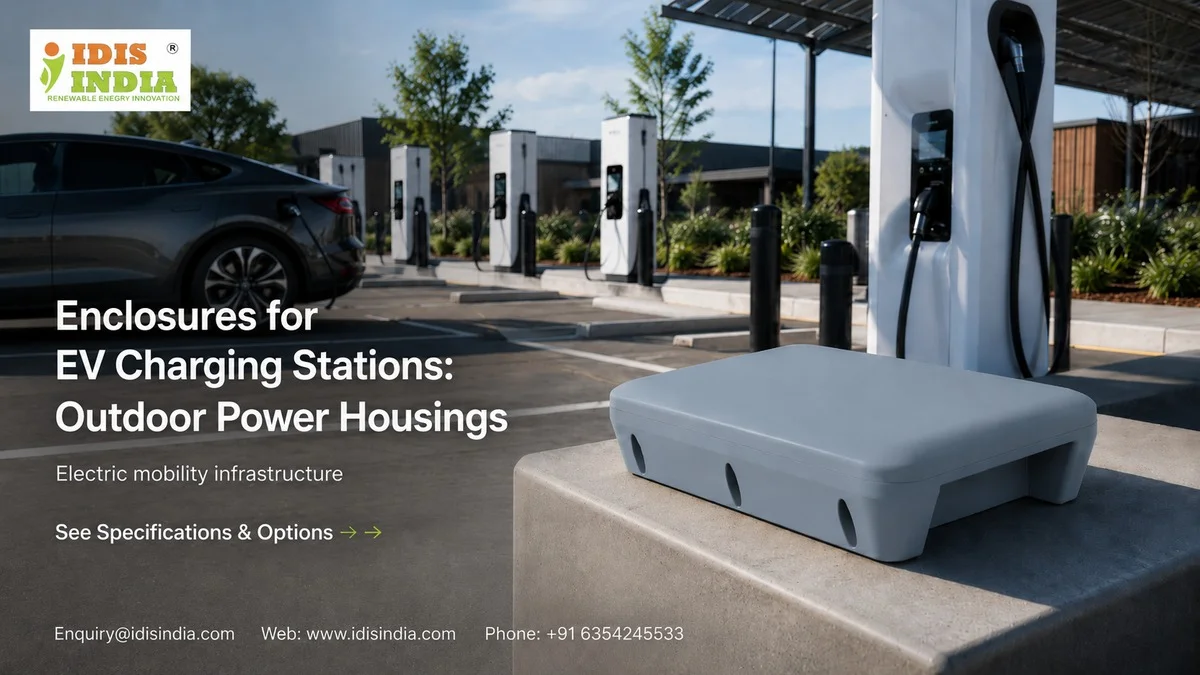
Electric vehicle charging stations need reliable protection for critical electronic components from the environment. The critical components of electric vehicle charging stations are vulnerable to damage from rain, dust, vandalism and extreme temperatures. At IDIS India, we specialize in designing and manufacturing housing solutions to keep electric vehicle charging stations operational and reliable in tough outdoor conditions. We have developed over 50 types of enclosures for vehicle charging applications including AC chargers, DC fast chargers and fleet E-vehicle charging network stations. IDIS India’s I-closure Institutional Type enclosures are built to protect any of your devices from the simplest 7kW chargers to the most complex 350Kw units, but when you’re selecting your EV Charger housing, it’s not just about selecting a specific size, you also need to understand how each type of enclosure interacts with electric vehicle service stations.
EVSE Power Electronics Housing Requirements
Power electronics in charging stations generate significant heat and contain sensitive components that cant tolerate moisture or contamination. Your enclosure must handle multiple challenges simultaneously.
Temperature cycling creates the biggest stress on charging equipment. Morning frost followed by afternoon heat causes expansion and contraction that can crack poorly designed housings. Our polycarbonate enclosures maintain structural integrity across temperature ranges from -30°C to +55°C, which covers most outdoor parking environments.
But temperature isnt the only concern. RFID readers need clear windows for card access. Payment terminals require precise display cutouts. Cable entry points must prevent water ingress while allowing thick charging cables to pass through. Each element needs careful planning.
| Application | Typical Size | Key Features |
|---|---|---|
| AC Charger Controller | 300x250x150mm | RFID window, LED indicators |
| DC Fast Charge Housing | 400x300x200mm | Ventilation grilles, cable management |
| Charging Cabinet | 500x400x250mm | Multiple compartments, heat dissipation |
| Payment Terminal | 250x200x120mm | Display cutout, tamper-proof locks |
Fast Charge Thermal Management Solutions
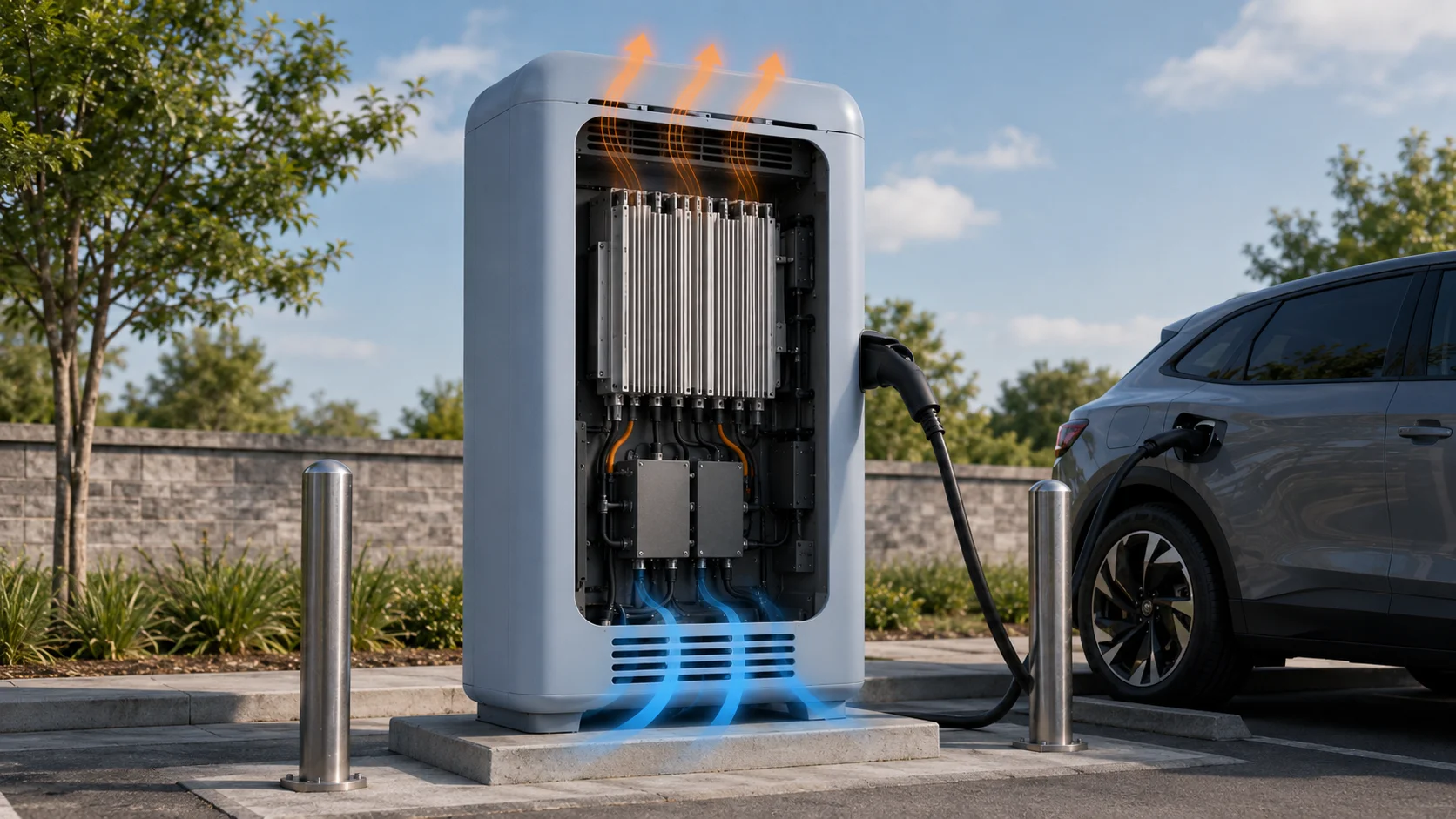
DC Fast Charging generates a lot of heat, and if this is not adequately managed it can ultimately destroy a charger’s power module. The waste heat produced by your 150kW fast charger is approximately 4.5kW of waste heat. Where does that heat go? Since regular enclosures trap the hot air being generated, it creates build-up of thermal energy and can potentially shorten the life of all of the components, as well as cause an over-temperature fault leading to a thermal shutdown of the charger. Fast charging stations must have enclosures with engineered ventilation to promote natural convection, while still maintaining the required IP65 level of protection. We engineer the layout of your ventilation grilles based upon your specific power electronics configuration. The bottom intake vents pull cool air from underneath through the heat sinks and then the hot air will be exhausted from the top vents naturally. Why do we care? By providing an environment that allows the heat sinks to operate at lower temperatures, you will experience fewer service calls resulting from the thermal shutdown of your fast charger due to a component’s short operational life. Additionally, many people overlook the fact that dust build-up on a heat sink diminishes cooling efficiency by as much as 30%. Our filtered ventilation systems keep the cooling surfaces of the charger clean and provide weatherproof protection.
Vandal Resistant Design Features
Vandalism and theft is a frequent occurrence at Electric Vehicle charging stations because of the high cost of the stations themselves. The charging stations have a number of things that are of high value and will therefore attract thieves, including copper cables, payment terminals, and camera components. When charging stations are within public view and not supervised, this can potentially make them an even more attractive target for thieves or vandals because they can be undetected. A typical plastic enclosure at a public charging station will break or crack under even mild impact conditions. The IK10-rated Polycarbonate case provides 20 Joules of impact energy resistance (equal to 5 kg. dropped from 40 cm.). In addition to resisting impact, vandal-resistant enclosures must have the following: Preventing tampering with the cable entry points Using scratch-resistant materials on display panels Locks that are drill and pry-resistant A custom key type for a quarter-turn lock that is vandal-resistant Grommets on the cable entry that are cut-resistant and reinforced Recessed screw heads that are resistant to tampering Optional steel backing plates for critical components Payment terminal enclosures have their own set of security issues since they contain cash and valuable electronics. Security protection features for payment terminals that are contained in the payment terminal enclosures include: anti-skimming features and secure mounting methods to prevent devices from being removed.
Payment System Integration Planning
Today’s electric vehicle charging stations have a great deal of different methods for customers to pay – including RFID cards, mobile applications, traditional credit cards, and contactless payment systems. Each payment method has unique requirements for how it should be accommodated in the charging station enclosure system. For example, an RFID card reader needs a clear polycarbonate window to be installed at an optimal height for reading. The window must also allow 13.56MHz signals to pass through, while blocking any moisture and dirt/contaminants from getting inside the charging station enclosure. The thickness of the polycarbonate window will also dictate the effective read-range of RFID cards, as thicker pieces of polycarbonate do not allow the RFID tag (the card) to be read reliably. In addition, credit card readers require a weather-resistant mounting system, and the routing of the cables that power the credit card reader must be routed in such a way to ensure that no water can enter into the internal components inside of the charging station. Many installers of the various payment options have misjudged how much space is needed for the wiring required for each payment system and have created crowded installations that make service of the various payment options very difficult. Finally, the screens that display charging and payment information also present challenges. Many outdoor-rated display screens generate heat, and require some form of ventilation to not overheat. Unfortunately, providing openings for ventilation compromises the weather-tightness of the enclosure. To resolve this issue, we have developed cut-out designs for the display screens that employ overlapping flanges and drainage channels to keep moisture away from sensitive components.
Fleet Charging Network Layouts
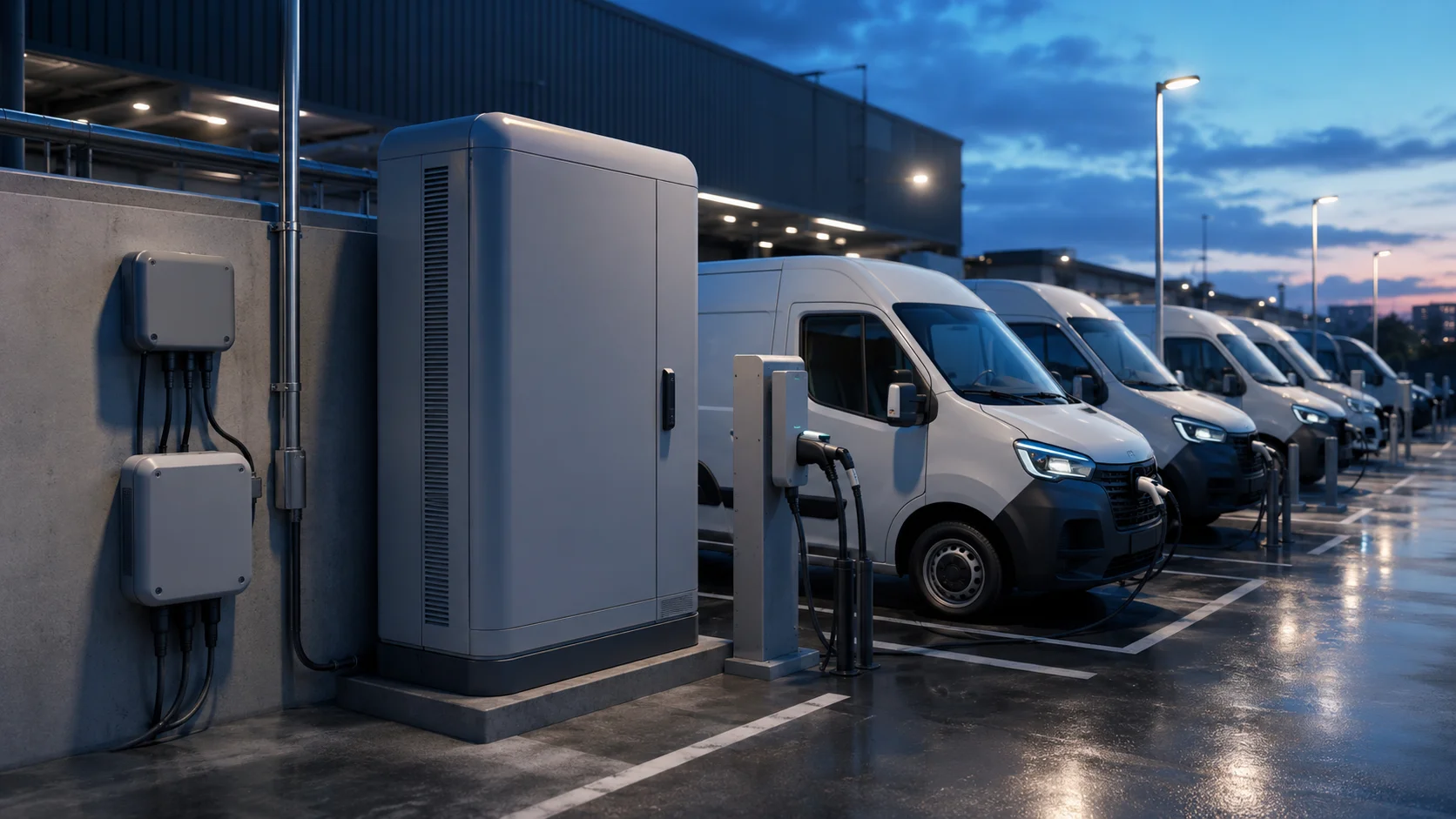
Fleet charging installations differ from public charging stations because they charge multiple vehicles at once. Fleet charging systems face a unique set of challenges regarding how to manage the load on the infrastructure. Load balancers require a central location to connect to the entire energy network and each charging point. The larger cabinet enclosures allow for complex power control systems and room for future expansion. Modifications to the internal mounting panels provide easy reconfiguration as fleets expand. The network communication equipment must be housed separately to support the operation of the network and minimize interference from the power electronics. The OCPP gateway, cellular modems, and WiFi access points also need an independent enclosure to provide adequate cooling. Fleet charging installations can be mounted either on the wall (flush) or on a pedestal (standalone) to minimize the space used in a parking space. All of our mounting systems are capable of supporting each of these configurations while maintaining the structural integrity of the mounting system under wind loads.
Cable Management Strain Relief Systems
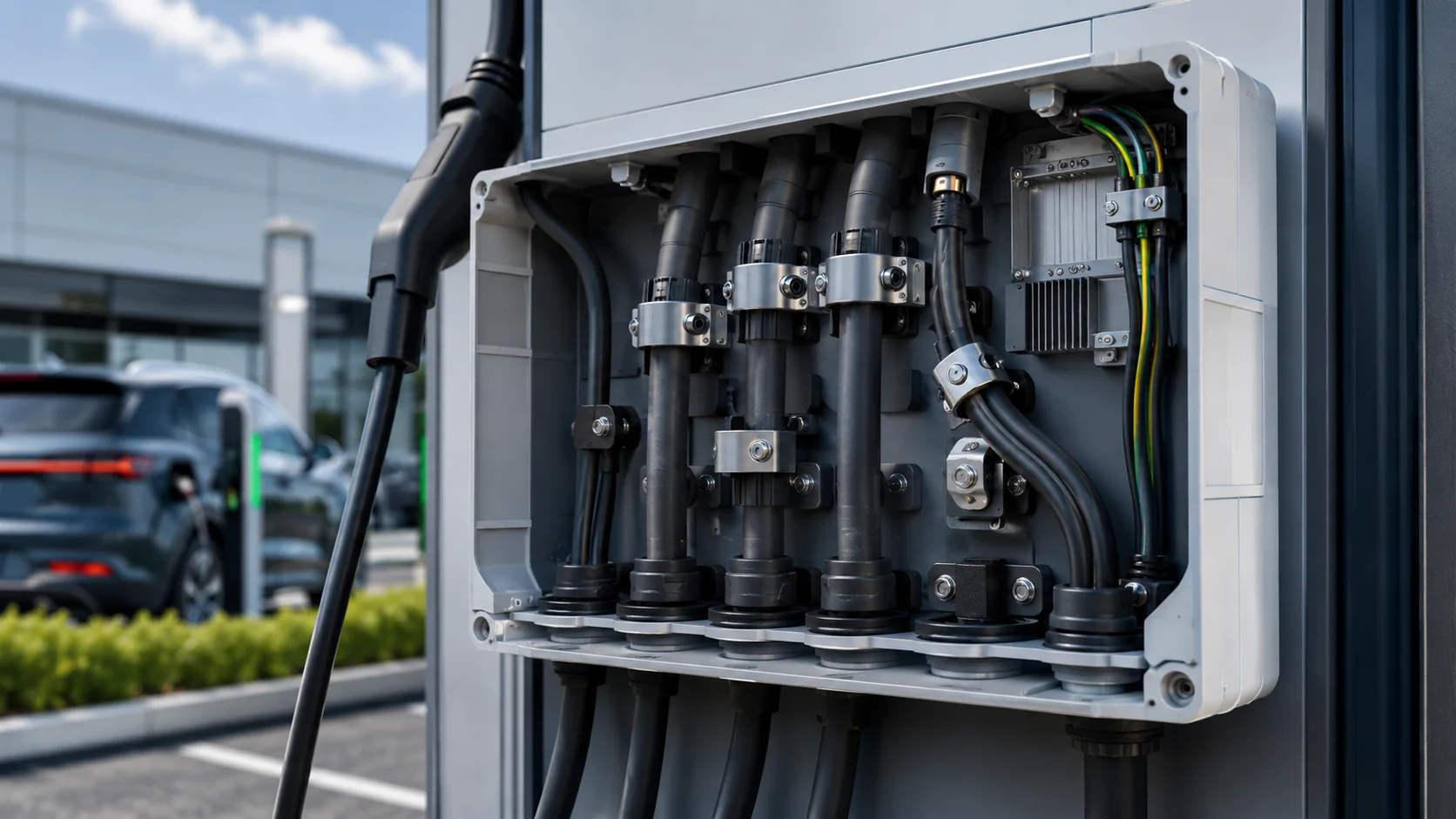
Charging cables undergo a lot of stress from constant flexing when connecting and disconnecting from various vehicles. Poorly managed cables cause significant stress points on the cable, ultimately resulting in conductor failures and unsafe conditions. The entry point for charging cables needs to have adequate strain relief to distribute continuous bending forces from that entry point through longer lengths of cable. Over time, sharply edged enclosures will cut through the jacket of the cable. Our cable management systems feature smooth radius bends and cushioned mounting points. High DC charging cables pose unique challenges as they typically weigh between 3-5 kilograms and are capable of carrying up to 400 amps of electrical current. Entry grommets must provide moisture seal capability while also allowing for the necessary movement and adjustment when a vehicle is positioned. Our design team will analyze your unique specifications for your charging cable and create a custom-designed cable management solution based on those specifications. This includes strain relief clamp adjustment, accommodating cable diameters of varying sizes and multiple entry points for flexible installation.
Arc Flash Protection Requirements
Specialized protective measures need to be in place at all high-power charging stations due to the risk of arc flare-ups. In the event of an electrical fault, arc energy needs to be contained within the enclosure while allowing access to the equipment safely. Materials used in constructing the enclosure that are arc rated provide ignition resistance and do not emit toxic gas when an electrical fault occurs. Our polycarbonate formulations are classified by UL94 V-0 for flammability and remain structurally sound under fault conditions. Ventilation systems also must consider arc flash hazards; therefore, ventilation openings must not allow arc energy to escape from an enclosure and place personnel in jeopardy. We design and engineer “protected” ventilation paths that provide forced cooling while also containing potential arc energy. Equipment compartmentalization limits the exposure to arc flash events as it separates high voltage power electronics from low voltage control systems and reduces the fault energy available; additionally, it simplifies safety protocols to follow when servicing the equipment. Would you like reliable enclosure solutions to protect your EV charging infrastructure? Please reach out to IDIS India for engineering consulting assistance specific to your EV charging station’s requirements, Our technical team can help you determine the right mix of protection, functionality and cost-effective design for your electric vehicle charging project.
Need Help Choosing the Right Enclosure? Get in Touch!