
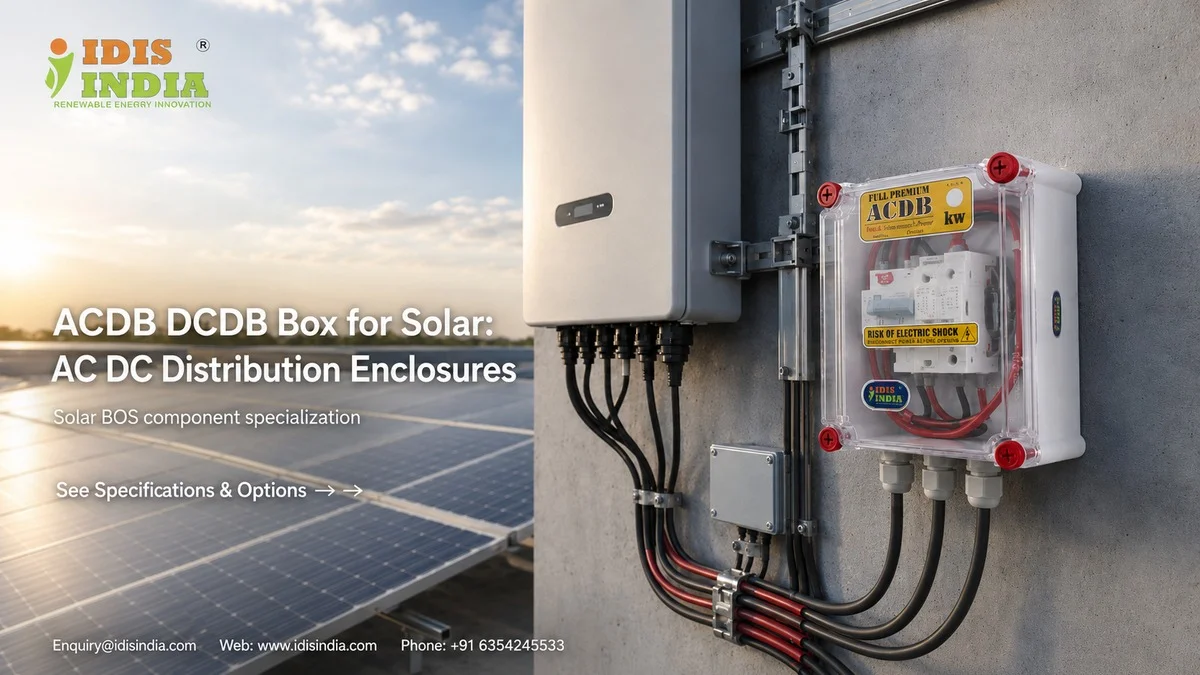
Photovoltaic systems require dependable safety equipment for AC and DC circuits. The ACDB and DCDB boxes are an essential part of photovoltaic system designs. Distribution enclosures are protective devices that house monitoring equipment, overcurrent protection, and disconnect switches, allowing for the safe operation of solar photovoltaic systems. However, selecting the proper distribution enclosure requires more than simply considering the size of the enclosure; you must also consider items such as UV resistance, weatherproofing, and thermal management. IDIS India produces highly-specialized solar distribution boxes for demanding outdoor photovoltaic installations.
ACDB Overcurrent Protection Sizing
When designing your AC Distribution Control Box, it is essential to select an appropriately sized enclosure based on inverter output and grid interconnection needs. For typical home use, a smaller size of enclosure will usually suffice, approximately 300x200x150mm. On the other hand, commercial installations will require, typically, larger boxes ranging between 500x400x250mm, etc., depending on the total number of required circuits. The most important factor in designing the ACDB is matching the breakers used with a sufficient amount of space to dissipate the heat generated during normal operation— AC breakers generate a significant amount of heat as they operate, and if the unit has a sealed enclosure, the heat will be trapped inside and accumulate within the enclosure.
The I-closure Solar ACDB is constructed of U.V. stabilized polycarbonate, which has a very high thermal degradation temperature (up to 85°C). Designing to provide adequate space within an ACDB can become very challenging once you include surge protection devices in the ACDB’s design. Your ACDB should have mounting surfaces provided for SPDs, proper routing spaces for conductors, and sufficient clearance for servicing or maintenance. Additionally, don’t forget about the proper types of cable entry fittings for your particular wire sizes—most of our clients use M20 and M25 cable glands in their designs.
Heat Management in ACDB Design
Heating up a breaker may cause an undersized enclosure to trip, causing nuisance trips. This why thermal planning is important. The IDIS India ACDB enclosures can include optional vents to allow for convective cooling, but still maintain their IP65 or IP67 rating. White and RAL 7035 grey colours reflect the solar heat and dark colour enclosures also absorb more radiant energy, compounding the problem of heating inside an enclosure. Therefore, choosing a colour is more than an aesthetic choice; it relates to thermal management.
DCDB String Combiner Integration
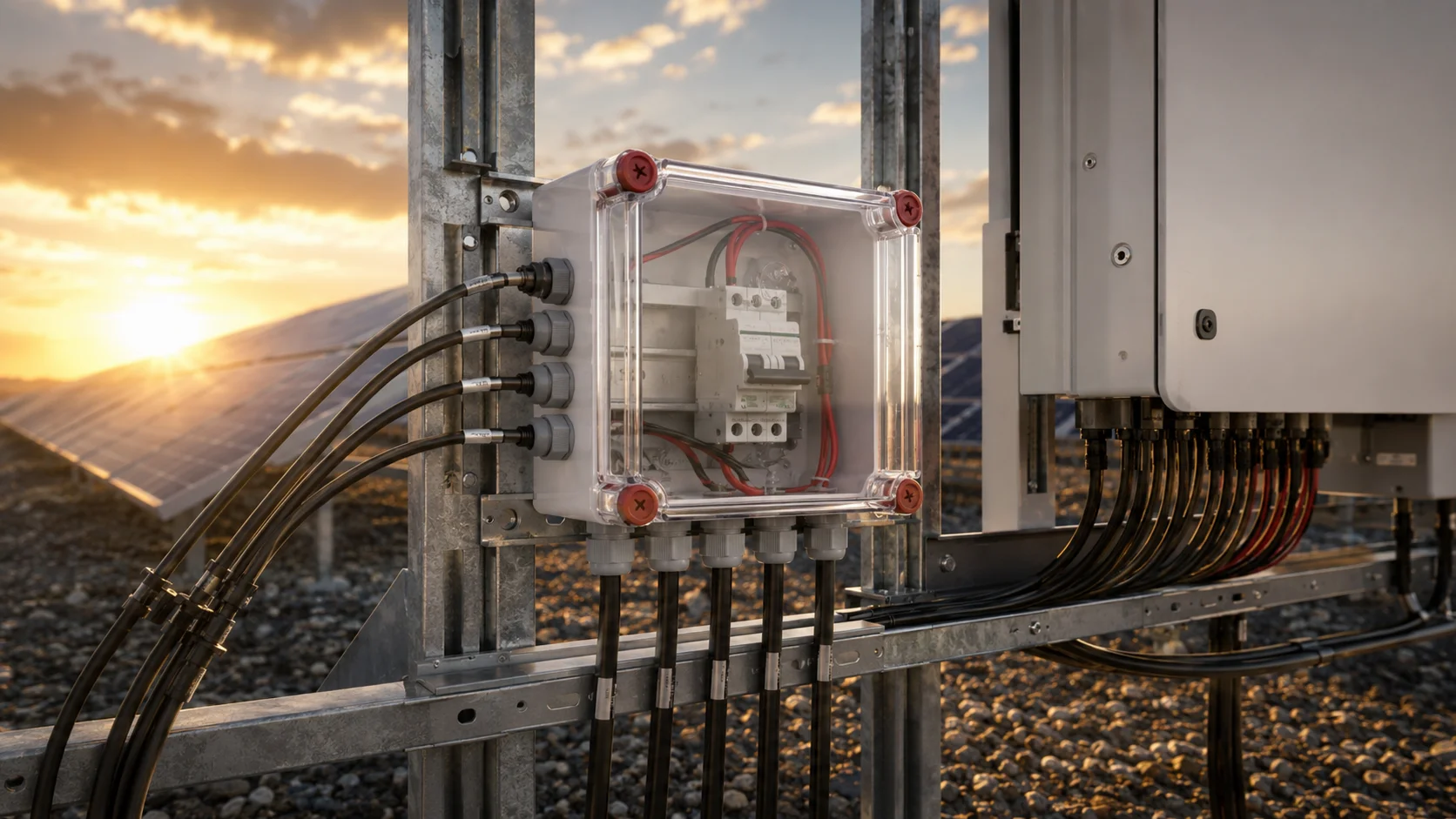
DC Distribution Control Boxes usually are used as strings combiners in a solar PV system. A number of strings of DC electricity (from the solar panels) are coming from multiple strings into a single DC bus that connects to your inverter. But the special features of the DC electrical system have special safety requirements that will affect the design of your enclosure. Depending on your DC manufacturer’s specifications for string fuses, they will include the appropriate mounting and will also need to take into account the necessary arc fault clearance. According to National Electrical Code (NEC), all DC systems will require a means of quick shutting down. Therefore, when determining the appropriate enclosure for a DCDB, it will contain adequate room for the disconnect switch or power optimizers. Designed to meet NEC requirements, I-closure DCDB enclosures come completed with pre-configured cutouts for DC isolation that accept standard disconnect switches. DC electrical systems will require that polarity identification is clearly marked. The enclosure must have a sufficient marking area (with labels) for any positive, negative and/or ground conductors. DC electricity circuits that have opposite polarity must be housed in separate compartments/barriers to prevent the accidental touching of the two circuits.
String Combiner Wiring Methods
MC4 Connectors need to enter your DCDB correctly from your Solar Panels. Most systems use PG Cable Glands (IP Rating – IP68) designed for habitat burial or wet environments, these cable glands have to maintain the overall IP Rating of the enclosure while providing Strain Relief of the Solar Cables. The size of the Internal Bus Bar is going to be determined by the current flowing through the strings and the number of total strings combined. The Copper Bus Bar will carry higher current densities than an Aluminium Bus Bar (but an Aluminium Bus Bar has a lower cost). The Enclosure will need sufficient Mounting Holes for the Bus Bar System you choose.
Solar DC Disconnect Requirements
The National Electric Code (NEC) requires that both AC and DC circuits have accessible disconnect means. The DCDB needs to have a means to disconnect that utility workers can access outside of the enclosure. This means that a rotary disconnect switch with an external handle must usually be installed. Disconnect switches create heat while they are switching. Arc suppression chambers need to have enough clearance and ventilation. The DCDB enclosures are designed by IDIS India to have separate compartments for disconnect switches to keep the heat generated while switching away from your monitoring equipment. Disconnect sizing depends on the voltage and current rating of your system; for example, 600 volts DC will require different clearances than 1000 volts DC. In addition, depending upon the specifications of the panels being used in conjunction with your system as well as the weather conditions at the installation site, the string currents will vary considerably.
Rapid Shutdown Compliance
There have been code changes lately regarding the need for solar PV systems to have a rapid disconnect/shutdown. You may need power electronics equipment in your DC distribution board (DCDB) to remotely de-energize DC circuits. These module level power electronics (MLPEs) create new requirements for the design of string combiners. Separate routing of communication wiring is necessary for rapid shutdown devices from power conductors. Your enclosure must have dedicated space for control circuits that do not interfere with the power distribution components.
AC Distribution Breaker Layouts
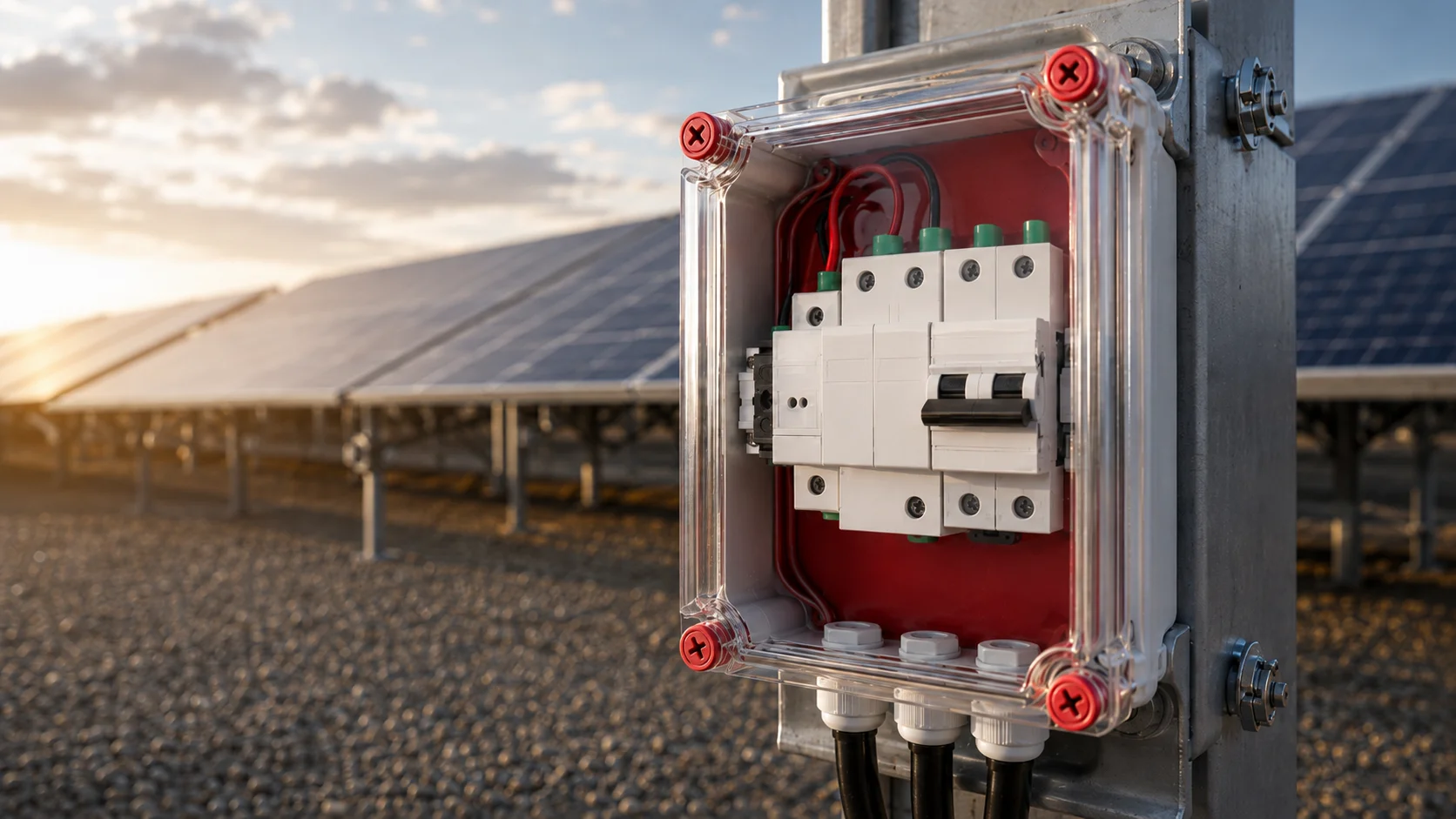
ACDB units use standard DIN rail to install breakers in the enclosure. It is important to leave adequate distance between the devices to ensure proper airflow for heat dissipation and access for service. When breakers are installed too closely to one another, they will create hot spots that can lead to early failures in the breakers. The way in which the breakers are mounted will affect how wires are routed within the enclosure. The main breaker(s) will use large conductors requiring a larger bend radius to route properly. Branch breakers use smaller conductors and should be routed in an organized manner to help prevent damage from servicing the circuit conductors. Ground fault circuit interrupters (GFCI) are becoming common in the solar AC circuit and take up more space than standard breakers and may require special mounting considerations. All designs for I-closure ACDB will accommodate various types of breakers without compromising protection ratings.
Neutral and Ground Bar Sizing
In many instances, solar projects require oversized conductors for the neutral and/or grounding conductor- your inventrory of ACDB (or AC distribution panels) will normally include terminal blocks or busbars to make electrical connections with these larger conductors; plenty of torque value required for termination hardware so as not to loosen; if your system is outdoors non-corrosive fasteners (e.g., Stainless Steel) will provide much longer “service lives”. Grounding electrode connections will require specially designed (for compression) lugs and/or fittings also; since they are responsible for passing large amounts of “fault current” during ground faults, they too must provide sufficient mechanical and corrosion resistance in their designs.
PV System Grounding Configurations
Grounding requirements for solar equipment vary by the type of installation used as well as by the local building code. Ground signals must be sent back to the DC Disconnect Box (DCDB) from the racking system for all types of rooftop-mounted solar systems. When it comes to ground signals for ground-mounted solar systems, they will often require one or more additional grounding electrodes. All metal enclosures should utilize bonding jumpers to create an electrical path or point of electrical continuity throughout the enclosures. Grounding of AC Disconnect Box (ACDB) and DCDB enclosures should require one or more internal bonding screws that must connect to the equipment’s overall grounding system. Use stainless steel bonding screws for outdoor applications, as they will help prevent galvanic corrosion. The manner in which direct current (DC) systems are grounded will vary based on the type of inverter being used; however, both transformerless inverters ground differently than transformer-isolated inverters. Therefore, the design of your DCDB should also provide flexibility to accommodate the different grounding methods needed for transformerless versus transformer-isolated inverters.
Lightning Protection Integration
Properly mounting and connecting Surge Protection Devices (SPDs) is necessary in all types of distribution panels for both AC and DC power. The SPDs can have multiple failure modes, including the potential for fire and/or explosion, so your enclosure must provide sufficient containment and ventilation. IDIS India incorporates the mounting rails for the SPDs to provide maximum surge current flow through the circuits connecting the SPDs. Lightning protection also plays an important role in cable routing inside the enclosure. Sharp bends in the conductors and long running parallel with each other create increased surge impedance for the conductors. Your internal enclosure layout should try to reduce the conductor length where possible and also minimize any unnecessary bending of the conductor when carrying surge current.
DCDB Fuse Holder Specifications
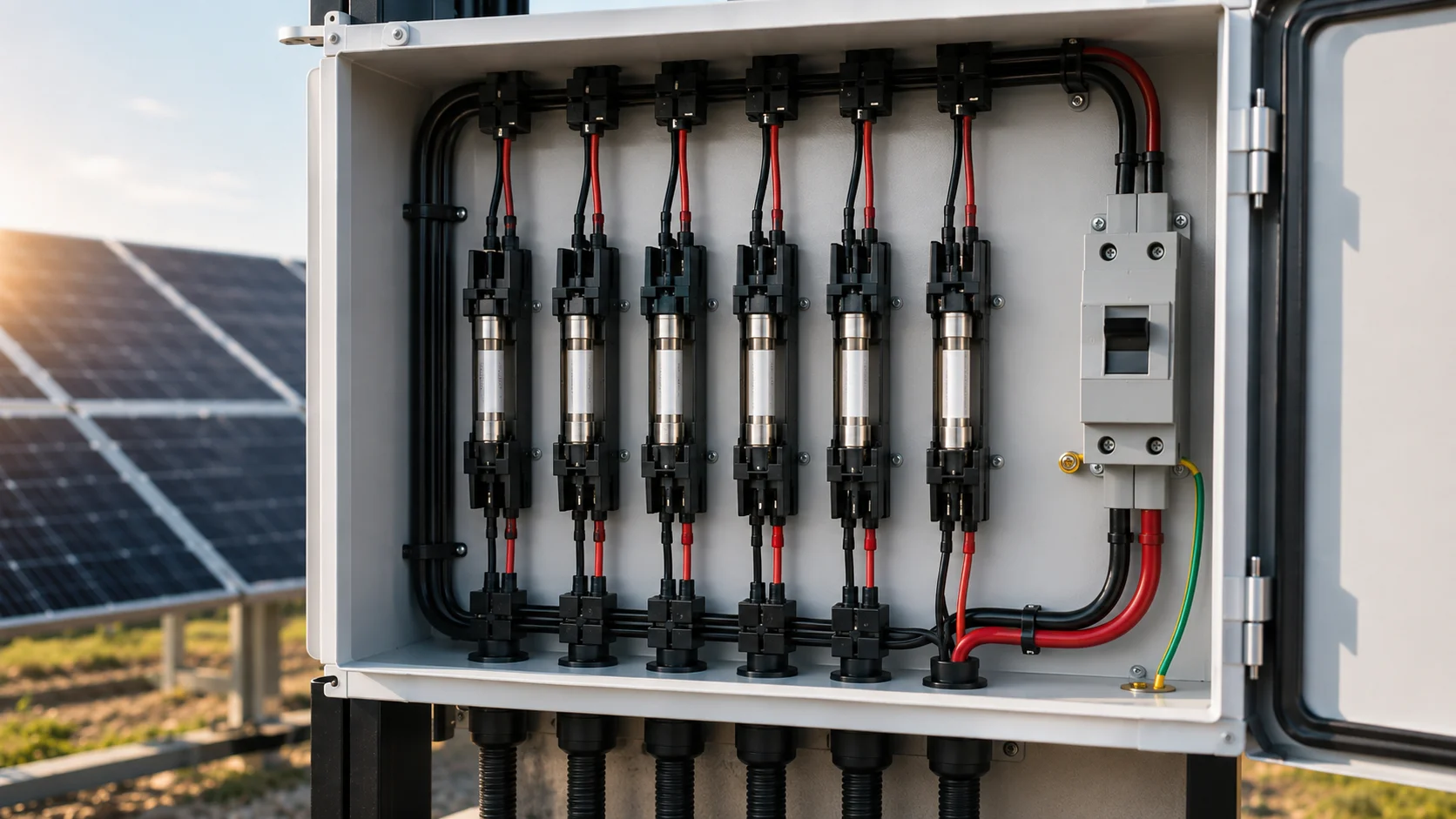
Fuse protection against reverse current flow and provide each string with proper overcurrent protection. The choice of fuse holders impacts the procedure and accessibility to maintain each string in the event of a blown fuse. Touch safe fuse holders ensure that personnel will not come in contact with live wire (and possibly electricity) while changing a fuse. The fuse you select must be sized appropriately to match the available short-circuit current from the string to the allowable current rating of normal operation. Undersized fuses will experience nuisance-opening when the irradiance is at its highest. Oversized fuses fail to protect against fault conditions. In order for your DCDB to have adequate access to replace each blown fuse, you will need to allow plenty of space around each fuse holder. Additionally, you will require an adequate means of identifying the ratings and strings associated with the fuse. I-closure DCDB enclosures utilize an organized layout for fuse holders and include built-in space for permanent identification of each fuse holder.
Arc Fault Circuit Interrupter Integration
Many jurisdictions now require the installation of arc fault detection systems. The use of AFCI devices can require specific mounting conditions, which could lead to differences in the internal layout for your DCDB. In addition, AFCI devices generate heat as part of their normal operation and could increase your thermal management requirements. Depending on the design of your combiner box, AFCIs may be prone to nuisance tripping. Proper routing and shielding of conductors can help reduce false detection of arcs. Your enclosure should allow for proper installation and operation of AFCIs.
Grid-Tie Inverter Connection Methods
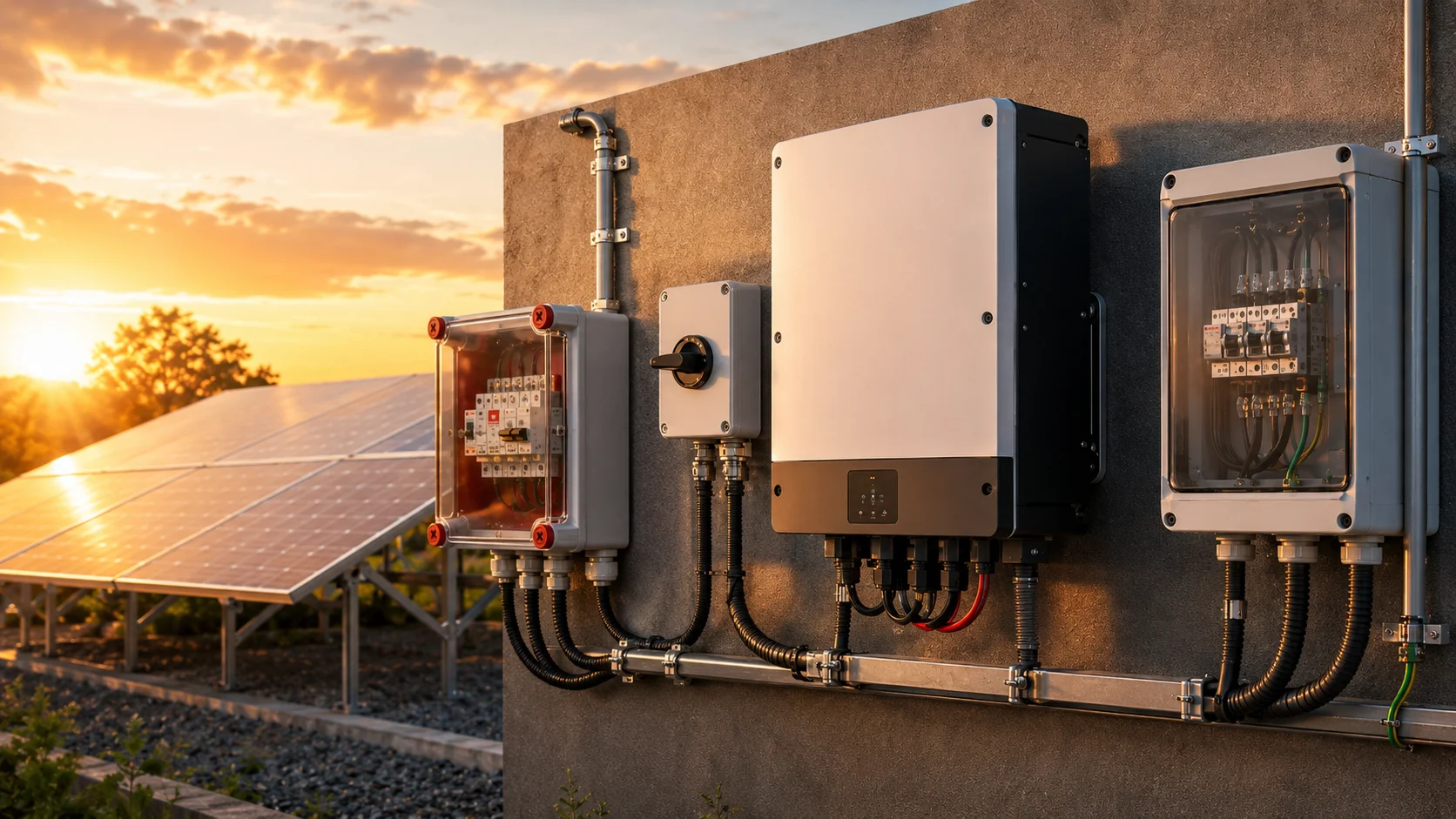
Your system’s reliability/maintenance will be influenced by the connection type of both the ACDB/DCDB and the inverter, as well as where the wiring/connections were made. Using flexible conduit allows the inverter to be replaced without having to rewire the distribution panel. However, flexible conduit also requires adequate strain relief and weatherproofing. Depending on the installation type, the inverter could be located in an entirely different area than when connected to string inverters (which would generally be mounted close to the solar array) by using central inverters (which would usually be packaged separately). Thus, mounting method for the distribution enclosure should take into consideration both the inverter location and requirements for connecting the distributor/modalities (Enclosures) will be located close to the inverters DC Disconnect switch or remoted from them for ease of use and safety. Therefore, a DC Disconnect switch located between the DCDB & the inverter provides a safe way to perform maintenance work. Additionally, you will also need weatherproofing and easy operation of your DC Disconnect switch. IDIS India offers enclosure combination design systems that provide integrated functions for DCDB enclures/disconnect switches in a single weatherproof enclosure. Need some assistance in selecting the best ACDB DCDB solution for your solar project? Contact IDIS India for application-specific recommendations & footprints as well as specifications – up-to-date. If you’re looking for specific recommendations for optimizing your distribution panel design for code compliance & reliability, you may want to consider using representatives from our solar enclosure group to assist in your designs.
Need Help Choosing the Right Enclosure? Get in Touch!