
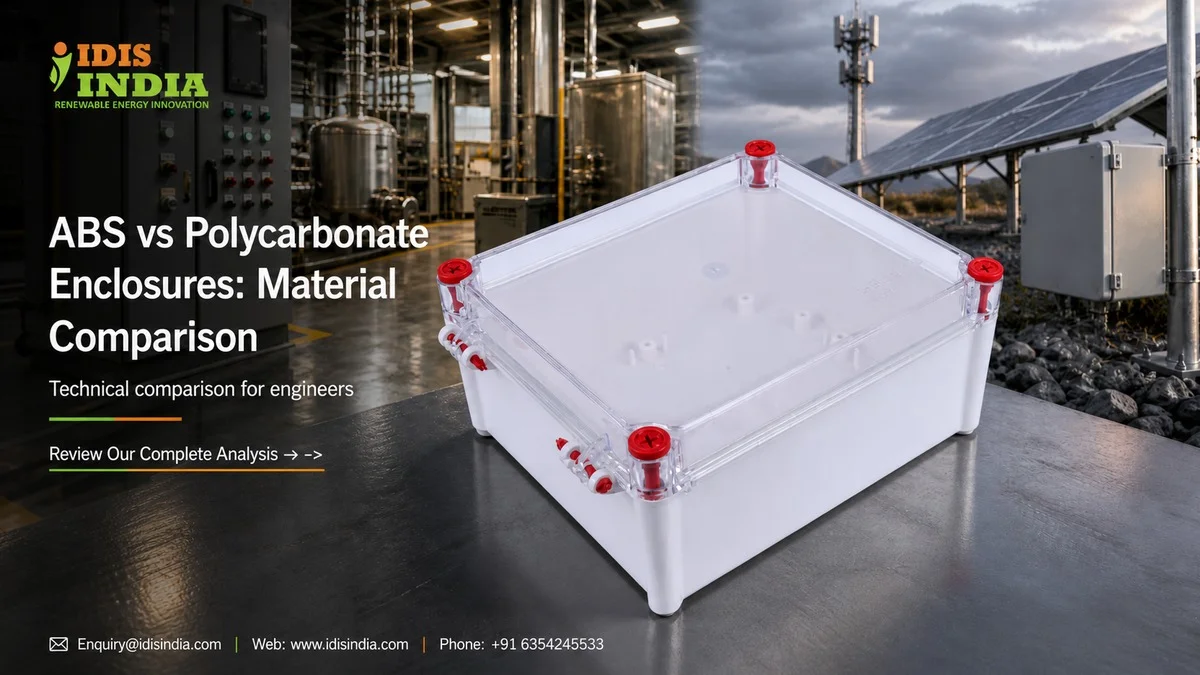
The decision between choosing ABS or polycarbonate enclosures is critical to the success or failure of your design. All types of enclosures made from either material have advantages, but it may be difficult to determine which will work best for your individual application. IDIS India is a manufacturer of both ABS and polycarbonate enclosures with both IP65 and IP67 ratings. Having worked with over 1200 customers, we know how to evaluate whether or when each material is suitable for a specific application. The following comparison will provide you with the information needed to make the appropriate choice for the project you are currently working on.
Quick Comparison: ABS vs Polycarbonate
| Property | ABS Enclosures | Polycarbonate Enclosures |
|---|---|---|
| Temperature Range | -40°C to +85°C (typical) | -40°C to +130°C (typical) |
| Impact Strength | Good | Excellent |
| UV Resistance | Requires UV stabilizers | Naturally UV resistant |
| Chemical Resistance | Excellent | Good |
| Cost | Lower | Higher |
| Transparency Options | Opaque only | Clear and opaque |
| Flame Rating | UL94 HB to V-0 | UL94 V-0 to V-2 |
ABS Enclosures: The Versatile Choice
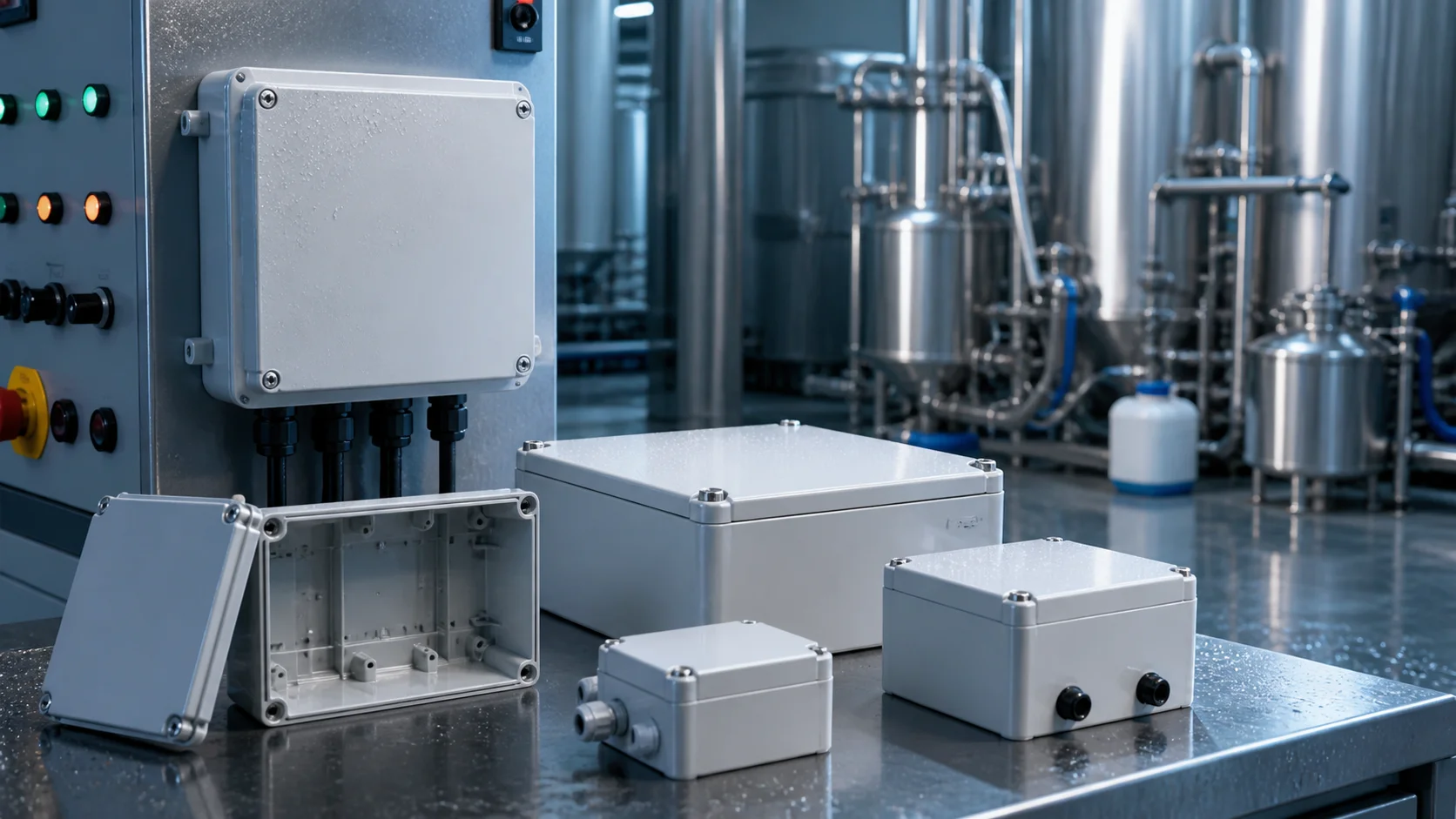
For decades, ABS (Acrylonitrile Butadiene Styrene) has been used to manufacture enclosures, due in part to its wide-ranging applications.
Key Properties of ABS
The chemical resistance of ABS levels out tremendously. The most common oils, acids, and cleaning solvent (or chemicals) will not cause it to become brittle due to the chemical exposure. Therefore, they are suitable for use in any industrial environment where chemical exposure occurs.
The material of ABS processes exceptionally well. You rarely have to worry about high or low tolerances as Sharp Corners Fine Detail And Consistent Wall Thickness Are Made To Exacting Standards For Material.
In addition, ABS maintains a relatively high-temperature stability throughout its operating range. While ABS doesn’t handle the extreme ranges of temperature as well as Polycarbonate, it works exceptionally well across all standard applications.
Advantages of ABS Enclosures
Low-cost option for a lot of applications Superior chemical resistance (to nearly everything) Easily machined and changed Good dimensional stability Available in a variety of colours Will recycle back into a raw material
Limitations of ABS Enclosures
Compared to polycarbonate, it has both a lower heat tolerance and a requirement for UV stabilizers when used outdoors. It does not inherently resist fire (additives needed) and has a lower impact resistance than polycarbonate. There are situations where it may suffer from cracking due to tension.
Best Applications for ABS
Controlled environments are ideal for the use of ABS enclosures. Applications such as indoor control panels, electronic housings, and junction boxes typically do not have extreme temperatures; therefore, they can be made from ABS material. ABS Enclosures are widely used in chemical processing plants because they can withstand harsh chemicals that may damage other plastic products.
Polycarbonate Enclosures: The Heavy-Duty Option
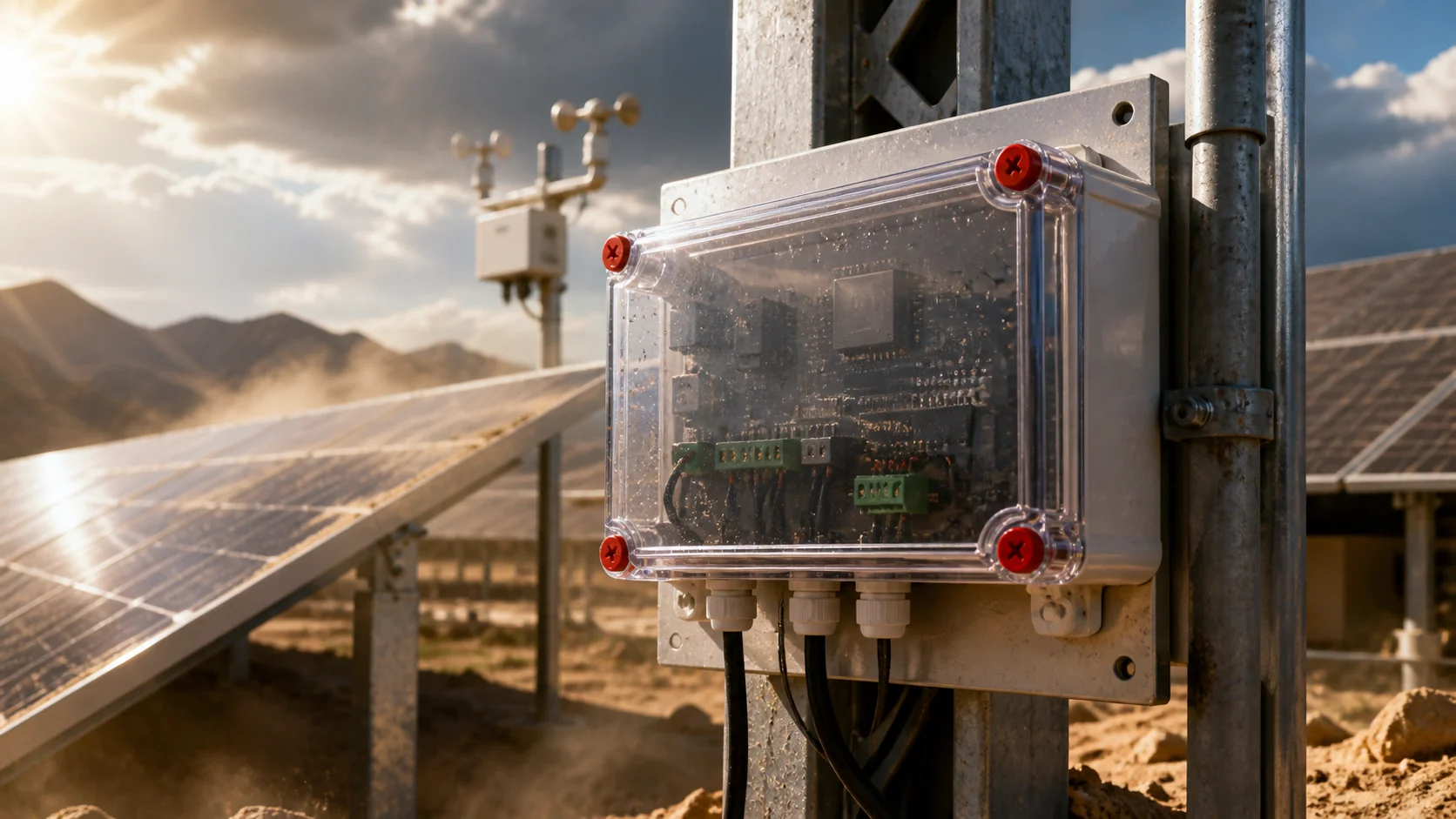
Polycarbonate delivers the highest level of performance when needed. Engineering polymers like polycarbonate can withstand many extreme conditions where other products would fail.
Key Properties of Polycarbonate
Polycarbonate is best known for its impact strength, which allows it to withstand a lot of mechanical stress without breaking apart. Whether it’s dropped, vibrated or subjected to thermal shock, polycarbonate will protect your electronics. The ability of polycarbonate to withstand temperature extremes is excellent too – quality polycarbonate enclosures can operate in temperatures up to 130 degrees C without any issues. UV stability is also a natural attribute of polycarbonate; unlike ABS, which needs the addition of UV stabilizers to be used outdoors; quality polycarbonate will maintain its capabilities when exposed to direct sunlight for years.
Advantages of Polycarbonate Enclosures
Incredibly strong impact resistance; A very high resistance to heat; Very high level of natural UV resistance; Available in both clear and opaque forms; Superior dimensional stability/low expansion characteristics; Self extinguishing properties (flame-resistant); Great electrical insulating properties.
Limitations of Polycarbonate Enclosures
Higher price of material compared to ABS Vulnerable to specific chemicals Subject to stress cracking when exposed to some solvents More challenging to recycle Needs to be handled properly while machining.
Best Applications for Polycarbonate
Polycarbonate is ideal for outdoor applications. Parts that benefit from UV protection include: Solar Panel junction boxes, outdoor lighting controls, and weather monitoring systems. Polycarbonate is also suitable for very high temperature applications. Examples of items that generate heat include: motor control enclosures, transformer housings, and industrial ovens (which produce heat at a much higher temperature than ABS is able to withstand).
Key Differences That Matter
Temperature Performance
This is an important consideration, though, as the operating temperatures of ABS are approximately -40°C to +85°C. In contrast, polycarbonate can operate up to approximately +130°C. Although these are good generalizations, another important variable to consider is thermal cycling. Polycarbonate maintains its properties better than ABS during repeated thermal cycles of heating and cooling.
Environmental Resistance
UV light rapidly breaks down these materials. ABS requires UV stabilizers and continues to diminish in outdoor environments over time, whereas Polycarbonate retains its characteristics without help from outdoor factors such as UV. Regarding chemical durability; ABS is very resistant to nearly all industrial chemicals and Polycarbonate may develop stress cracking when exposed to certain organic solvents.
Mechanical Properties
If you need strength against impact, swing or mechanical stress then polycarbonate is your best material. With polycarbonate there is no doubt that this is the best choice for you because of its superior resistance to impact when compared to ABS. Another advantage of ABS is that machinery, custom mounting holes and field modifications are all done much easier than with a polycarbonate enclosure.
Cost Considerations
Material costs for ABS are often lower than polycarbonate. Material cost differences can be significant depending on size and quantity of the project. However, determine the total cost of ownership (life-cycle) of each material. Is the enclosure likely to be replaced sooner using ABS? How often will the application require the addition of protective coatings? In some cases, using polycarbonate material will save you money over the long-term.
PC/ABS Combination: The Middle Ground
Not certain whether to go with ABS or polycarbonate? Check out I-closures’ range of enclosures made from a combination of PC/ABS polymer. The combination of these two materials creates a chemical resistance characteristic of ABS along with increased impact strength and temperature resistance. As an alternative to pure polycarbonate, the PC/ABS polymer does not provide the same toughness as polycarbonate but costs significantly less while providing all the added benefits of increased strength and improved performance over traditional ABS. The PC/ABS polymer will function well for your applications that require moderate improvements compared to ABS but do not warrant the expense of pure polycarbonate.
How to Choose: Decision Framework
Choose ABS When:
Maximum sustained temperatures below 80°C Chemical resistance is an important consideration Budget is of utmost concern Indoor installation, no exposure to U.V. light Fabrication and ability to be modified easily Standard mechanical performance characteristics required
Choose Polycarbonate When:
Over 85 degrees C. Can be installed outside and will be subjected to severe UV conditions; Must provide high impact resistance; Must provide 100% transparency; Must be able to withstand extreme environmental conditions; Must have the ability to withstand long periods of time.
Consider PC/ABS When:
You will need a material that will give you better performance than pure polycarbonate and that may exceed your budget, allowing moderate temperature increases and subjecting the product to some degree of UV exposure.
Real-World Application Examples
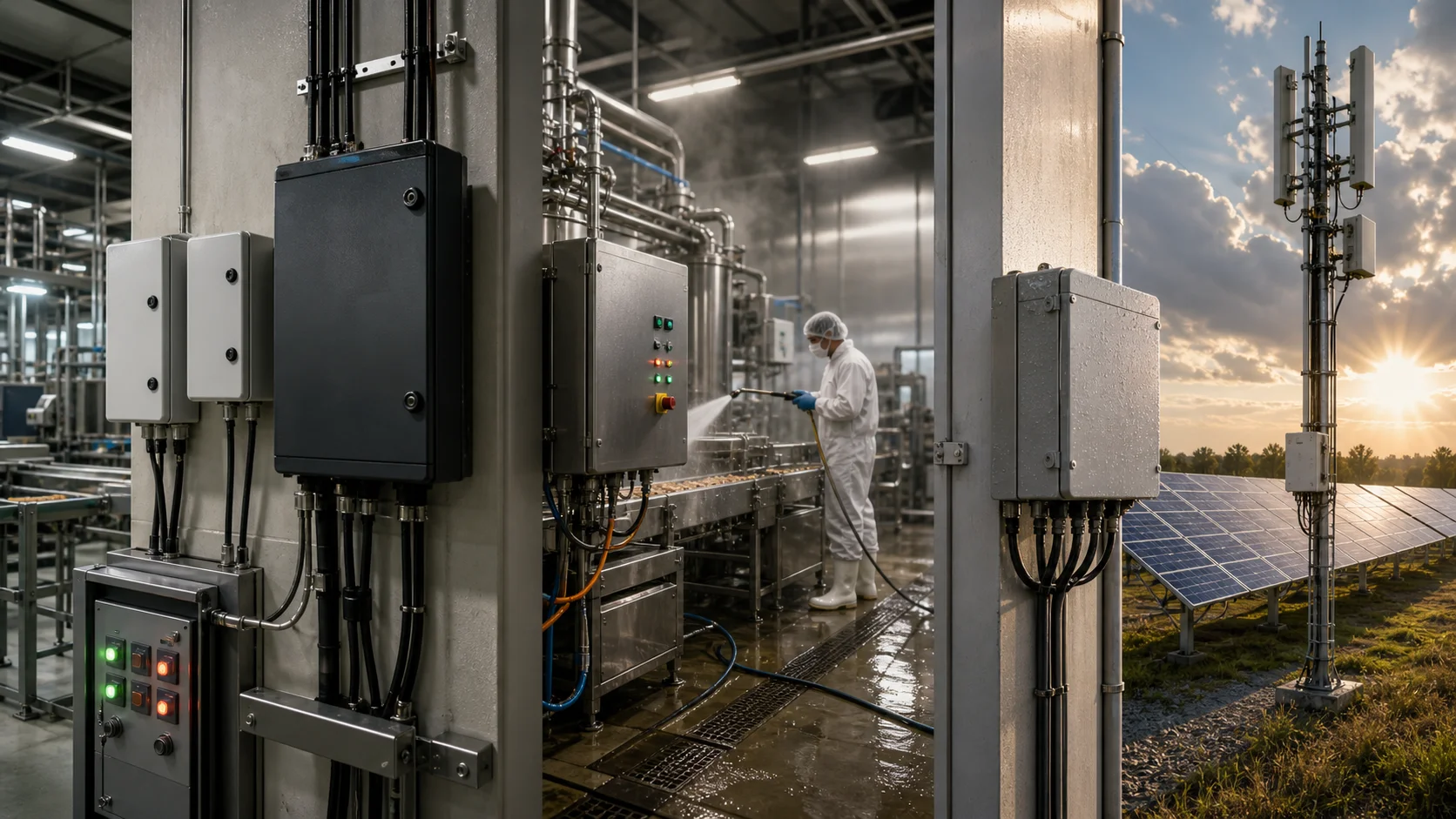
Industrial Control Panels
ABS enclosures are the standard and preferred option for most indoor control panels because of their controlled setting, moderate temperature, and cost sensitivity. However, when it comes to high power control panels producing high levels of heat, polycarbonate is the preferred enclosure choice.
Outdoor Junction Boxes
UV radiation and temperature cycling require polycarbonate because of its excellent characteristics. Polycarbonate is used as a material for solar installation, outdoor lighting systems, and telecommunications equipment.
Food Processing Equipment
In general, ABS is preferred for chemical washdowns due to its chemical resistance; however, if high temperature cleaning methods are used, a polycarbonate may be required.
Making Your Final Decision
Selecting an enclosure made of ABS vs. polycarbonate depends on your unique requirements. Use ABS if it meets your needs without putting extra cost into engineering. Do not skimp on safety or reliability. When considering the worst-case scenario for environmental conditions, ask yourself: What is the operating temperature? Will there be exposure to sunlight? Which chemicals will come into contact with the enclosure? How important is impact resistance? What is the cost for a piece to fail vs the cost to upgrade to a new one? Over 1200 customers have consulted with IDIS India to help them make this decision. Our engineers can analyze your needs and recommend the best material based on those requirements as well. Both the I-closure’s ABS and Polycarbonate enclosures meet the IP65 AND IP67 ratings, along with full ISO9001, CE, and RoHS certifications. Please contact us for detailed specifications; we are more than willing to provide assistance regarding your specific application needs. Using the proper material for an enclosure will secure your investment and create a reliable enclosure that will provide many years of seamless operation.
Need Help Choosing the Right Enclosure? Get in Touch!