
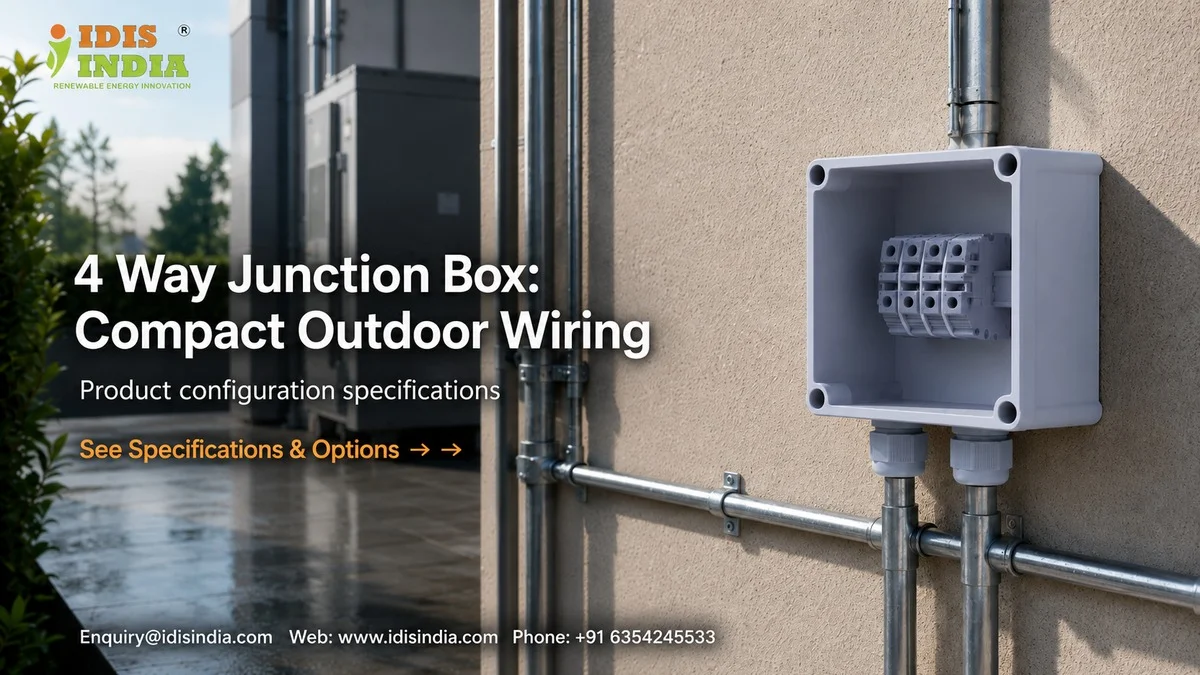
Are you needing to separate electrical circuits in four directions? A four way junction box can give you the flexibility you need. Compact and easy-to-use enclosures, a 4 way junction box has many cable entries for various installations and keeps the weather out when used outdoors. At IDIS India, our I-closure 4-way junction boxes are designed specifically for contractors requiring dependable solutions for their multi-directional wiring needs. These boxes allow you to maintain compliance with appropriate IP65 and IP67 ratings, so that your installation will work on the exterior of buildings and other types of structures where traditional junction boxes will not.
4-Port Entry Configuration Planning
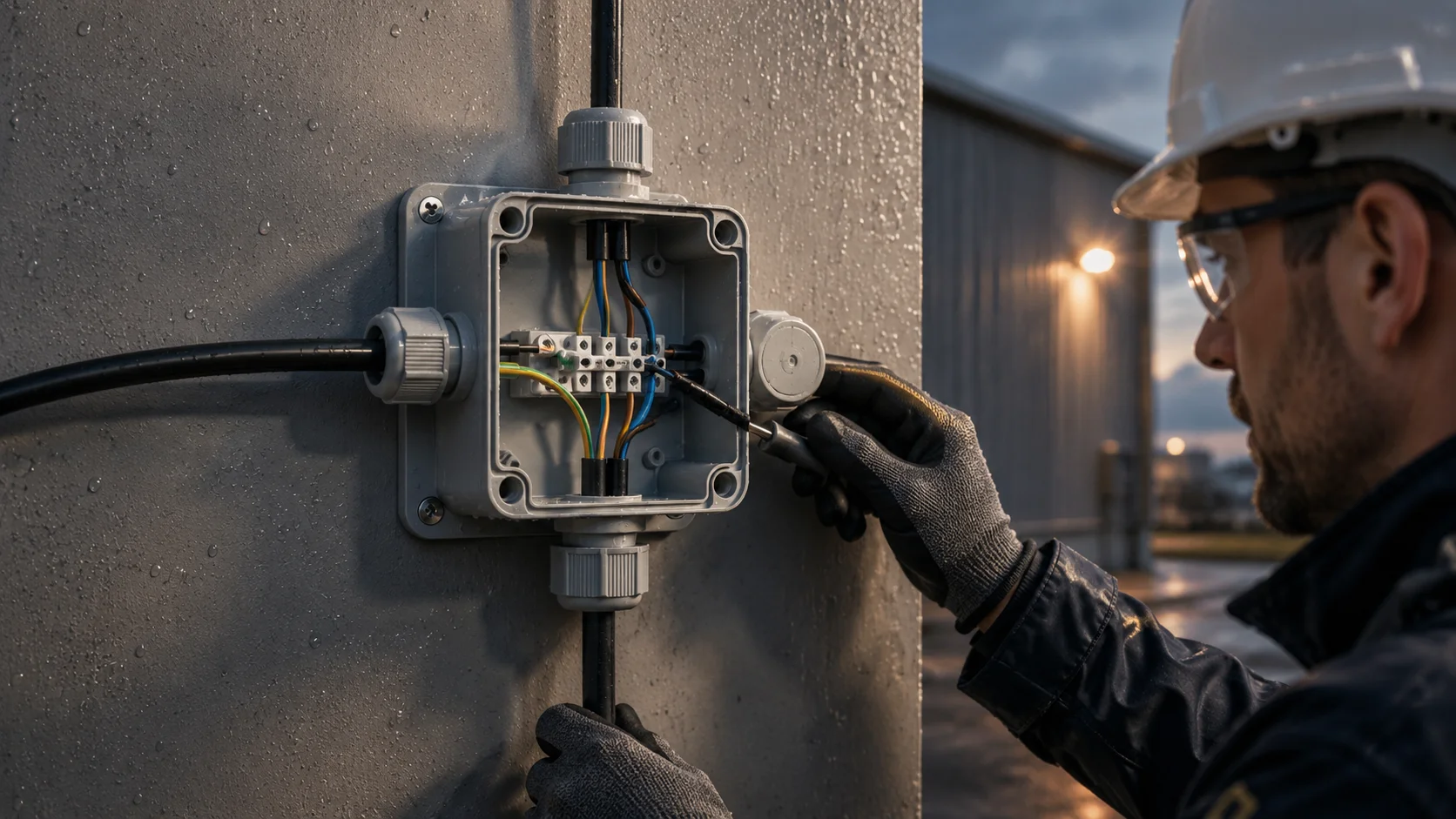
Having a good plan for the installation of your 4-port setup is very important than most people realize. All ports must have the right size and location of cable glands installed in order to prevent water from entering your junction box(s). Our range of 145x145x75mm junction boxes come with four pre-set entry points ready for you to install your cables.
However, you do not have to use all four entry points for your cable glands as the unused spaces will require blanking plugs to ensure that your IP rating remains in intact.
Another thing to keep in mind when determining where to install your junction box is the ‘bend radius’ of the cables. Placing cables in tight bend radii can cause stress and eventually failure of the cable.
There is also a compact square design allowing you options in terms of mounting orientations.
Cable Gland Selection for Four-Way Systems
The cable glands you install determine whether your weatherproof installation will hold up. For your cable specifications, we usually recommend PG or M-thread cables. PG13.5 will work for 6 to 10 mm sized cables PG16 will work with 10 to 14 mm sized cables M20 will work with cables with larger conductor bundles Blanking plugs are available if there are any unused holes in the cable glands.
Quad Circuit Load Distribution
A four-way distribution splits an incoming circuit into several outgoing feeds, resulting in a number of specific electrical design considerations that impact terminal configuration and box size. Each of the four modules (18mm) provides the required space for standard-sized terminals. Depending upon the connection types used, you may accommodate 12 to 16 terminals in your box. Actual terminal capacity will, of course, be dependent upon terminal type and wire size. Load calculations are very important in this case. When distributing high-current circuits, larger terminal sizes and/or greater spacings between terminals may be required. Please ensure that the total load does not exceed the incoming circuit capacity.
Terminal Block Configuration Options
There are a range of terminals to suit different types of installations; the most common types include; single stage for basic through connections, double stage to keep the I/O separate, earth terminals in the case of proper grounding, and neutral distribution blocks when several circuits need to be connected.
Multi-Direction Cable Routing
Routing four-ways can create some very complicated issues when it comes to managing cabling. You can’t simply throw your cables into the box and expect to achieve decent results. You will need to plan your cable entry directions by reviewing the runs of your conduit and the layout of your cable trays. Typically, when using an underground feed, the cable will come into the box from one of the bottom ports. With an overhead feed, it is best to utilize a top or side entry point. The unique design of these boxes allows you to orient them according to the way you route your cables to the box. You could mount the box in a diamond orientation for corner installations, or you may mount the box in a square orientation for wall-mounted installations.
Conduit Connection Methods
Weatherproofing Conduit Connections are just as essentiial to secure connections. For instance: – PVC Conduit Adapters with Rubber Gaskets – Metal Conduits with Locknut Assemblies – Flexible Conduits in Vibration-Prone Areas – Underground Rated Connectors for Buried Applications
Four-Way Splice Access Design
Major disassembly should not be required to access connections during maintenance. The design of the junction boxes was done to allow for technician access from day one and the 145mm width allows sufficient working space for most electrical tools. However, when working in a small area it is very important to plan carefully how terminals and wires will be placed inside the junction box. Circuits should be labelled clearly; four-way junction boxes can create confusion during troubleshooting. Circuit identification should be on both terminals and external cable markings.
Maintenance Access Considerations
When putting in remote alarms/annunciators keep in mind of long-term maintenance: include service loops for wire replacement; all terminals are positioned to allow the multimeter to reach with ease; don’t tighten cover screws too tightly; use removable terminal markers.
Cross-Junction Wiring Methods
A systematic approach is necessary when creating cross-junction wiring in 4-way junction boxes. Wire routing that uses random methods can lead to troubleshooting issues, as well as increased risk of faulty connections. When possible, group circuits that have similar characteristics (for example: lighting circuits and outlets) together. Additionally, when running high voltage and low voltage wiring through the same box, keep them separated from each other. The use of colour coding for wires is extremely important in multi-circuit installations. Stick to standard wiring colour codes, ensuring clear documentation of any deviation from those standards.
Circuit Isolation Techniques
In some installations, having the circuits isolated from each other is beneficial; this may be accomplished with: (1) each circuit having its own terminal strip and circuit; (2) physical barriers separating low-voltage wiring and high-voltage wiring; (3) individual earth connections for each circuit; and (4) a dedicated neutral block for multi-phase systems.
Compact 4-Way Space Optimization
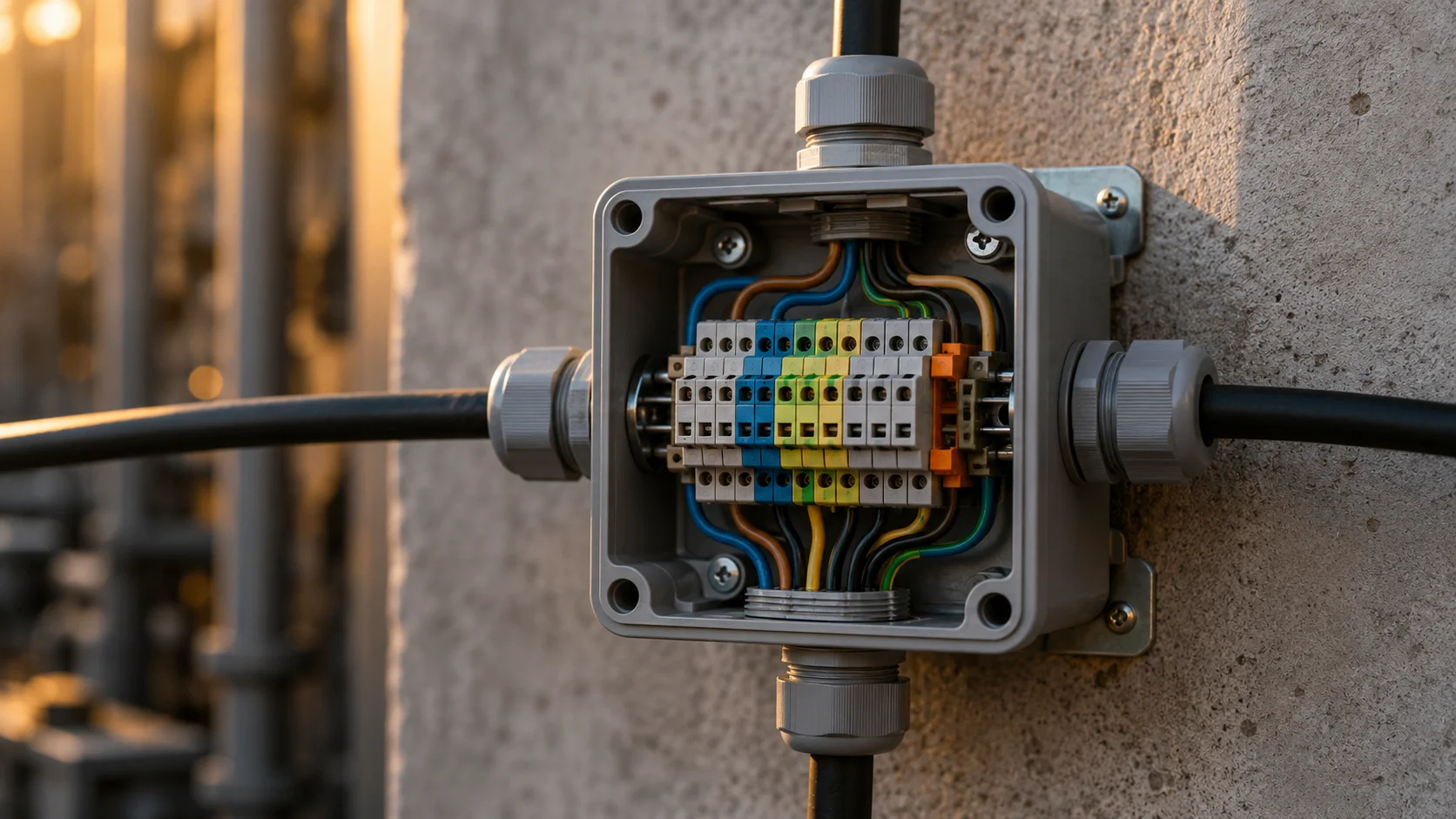
To maximize the limited available space in small enclosures, you need to achieve the best component choices and placement strategies. Every cubic centimetre of space is important in small enclosures. Use terminal blocks that will fit your wire size specifications. Oversized terminal blocks waste valuable enclosure space and provide no useful benefits; consider using modular terminal blocks that can be used together on the same mounting rail, providing you with greater versatility and helping to optimize the available space.
Component Sizing Guidelines
| Wire Gauge (mm²) | Recommended Terminal | Space Required (mm) |
|---|---|---|
| 1.5-2.5 | Standard screw terminal | 6-8 |
| 4-6 | Heavy-duty terminal | 10-12 |
| 10-16 | High-current block | 15-20 |
Technical Specifications
Here are the key specifications for I-closure 4 way junction boxes:
| Parameter | Specification |
|---|---|
| Dimensions (LxWxH) | 145 x 145 x 75mm |
| Module Capacity | 4 modules (18mm each) |
| Entry Points | 4 configurable ports |
| Material Options | ABS, Polycarbonate, PC/ABS |
| IP Rating | IP65, IP67 |
| Operating Temperature | Typically -20°C to +80°C |
| Cable Gland Thread | PG, M-thread, or NPT |
| Mounting | Wall mount or DIN rail |
MOQ and Ordering Information
Typically, the I-closure 4-way junction boxes have minimum order quantities that begin at standard production quantities; A minimum order quantity (MOQ) is defined by material selection, color, and the level of customization desired. For example, standard colors (gray or light gray) tend to have much lower minimum order quantities for production than colors that require custom color matching. The lead time for these products can vary depending on the current production schedule and the details of your order. To get current pricing, MOQ information, and technical specifications, please contact your local IDIS office in India. Our team can provide a full quotation based on your specific application and volume requirements. Have a need for custom modifications or new port arrangements? IDIS will work with contractors or OEMs to develop solutions to fit your application artwork.
Need Help Choosing the Right Enclosure? Get in Touch!