
The agro-industry utilizes many different types of electronic devices which are subjected to some of the most brutal environments on Earth. For example, systems inside equipment must endure everything from dust storms, chemical sprays and temperature changes, all of which could otherwise damage normal equipment housings. I-closure has learned the hard way about what can happen when electronics fail during harvest time; replacing equipment isn’t only a financial decision but also includes expensive crop losses as well as delayed harvest times and customer relationship damage. To help you protect your sensitive electronic equipment, you need to find purpose-built enclosures specifically designed to meet the unique conditions found in the agricultural industry (e.g., combination of moisture, chemicals, high/low temperatures and mechanical stresses).
Chemical Spray Resistance Testing
Farm machinery has to put up with everything from pesticides to fertilizers to cleaning agents on a daily basis. Not every type of plastic enclosure can withstand this type of chemical assault. The typical ABS enclosure will work great indoors, however, if you expose an ABS enclosure to glyphosate based herbicides or ammonia based fertilizers, you will see the enclosure crack from stress in just a couple of months. That is why we use UV stabilized polycarbonate for agricultural applications here at IDIS India. We have a rigorous testing protocol that exposes samples of our enclosures to a range of common agricultural chemicals over time. We test to determine how much structural integrity and clarity can be maintained after prolonged exposure to: 1) Herbicide concentrates at field strength and diluted to field strength; 2) Liquid fertilizer spray drift; 3) Cleaning solvents used on equipment; and 4) Exposure to diesel fuel and hydraulic fluid. Based on our test results, we can safely say that polycarbonate will retain its structural integrity and clarity even after extended exposure to many chemicals. Furthermore, as long as the proper gasket is used with the enclosure to maintain the IP65 or IP67 protection rating throughout the growing season, then those protection ratings remain intact.
Livestock Moisture Protection Requirements
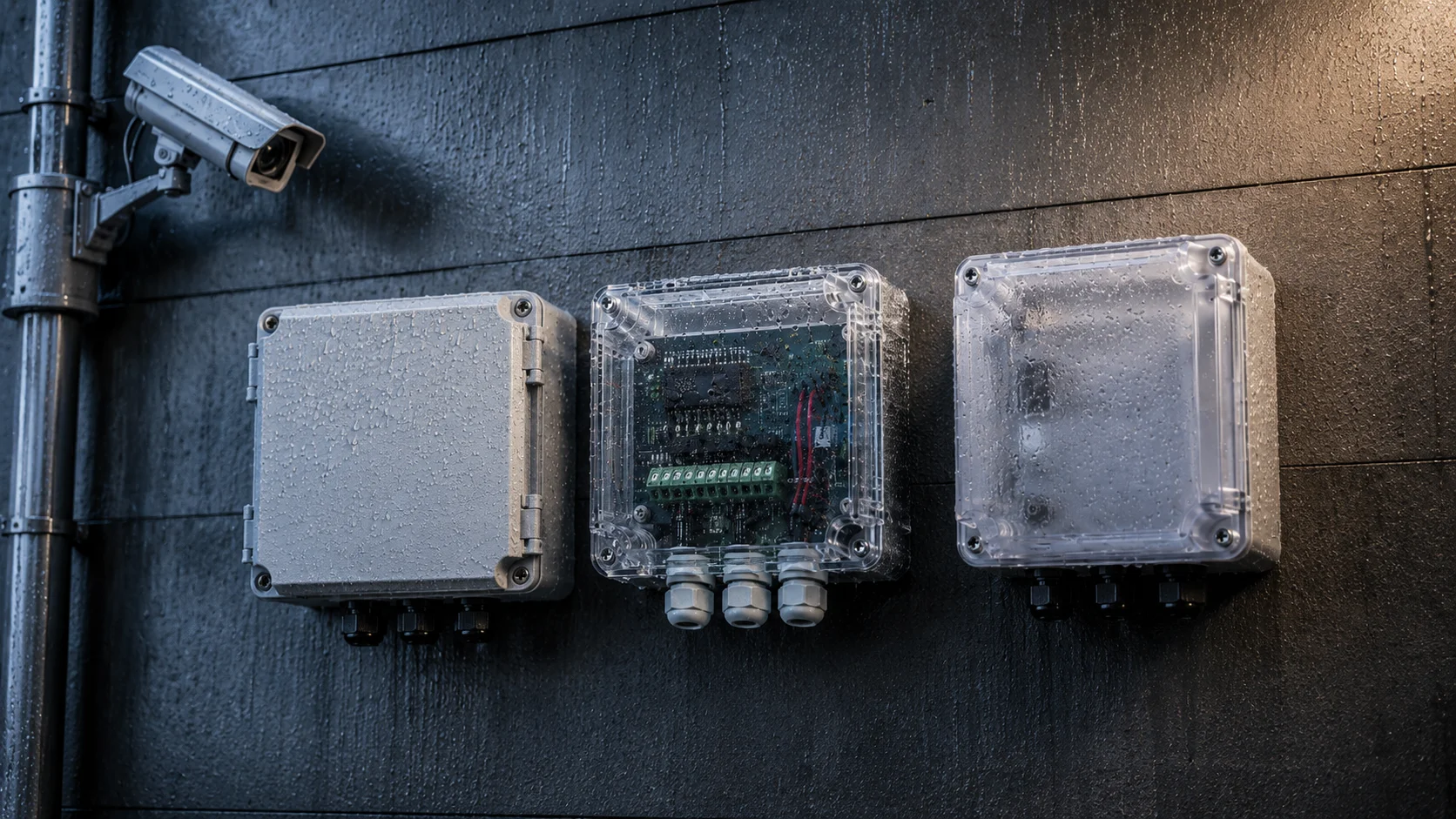
Livestock facilities have their own unique challenges, separate from just protecting their exterior (outdoors). The high humidity level due to respiration of the animals, along with constant exposure to ammonia and ongoing moisture can create a “perfect storm” for some types of electronic components to fail. An example of this would be irrigation control systems in cattle operations. These types of systems see water with pressures up to 60 PSI, temperature fluctuations from freezing nights to summer days of 40 degrees C, and high ammonia concentrations which can corrode the metals in the system within 3 months of installation. Therefore, it is not enough to simply weatherproof your enclosure; you must also include components that provide: Condensation management via proper ventilation design, Gasket materials resistant to ammonia breakdown, Cable entry systems maintaining their seal under pressure washing, and Impact resistance to curious livestock. We manufacture our livestock enclosures with reinforced mounting for added strength and also have anti-tamper features engineered into each unit; after all, the last thing you need is for a curious cow to take out your entire milking system!
Field Vibration Dampening Systems
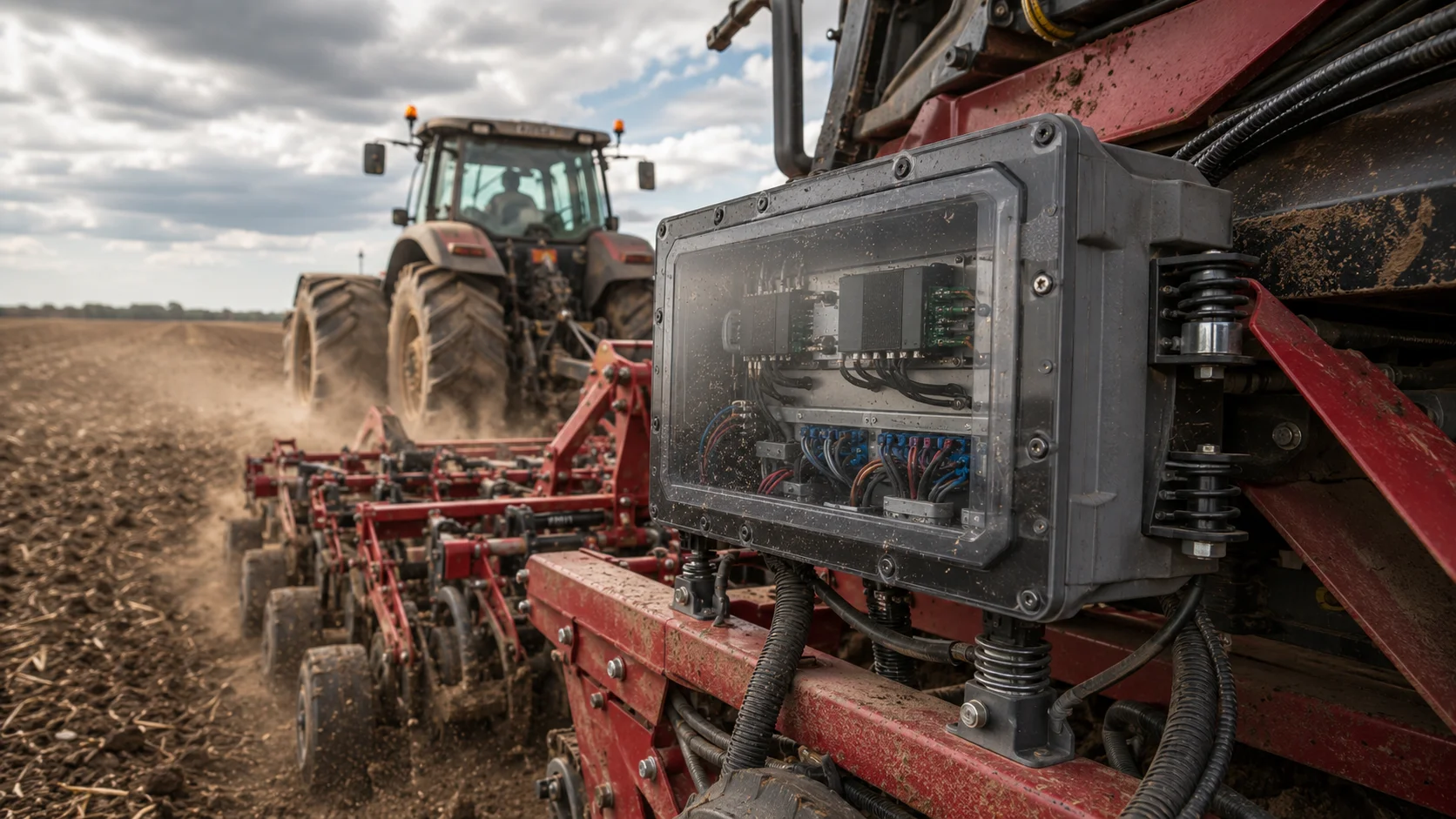
Today’s farming machinery produces huge amounts of vibration. Equipment like seeders, chemical sprayers and combines continuously create mechanical stress in a way that loosens attachment and will cause damage or malfunction to any electronic component attached to the machinery. Here’s where most OEMs fail to capture: The enclosure of a machine itself can mitigate the amount of vibration which is transferred to the electronics. For example, by having a good enclosure design and mounting system layout, you could greatly reduce the overall amount of vibration indicated by electronic components. Our vibration mitigation solutions build upon those principles: Devices with flexible mounting systems to absorb shock; internal positioning of the DIN rails to minimize isolated stress points; efficient cable management systems to eliminate failure due to fatigue; and proper gasket compression to provide a seal while being subjected to vibration. For Mounting Assemblies on tractors, we also typically suggest utilizing shock-absorbing mounting products capable of withstanding an acceleration load of up to 5G providing a secure location for your electronics while performing aggressive/rough field work.
Fertilizer Corrosion Barrier Coatings
Liquid fertilizers can be very damaging to plastic enclosures because the combination of the salts, acids, and high level of moisture creates corrosion problems that regular enclosures cannot deal with. While standard gray enclosures may appear to be fine on the outside, the deterioration of the inside starts right away with the very first time it is exposed to liquid fertilizers. For example, the metal mounting hardware is being corroded; the gaskets are swelling and/or cracking; and the electrical terminals are creating resistance problems. At IDIS India, we eliminate this by using special materials and surface treatments. The key features of our polycarbonate formulations are as follows: Chemical resistance enhancements; UV stabilisers that prevent the surface from chalking due to sunlight exposure; Impact modifiers that give toughness after exposure to chemicals; Flame retardant systems that will not leach out when used in a field environment. In addition, we use stainless steel or special coatings on all of the mounting hardware to resist corrosion from agricultural chemicals. Your enclosure investment should provide you with many growing seasons, rather than failing after the first fertilizer application.
Temperature Swing Expansion Management
Extreme temperature fluctuations occur in agricultural environments. One example would be an enclosure’s seals and mounting points would be exposed to extreme thermal cycling through the course of an agricultural day, from frost at night to heat in the day. For example, the irrigation control boxes used in desert agriculture may drop down to -5C (approximately 23F) at night, but then the equivalent surfaces of these boxes can be heated by the sun’s rays to approximately 70C (158F) at midday. This temperature change is almost 80C (approximately 144F) in a single day! Therefore, it is imperative that your enclosure design allows for the thermal cycling without sacrificing protection. Some of the major design features to consider in your enclosure would be: – Gasketing materials which are capable of remaining elastic over the entire temperature range. – Wall thickness to provide thermal mass and reduce the temperature swing on the inside of the enclosures. – Mounting systems which allow for controlled movement of the enclosure’s thermal expansion. – Calculating the volume of enclosed internal air to ensure the internal volume of the enclosure does not allow for pressure build-up. – Also consider the effects of thermal bridging. If you do not properly isolate any metal components inside the enclosure from the enclosure walls, those metal parts can provide a place for condensation to form inside the enclosure.
Irrigation System Integration Methods
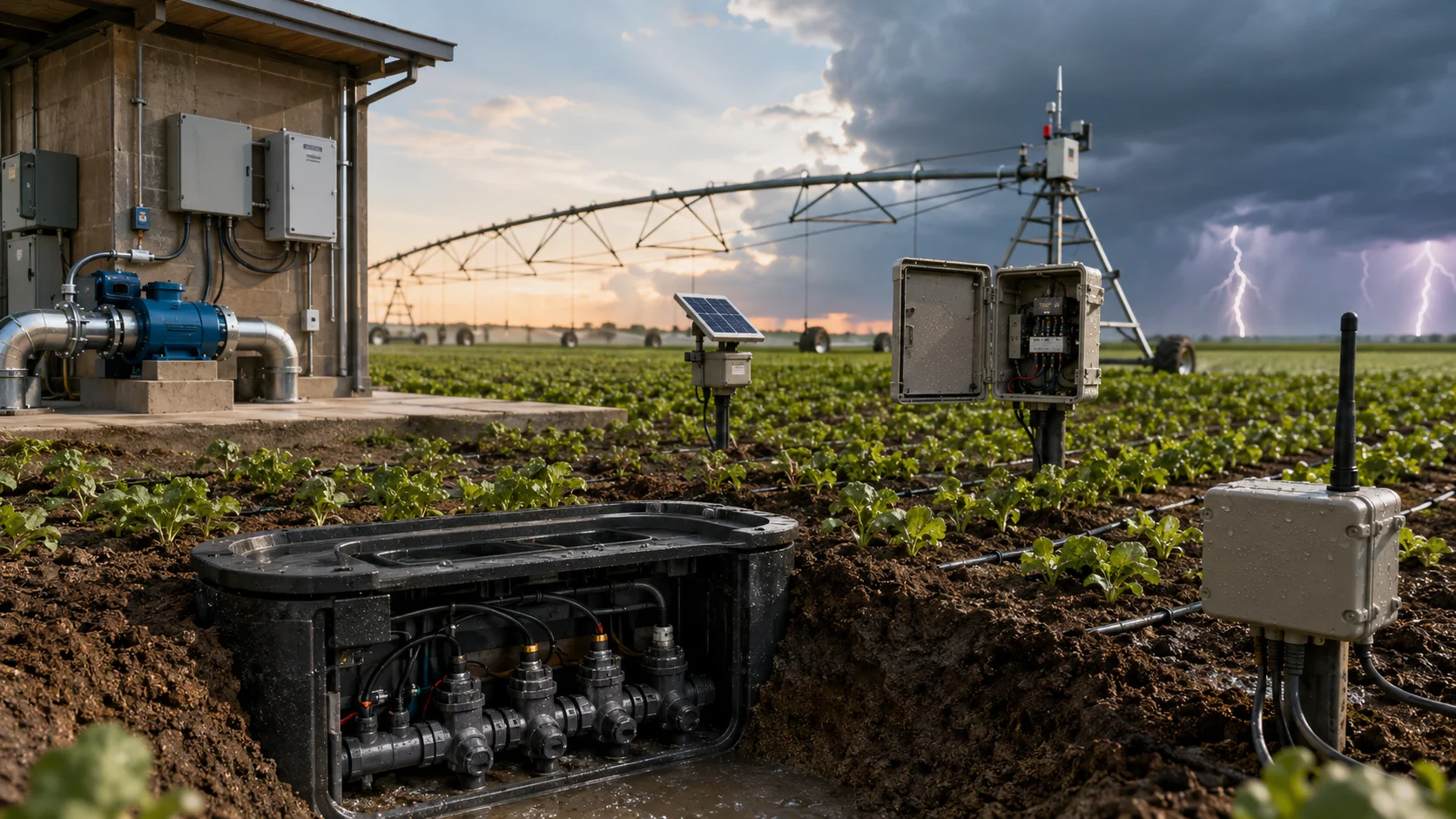
Irrigation systems also have their own specific integration issues. Underground placement of components, waterproofing of connections, and the need for remote monitoring all have an influence on the selection of the enclosure type. For example, a controller for a sprinkler irrigation system will most likely require a direct burial enclosure, while one that monitors drip irrigation will need accessibility for adjustment during each season. With the advances made in precision agriculture, many irrigation systems will also require either cellular or WiFi connectivity and present yet another challenge for sealing. The following are examples of common types of enclosures used within irrigation systems:
– Valve box controllers requiring soil contact protection – Pump houses requiring vibration isolation – Field sensor nodes with integrated solar panels – Central pivot controllers with protection from lightning strikes
For irrigation systems that are installed underground, enclosures with enhanced bottom sealing and draining features are recommended. Fluctuations in groundwater tables can produce hydrostatic pressure that can compromise the integrity of an enclosure that is rated for IP67 or higher.
Crop Dust Ingress Prevention
Dust entering an agricultural application is more than an appearance issue. Tiny particles will affect how cooling systems work, cause wear and tear on moving components of machinery, and allow moisture to enter machines. Threshing operations create the most difficult conditions for generating dust. Trees and others use combine harvesters, main elevators, and storage facilities to create large clouds of dust consisting of everything from coarse chaff to very fine dust made from flour. To get proper dust protection from the items listed above, having only IP65 rated items is not enough. You need to look for:
– Gaskets that compress properly to make continuous seals.
– Covers that are designed to shed dust that is allowed to settle.
– Cable entry systems that have progressive seals.
– Internal pressure management to stop the entry of dust into the enclosure during hot/cold cycles.
There are some applications that will also require explosion-proof rating(s) due to grain dust accumulation levels. While I-closure does not manufacture explosion-proof enclosures, we can help you determine the proposed levels of dust protection that will minimize or prevent ignition situations. Do you need assistance in selecting a proper enclosure for the agriculture equipment? Please contact IDIS India now! We know the challenges of a farming environment and can help you develop solutions that will allow you to run electronics every growing season. No one wants to have a failure of his or her equipment at harvest time, and your choice of enclosure will determine if your growing season is good or if it will be a costly failure.
Need Help Choosing the Right Enclosure? Get in Touch!