
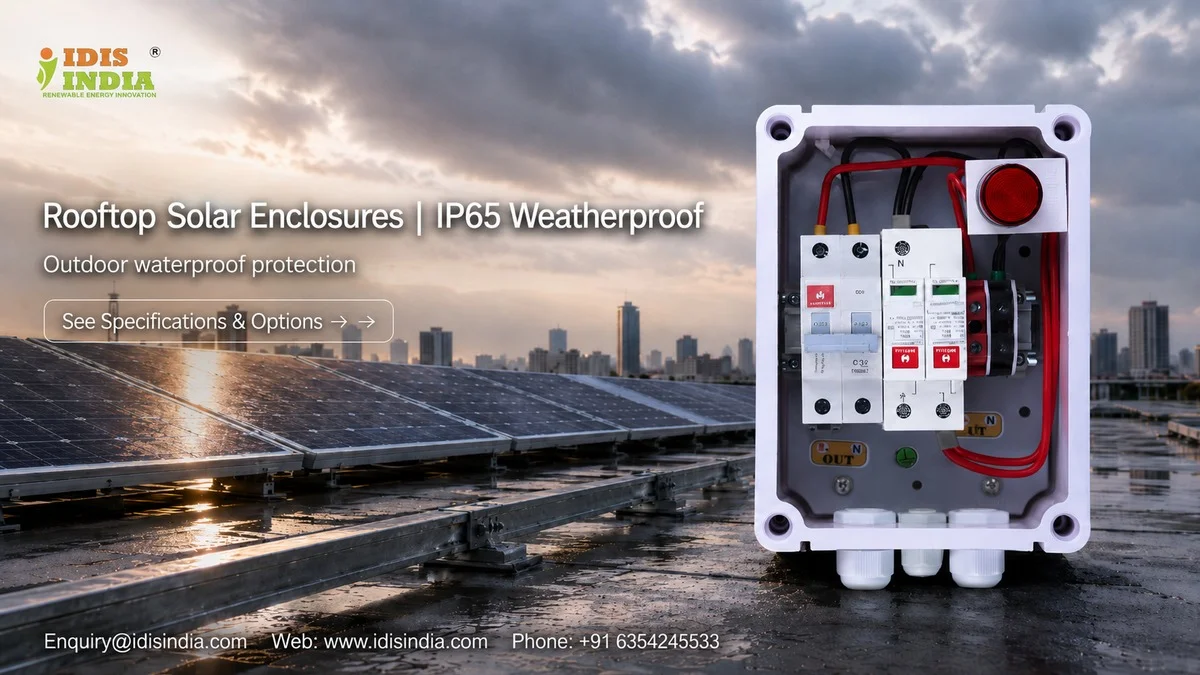
Over a typical 25-year period, extreme weather conditions (e.g., rain, snow, dust/electrical storms) could significantly compromise the integrity of the electrical components of your rooftop solar installation. Unfortunately, most rooftop solar equipment vendors do not recognize that not only does a quality enclosure provide protection from such weather but also acts as a life line for your system. Since 2017, IDIS India has designed and manufactured weatherproof enclosures specifically for rooftop solar applications; we have over 1200+ successful rooftop solar installations throughout India using our I-closure enclosures, including all types of enclosures (ACDB, string combiner). Our experience provides us with unique insights into what works best on roofs throughout India.
Rooftop Wind Load Calculations for Solar Enclosures
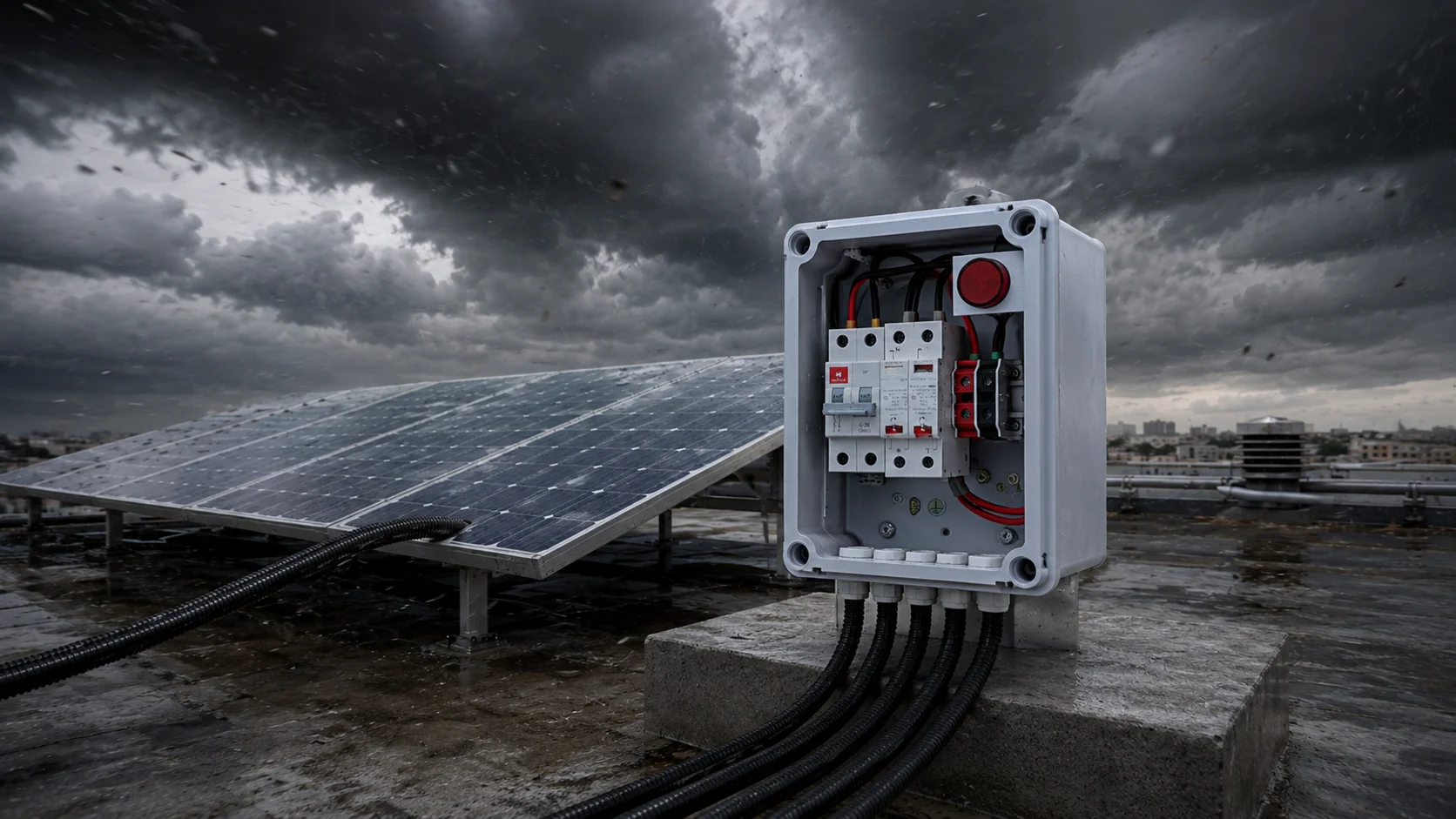
Wind not only exerts force behind your solar panel systems, but can actually create uplift which has ripped poorly mounted enclosures off roofs! The challenge is that the majority of enclosures were not engineered to handle the dynamic loads caused from wind. Our polycarbonate enclosures are considered to withstand wind speeds typically of up to 180 km per hour (when properly mounted). Why polycarbonate instead of ABS? The main reason is that polycarbonate does not crack under stress like ABS. We have seen the the (sic) ABS enclosures shatter during cyclones and cause thousands of dollars worth of equipment to be exposed to the elements. There are many factors that need to be taken into consideration while properly mounting these types of enclosures; only use stainless steel SS304 mounting hardware, seal all penetration holes using IP68 rated cable glands, install additional guy wire at enclosures greater than 500 x 400 mm and use flexible conduit connections in order to absorb movement. Wind load calculations can vary greatly depending on your location and the height of your roof, it is always best practice to consult local structural engineers before installing any type of mounting system over 15 meters in height.
PV Array Thermal Cycling Effects on Enclosure Materials
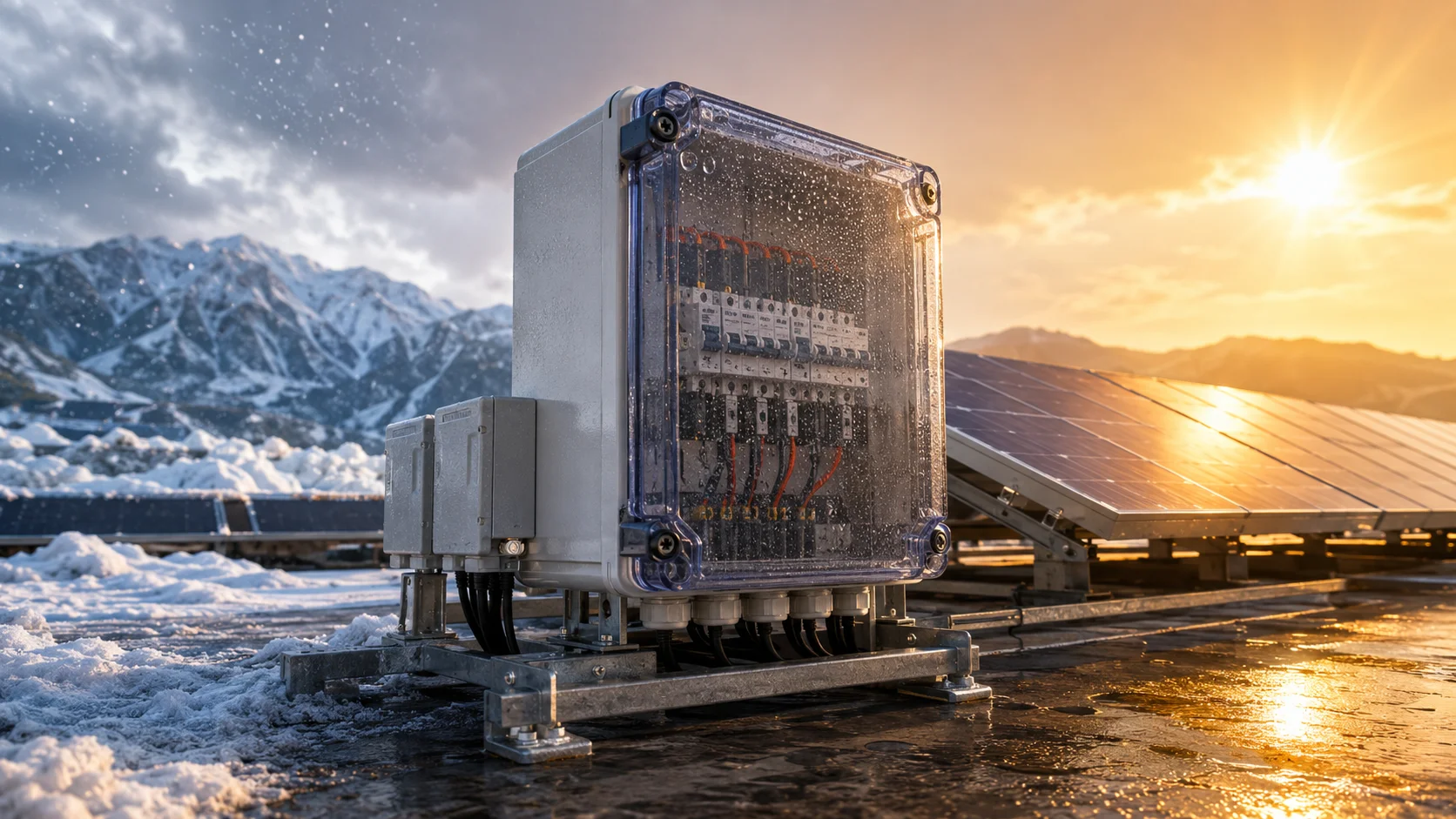
Rooftop temperatures swing from freezing winters to 70°C summers. This thermal cycling kills most plastic enclosures within 3-5 years. You’ll see cracking, warping, and UV degradation.
But not all materials are created equal. Our UV-stabilized polycarbonate maintains structural integrity typically for over 10 years under continuous outdoor exposure. We add UV stabilizers during manufacturing – not just surface coatings that wear off.
Temperature performance comparison:
| Material | Operating Range | UV Life | Color Stability |
|---|---|---|---|
| Standard ABS | -20°C to +60°C | 2-3 years | Yellows quickly |
| Polycarbonate | -40°C to +85°C | 10+ years | No yellowing |
| PC/ABS Blend | -30°C to +75°C | 5-7 years | Slight yellowing |
The thermal expansion coefficient matters too. Polycarbonate expands less than ABS, reducing stress on cable glands and mounting points during temperature swings.
Snow Load Bearing Requirements for Solar Junction Boxes
There is a lot of snowfall in Northern India. One of those innocent piles of snow can weigh over 150 kg/m2 when wet. It is important that your enclosures are able to bear this weight without deforming. Thin-walled enclosures are not designed to withstand snow loads and will collapse under the weight of snow. Our enclosures are made with reinforced wall thickness typically between 3-5mm depending on the size of the unit, as well as using a ribbed internal structure designed to help distribute loads evenly.
When considering how much snow your enclosure will have to support, think about the following: – A sloped roof sheds snow much faster than a flat roof – Avoid using a flat mounted surface to eliminate the accumulation of snow – Install drainage holes in the lowest point of the enclosure – Use flexible cable entry that do not break when frozen
On an enclosure that is subjected to high snow loads, we recommend installing additional internal bracing. The cost of this additional bracing is minimal compared to having to replace a crushed enclosure in the middle of winter.
Rooftop Membrane Penetration Sealing Methods
There’s always a chance of a leak at each point you penetrate the roof’s surface. The cost of repairing water damage caused by improper sealing of your roof can exceed your enclosing cost. A complete mounting system should have multiple layers of protection against water penetration. Some of the types of materials (or options) available for mounting systems include:
– Butyl rubber base gaskets – Stainless steel flashing plates – Backup silicone sealant – Intermediate penetration boots for irregular surfaces.
One critical point to remember when designing and constructing a roof-mounted system is to avoid using steel bolts which can rust and create water leak pathways. All of our mounting hardware is made from SS304 or higher grade materials. Although this can create a higher initial cost, it will also eliminate having to reconnect every few years because of water leaks. If the roof type is a membrane roofing type, we recommend specialized penetration systems that bond directly to the membrane material rather than drilling holes and sealing them with silicone for long-term protection.
Solar Inverter Heat Dissipation Through Enclosure Design
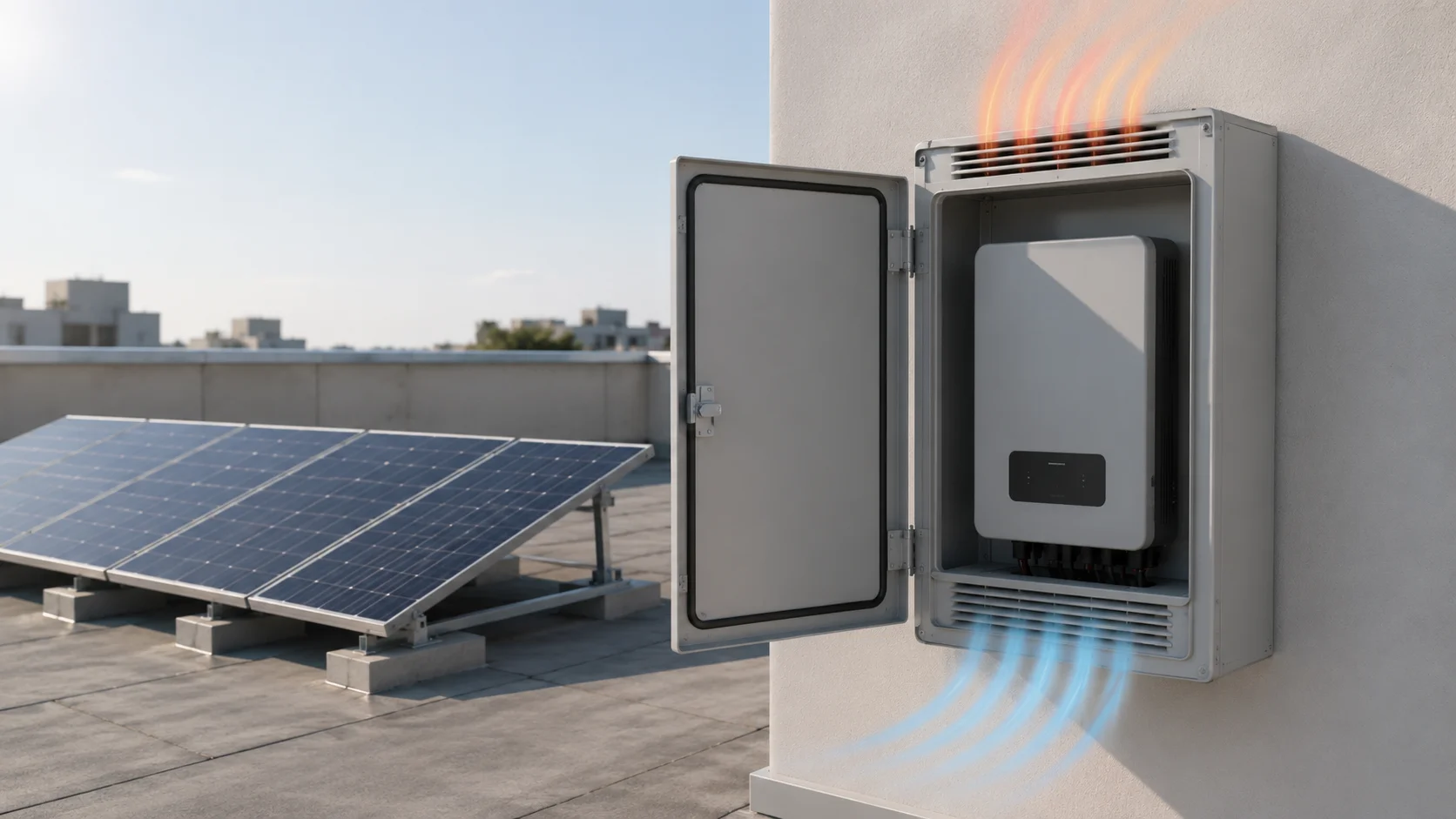
Inverter systems produce a large quantity of heat, typically between 50-100 watts for residential units and even more for commercial systems. A buildup of heat will harm your inverter’s electronic components more quickly than water damage. We have a variety of enclosure ventilation solutions available to keep your inverter cool. These include:
• Natural convection louvers (rated IP65)
• Forced air ventilation cutouts
• Heat sink mounting provisions
• Internal thermal barrier coatings
Properly balancing ventilation with weather protection is the key to providing an environmentally sound solution for your inverter. If you have too many openings on your inverter enclosure, it will compromise your IP rating. If you have too few, the inverter will overheat in the summer. For many applications, we recommend natural convection as the preferred method of ventilation. Locate the intake louvers at the bottom and the exhaust louvers at the top. By utilizing the natural tendency of warm air to rise, you create a natural airflow through the enclosure without the need for potentially faulty fans.
Conduit Entry Storm Protection Systems
Cable entry points are often the weakest link in the overall assembly. Standard cable glands will fail under pressure washing, driving rain and undergone thermal cycling. You will not want to use anything less than IP67 or IP68 rated cable glands, or the equivalent of. A cable management system that we provide includes: PG threaded cable glands with double O-ring seals; Strain relief to prevent pulling cables out of cables; Blanking plugs for unused cable entry points; Service loops located within the enclosure. Pro tip: When entering cables through the enclosure, always enter from the bottom, as this assists gravity with your sealing efforts. Drip loops should be provided on all
cable runs outside the enclosure. For DC combiner boxes, the M20 and M25 cable entries will be prefabricated to your cable specifications prior to shipment of the enclosure. This provides for proper thread engagement and allows the cable entry points to be pre-drilled instead of performing the drilling in the field.
Maintenance Access Safety Planning for Rooftop Equipment
Your equipment must have safe access to technicians, so carefully design your enclosure installation considering how it will be maintained from the beginning. Because safety is far more important than convenience, especially at 3 AM when a storm is occurring. The safety features we provide are: an access door at the front of the enclosure for easy access; non-slip mounting surfaces; captive screws that will never come loose from the roof; visible identification labels that can be seen from a distance; and in most instances, keep the enclosure from being installed on the edge of a roof, but if you do install an enclosure on the edge, the installation of appropriate fall protection anchors / were required. The cost of this additional hardware will be nothing compared to the liability if an accident were to occur! In addition, lighting inside larger enclosures will assist technicians in providing safe maintenance procedures during low light conditions that often occur when emergency repairs are required.
I-closure Product Range for Solar Applications
Solar enclosures are available for the most common rooftop installation applications: ACDB Box Enclosures (300x200x150mm) for residential projects, rated IP65 with space for surge protection and provisions for DC isolators; DCDB Box Enclosures (400x300x200mm up to 600x500x250mm) that can accommodate multiple string inputs with a combiner rail; String Combiner Housings (200x150x100mm) for 2 to 4 string applications that can either be mounted to wall or pole, and also include integrated cable management; and Array Junction Boxes large enclosures used for commercial installations that can be custom sized depending on use. All enclosures are manufactured to RAL7035 grey standard with an option of white for use in non-direct sun installations. All our products are also ISO9001 certified and RoHS compliant.
Getting Started with IDIS India Solar Enclosures
No two rooftop setups are the same. Depending on your region, the roof you’ve got, the amount of space needed for equipment, and how you intend to maintain them all can affect the type of enclosure you use. Thus, we create custom solutions rather than “one-size-fits-all”. Our technical team of engineers will work with you to determine what kind of enclosure will best suit your project, considering things like wind loads, thermal resistance, physical constraints, and cost. Are you interested in determining how well you can protect your investment? Give us a call at IDIS India! With over 100 employees, we have the knowledge and experience to take on any project from a single home to multi-megawatt commercial systems – because when you promise 25 years of performance, you had better provide an enclosure that lasts for 25 years.
Need Help Choosing the Right Enclosure? Get in Touch!