
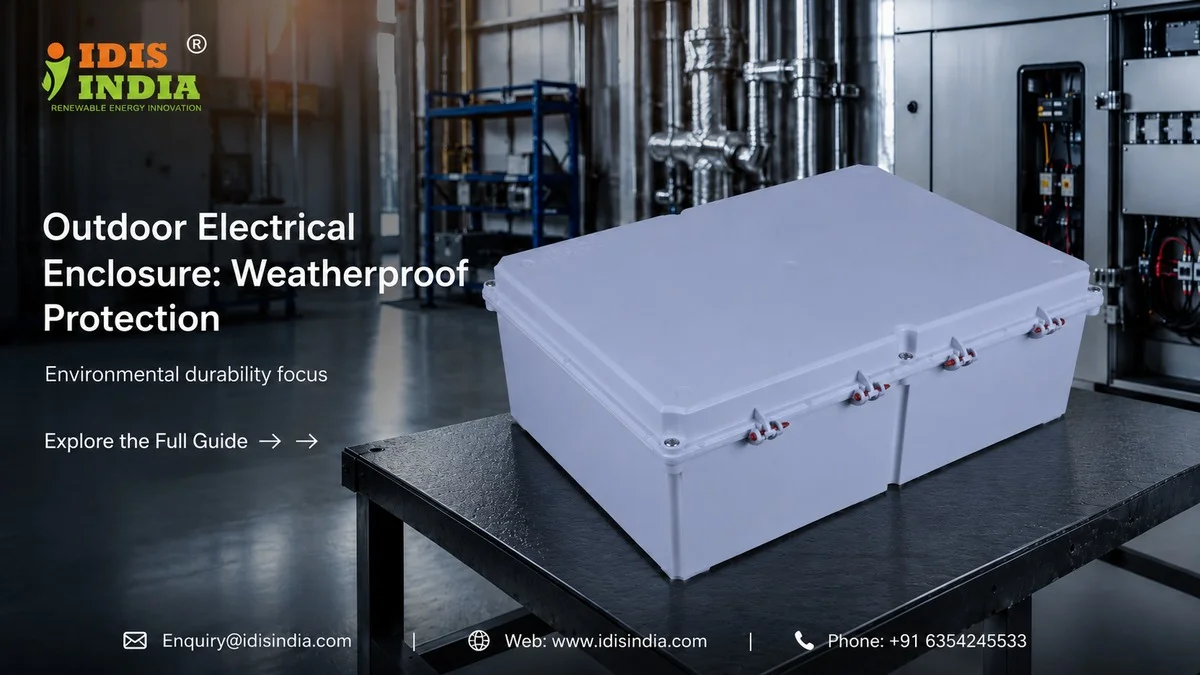
The failure of electrical equipment outdoors can cause entire systems to stop functioning. Traffic signals run out of power, and streetlights become dark. The communications system is completely crippled. There is only one reason for this: Engineers often do not realize how extreme outdoor conditions actually are (including extreme temperature changes, intense ultraviolet light, high humidity, and the corrosive nature of salt air). All of these factors are constantly attacking the electrical enclosure. However, with the correct type of weather-tight enclosure, your electrical equipment can last for many years (decades) in outdoor environments. IDIS India has produced weather-tight enclosures for outdoor electrical systems since 2017. We have a vast amount of knowledge regarding what types of enclosures are successful versus what types have failed. Our I-Closure products are designed to not only provide the necessary protection for critical infrastructure located throughout India, including coastal highways and high-altitude installations, but also will maintain their integrity through numerous years of use.
Extreme Temperature Cycling Effects on Enclosure Materials
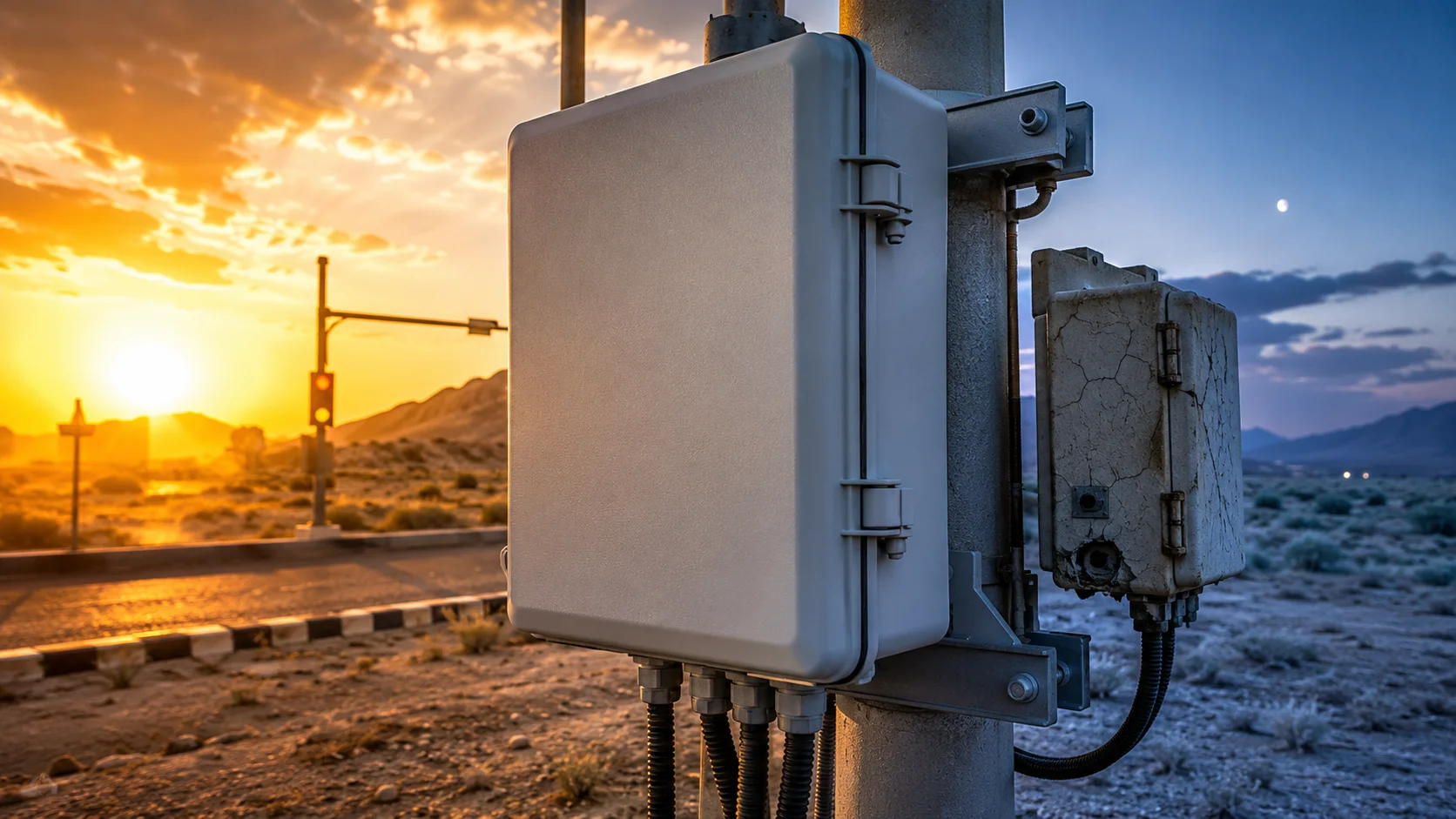
Temperature isn’t merely hot and/or cold; it represents constant change in size and shape that happens every single day. In India, for example, outdoor electrical enclosures experience daily temperature variations of 40°C or more. For instance, a traffic control box in Rajasthan may experience temperatures of 50°C in the afternoon sun and then drop to 10°C before dawn. This temperature volatility occurs all year, every year. Plastic enclosures expand and contract as they respond to daily temperature changes. ABS enclosures typically expand between 0.1 mm and 1 mm for every meter of material for every 10°C increase in temperature. Polycarbonate enclosures expand slightly more than this at about 0.065 mm. What happens to materials that aren’t able to withstand this type of expansion? Cracks appear near where mounts attach, gaskets don’t seal properly, water enters into the enclosure and shorts out expensive electronic equipment. “I-CLOSURE” enclosures include only high-quality materials that have been specifically selected for their thermal properties. Our ABS formulations also contain impact-modifying substances that help keep the enclosure flexible, even after thousands of thermal cycles. Our polycarbonate enclosure will provide superior dimensional stability, making them the best choice for use in extreme cooling or heating applications.
UV Radiation Material Degradation in Direct Sunlight
The impact of ultraviolet (UV) radiation can be catastrophic, even though UV radiation cannot be seen. It breaks down the polymer chains in plastic enclosures, which leads to weak and brittle enclosures. Standard plastic enclosures in intense sunlight like that found in India will not be able to endure indefinitely, and most will have significant failures (become unusable) within two years. The surface will become chalky, there will be color fade and above all, the material will become very brittle and break easily during regular use. Enclosures on street light poles are among the most susceptible; because they are high and above the ground, they receive direct sunlight all day long with no shade to protect them from UV rays. If an enclosure fails, it leads to significant costs for maintenance, along with often requiring bucket trucks and traffic control. IDIS India has identified four different strategies to combat UV degradation: 1) The addition of UV stabilizers within the base polymer 2) Using carbon black pigments which absorb UV energy 3) Utilizing specialized coatings on the surface of the enclosure to offer additional protection 4) Selecting enclosure materials that are based on predicted levels of UV exposure. Our enclosure sustains intact structural integrity even after five years of exposure to direct sunlight, as indicated by testing on multiple samples which appear almost brand new after continuing to be subjected to the elements for five years.
Moisture Vapor Barrier Systems for Electronics Protection
Water does not only come from the sky. There are many ways that water can create problems for electrical parts, such as humidity or condensation, as well as water in the form of vapor. Even when equipment is rated at either IP65 or IP67, the enclosures still face moisture-related issues. Variance in temperature causes pressure differences to be created; as warm, humid air enters these cooling enclosures, any excess moisture in the air condenses onto the colder surface of the electronic components causing both corrosion and short circuits. This is even more evident in telecom installations, where telecom digital equipment is particularly sensitive and requires stable levels of humidity; one moisture related incident could destroy circuit boards, each valued at thousands of rupees. I-closure outdoor enclosures are designed with several moisture protecting features which include: multi-stage gasket systems which prevent liquid water and vapor from entering, pressure-relief vents allowing for equalization of internal pressure without allowing moisture back into enclosure, and internal drainage channels that guide any condensation away from the electronics, coupled with wall thickness designed to minimize thermal bridging and accumulation of moisture due to condensation. As a result of all these features, electronics continue to stay dry during the monsoon seasons or if they are located in coastal areas with humidity levels above 90%.
Salt Air Corrosion Prevention for Coastal Applications
Outdoor equipment is severely affected by the corrosive effects of salt air. Particles of sodium chloride can be deposited in any location, leading to rapid corrosion of metal components. Coastal traffic systems face additional challenges. Salt spray generated by ocean waves can be blown several kilometers inland. In fact, anything encased in a metal enclosure will likely encounter salt corrosion even if it is located 5km from the ocean. Metal enclosures traditionally require regular servicing in these environments. Paint systems fail; hinges rust; internal brackets create rust particles which can contaminate electronics. There are beneficial characteristics believed to exist within plastic enclosures as they relate to the challenges regarding corrosion caused by exposure to salt air. Various plastics provide variable levels of protection from corrosion caused by exposure to salt, depending on the manufacturer and packaging of the particular product. Some plastic formulations will absorb salt, which then has a corrosive effect on any metal hardware that may be located inside of an enclosure made using that formulation. IDIS is an Indian company that has designed all of their coastal installations with respect to corrosion caused by exposure to salt air through the use of the following types of materials: Non-hygroscopic materials that do not absorb salt; Smooth surface finishes that do not allow contaminants to be trapped; Stainless steel hardware in locations where metal hardware is necessary; And gasket materials rated for salt exposure to maintain an effective seal between the inside and the outside of an enclosure. IDIS’ customers in the coastal areas of India have consistently reported maintenance times for their enclosures of 3 – 4 times longer than those utilizing metal enclosures previously.
Thermal Expansion Joint Design for Large Enclosures
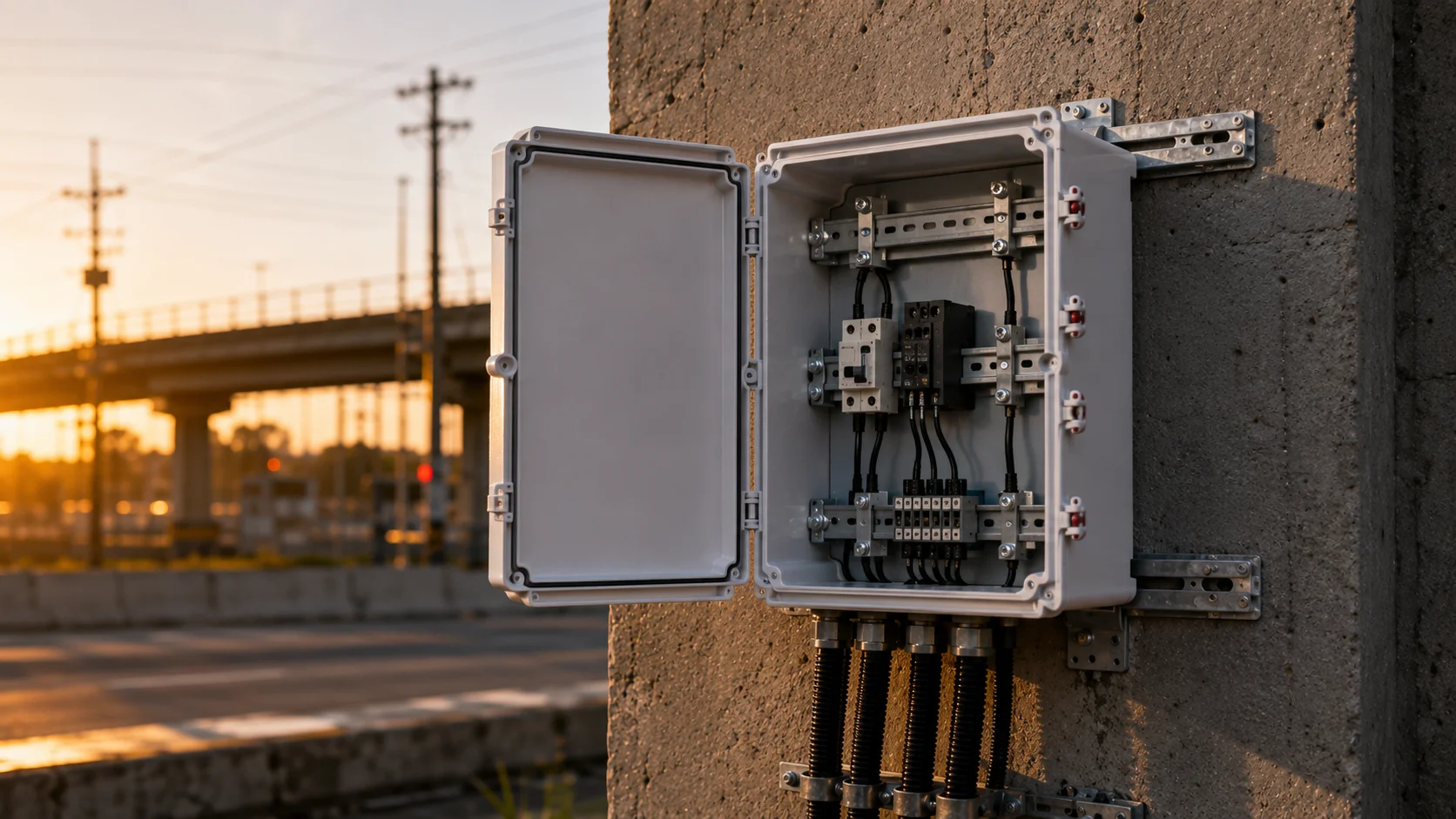
Large outdoor cages have the special difficulty of dealing with thermal expansion. For instance, a 600 mm wide cage can experience an expansion of 2-3mm at the peak of heat. While this does appear to be small, it can produce incredible amounts of stress to the mounting points and points where cables enter the cage. Traffic control cabinets typically contain many different circuit boards and a number of cable connections. As the cage expands and contracts, the internal components of the cabinet become subjected to mechanical stress. The cable connections begin to loosen. Circuit boards will crack. Equipment will fail in an unpredictable manner. A proper thermal expansion design requires a significant amount of engineering to incorporate the following elements: ” Mounting hole designs that will allow for dimensional changes ” Flexible cable entry systems that can shift with the cage ” Internal component supporting that will isolate the electronics from thermal stress ” Wall thickness design to reduce thermal gradients. In addition, large I-closure type cages are designed to include expansion joints and flexible mounting systems to provide secure mounting of equipment even through extreme temperature changes.
Wind Load Structural Requirements for Pole-Mounted Systems
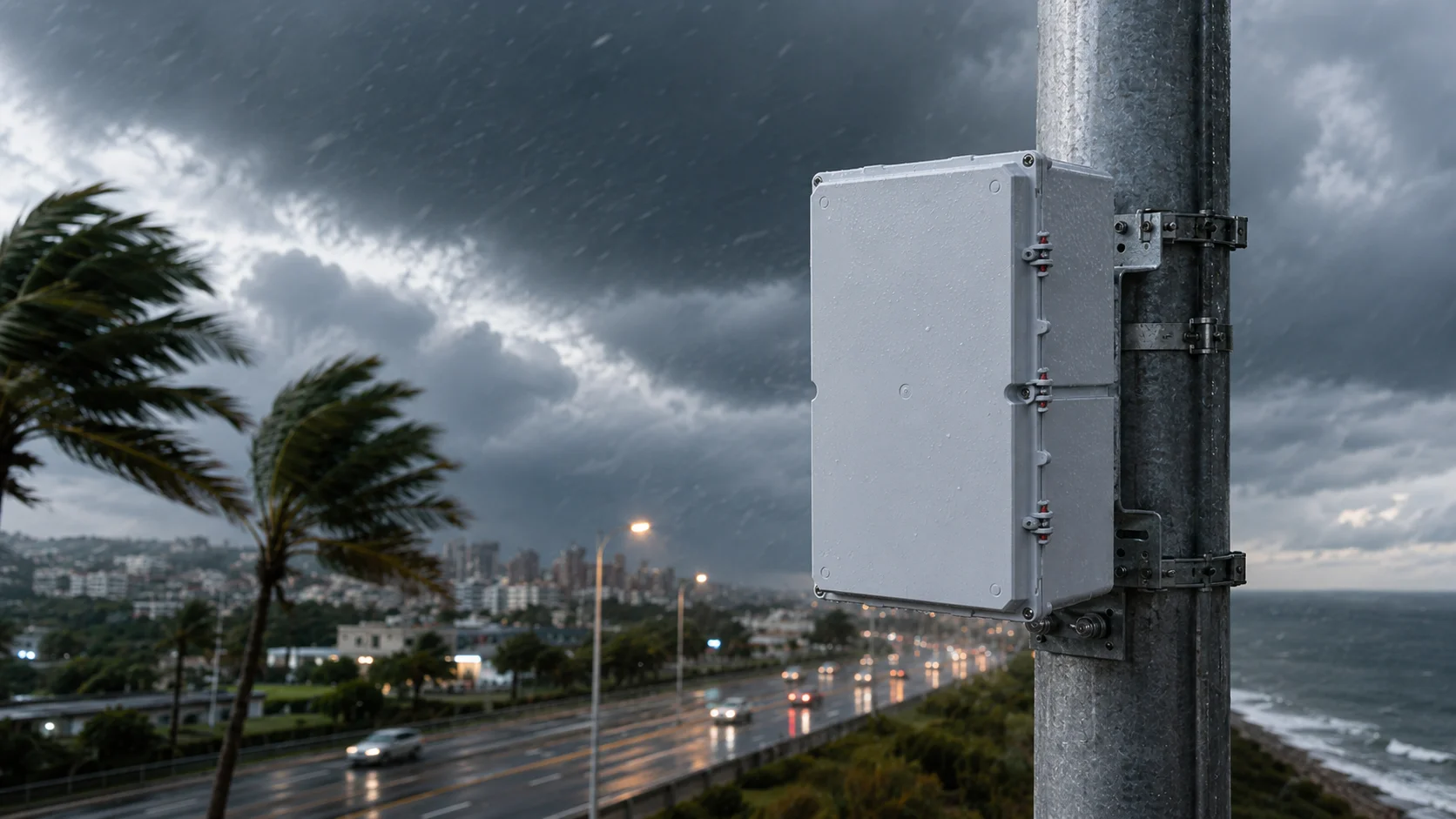
Wind loads are an area of concern for Engineers, although it seems like many engineers do not take them into consideration at all. A street light enclosure works like a sail. The wind forces applied to the enclosure are directly transferred to the pole it is mounted to. During a storm, wind speeds can reach 100 km/h and when combined with rain, this creates substantial stresses to both the enclosure and mounting system. This type of failure does not leave you with a malfunctioning enclosure, it now also has the potential to create a projectile. When properly designing for wind loads, there are a number of factors that can be taken into account including; The geometry of the enclosure and how much of the enclosure is exposed to wind, The height of the mounting pole and how flexible the mounting pole is, The maximum expected wind speed at the installation site, The dynamic effects created by the movement of air in gusts (wind direction change) and turbulence. IDIS India engineers I-closure products with real-world conditions in mind for wind loads. The walls of our enclosures are thick enough to not flex. The way that the mounting bosses are designed are to properly distribute loads. The design of our vents is to ensure that there is minimal water entry via wind driven rain. In addition, our engineers can provide the necessary wind load calculations for installations that may have specific needs. All of this ultimately assists infrastructure engineers in choosing the appropriate mounting hardware and pole specifications.
Lightning Strike Protection Integration Options
Lightning strikes can be both infrequent and extremely damaging to your electronics and equipment–one lightning strike can cause all the electronic devices in that enclosure to fail, and may also damage adjacent electrical equipment when the lightning charge flows through the power lines. The greatest risk of lightning is for outdoor electrical enclosures and especially enclosures mounted on tall poles, which provide the most lucrative targets for lightning. Streetlights, traffic signals and telecom antennas are the most obvious tall metal targets that attract lightning during storms. There are 2 methods of providing lightning protection: (1) Surge suppression and (2) Physical protection. Surge suppression includes: • Surge protection devices inside the enclosure • Proper grounding of all metal components (external and internal) • Cable entry designs that maintain lightning protection continuity (i.e., connecting to the building or pole ground systems) • Coordination with the grounding systems for the poles. Physical protection can be accomplished by configuring I-closure enclosures with the following: • Cable entry systems that maintain electrical continuity to building and/or pole ground systems. • Internal mounting provisions for surge protection devices.
Lightning protection devices must be site-specific in order to provide maximum effectiveness. IDIS India has developed a collaborative approach with electrical engineers to ensure that there is a proper integration of lightning protection and overall facility protection systems.
Protecting Your Critical Infrastructure Investment
Millions of rupees of electronic equipment are protected by outdoor electrical enclosures, but more importantly, these enclosures are critical to keeping essential infrastructure operational when people rely on it to function correctly. The right design of an enclosure eliminates costly equipment failures; it prolongs the useful life of equipment and reduces maintenance expenses. Most importantly, when you need your systems to function most well, you want them to work!
IDIS India has more than 1200 active customers who use I-closure products for outdoor applications. IDIS India has ISO9001 certified manufacturing processes to provide consistently high-quality products. CE and RoHS compliant products simplify the procurement process for international projects. Are you ready to specify outdoor electrical enclosures for your next project? Call IDIS India today! Our engineering team will be happy to assist in selecting the appropriate protection for your specific application and environmental conditions.
Need Help Choosing the Right Enclosure? Get in Touch!