
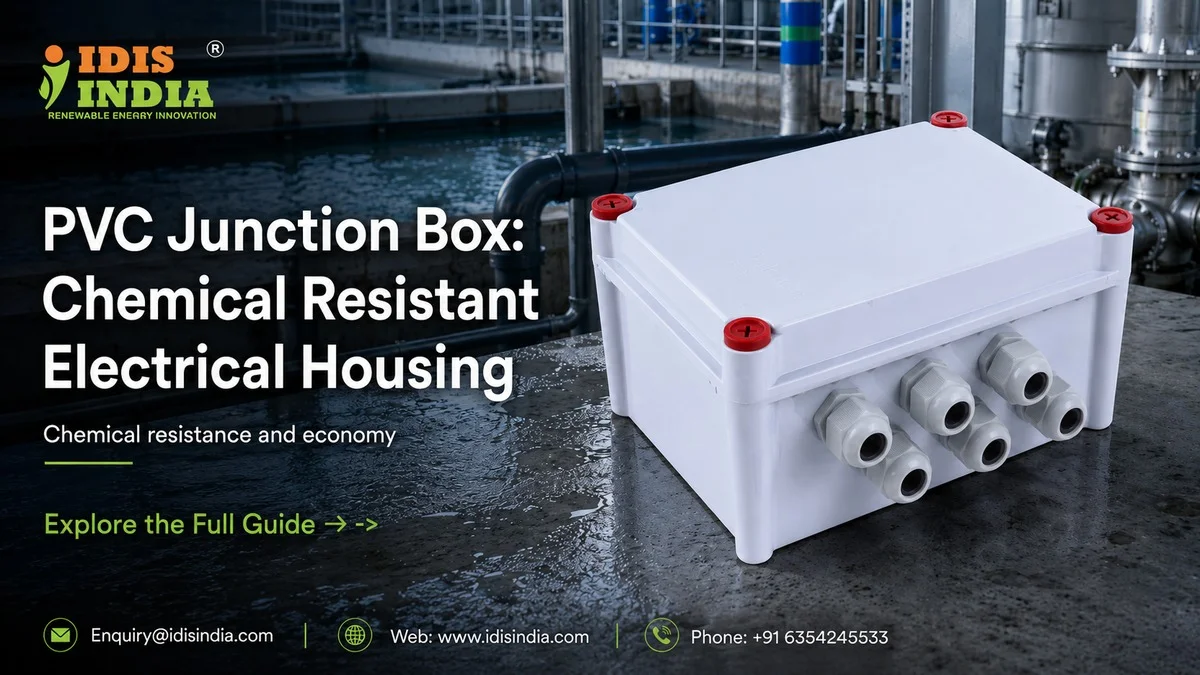
Want an electrical box that can withstand harsh chemicals? PVC junction boxes are an affordable choice with great chemical resilience compared to other high-cost options. Understanding what PVC enclosures offer will assist you in selecting the best option that suits your needs when designing residential buildings to industrial chemical plants. There has been an increase in demand for cost effective housing options to accommodate contractors wanting chemical resistant solutions like PVC. We primarily sell ABS and polycarbonate enclosure products with IP65 and IP67 rating; however, we continue getting questions from contractors about using PVC as an alternative. Let’s take a closer look to see if there’s a good reason you could benefit from using PVC for chemical resistant housing.
PVC Resin Grade Classification for Electrical Enclosures
There are several different grades or types of polyvinyl chloride (PVC). The type of PVC used in a junction box affects how well the junction box performs in different environmental conditions. The basic chemical resistance of Type 1 PVC makes it appropriate for use in residential applications; it’s typically less expensive than the other two types, but it has limited temperature applications. Type 2 PVC contains added impact modifiers that help improve the overall durability of the junction box when used for commercial applications. Junction box applications utilize rigid PVC compounds that contain stabilizing and ultra-violet (UV) additive materials to prevent deterioration of the junction box from the effects of direct sunlight while keeping its structural integrity over time. The chemical and mechanical properties of a PVC resin depend on its molecular weight. In general, high molecular weight PVC resins provide superior resistance to chemicals, but they’re more difficult to process. As a result, manufacturers will carefully consider and balance these various properties to develop junction boxes that perform well and are cost effective.
Chemical Compatibility Matrices for Process Industries
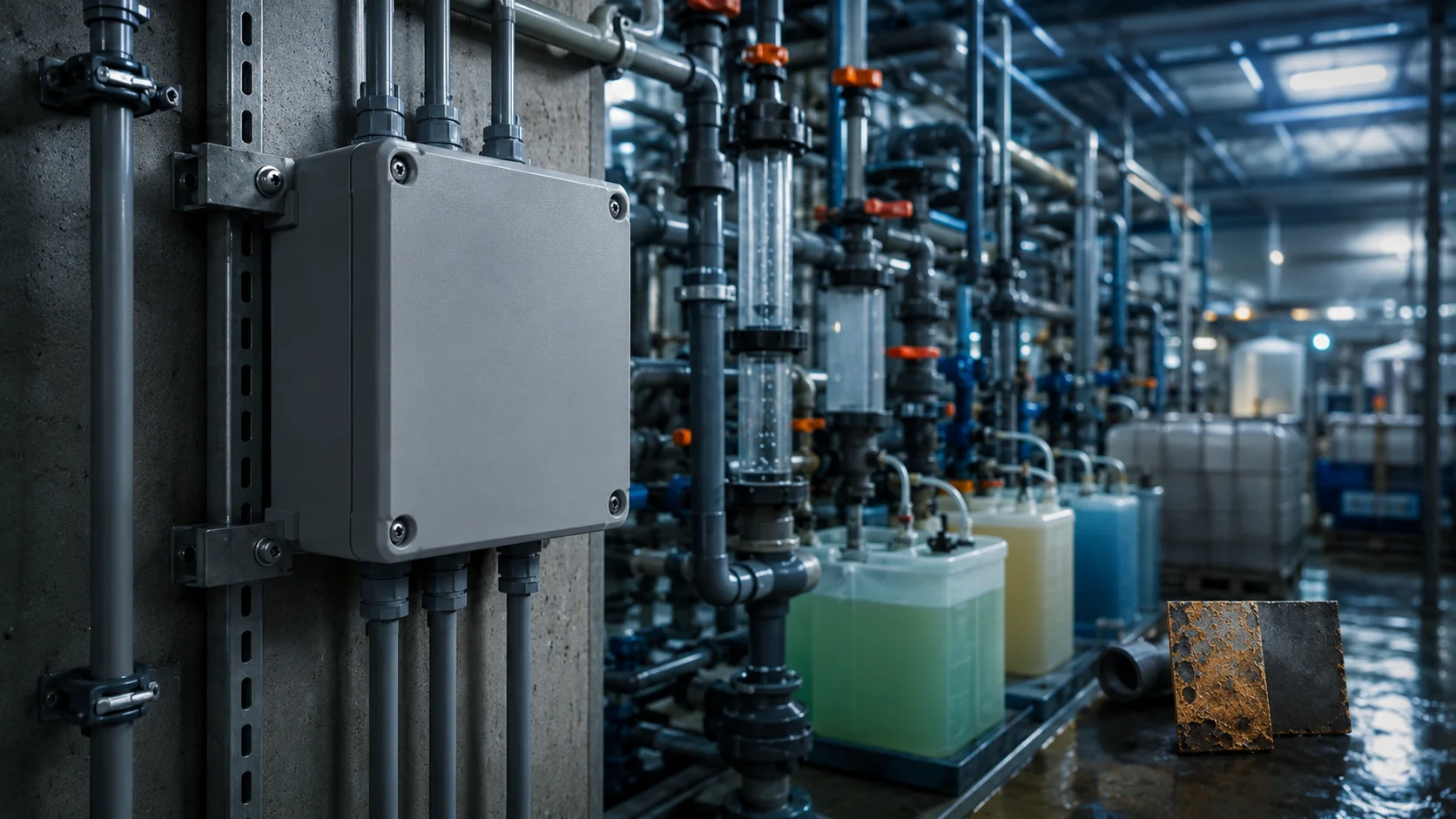
Understanding which chemicals your PVC junction box can handle is crucial for safe operation. Different industries present unique challenges.
In water treatment facilities, PVC handles chlorine exposure exceptionally well. Sodium hypochlorite solutions, commonly used for disinfection, dont degrade properly formulated PVC enclosures. This makes PVC an excellent choice for housing electrical components near chemical feed systems.
| Chemical Type | PVC Compatibility | Typical Applications |
|---|---|---|
| Acids (dilute) | Excellent | Battery rooms, laboratories |
| Bases (moderate) | Good | Cleaning systems, pH adjustment |
| Organic solvents | Poor to fair | Requires case-by-case evaluation |
| Chlorinated compounds | Excellent | Water treatment, swimming pools |
But heres the catch – organic solvents can cause PVC to swell or crack. If your application involves ketones, esters, or aromatic hydrocarbons, consider alternative materials like the PC/ABS combinations available from IDIS India.
Flame Retardant Ratings and Safety Standards
When it comes to chemical processing environments, fire safety is of the utmost importance and must not be compromised. PVC has excellent inherent flame-retardant properties; however, the junction box application must comply with certain ratings to use PVC. Most PVC junction boxes carry a UL94-V0 fire rating, which means the material is self-extinguishing and will stop burning once the source of ignition has been removed. This is particularly important for electrical enclosures since overheating components could cause a fire. The limiting oxygen index (LOI) for PVC is generally above 25%, which indicates that PVC will not burn in normal atmospheric conditions. Because of the property of fire resistance, PVC is acceptable for areas exposed to moderate risk of fire. However, when PVC does burn, the by-product of the combustion process is hydrogen chloride; therefore, it can potentially present a problem in confined spaces or in areas where sensitive equipment exists. Consider the emergency procedures and ventilation needs when specifying PVC enclosures.
Corrosive Environment Performance Factors
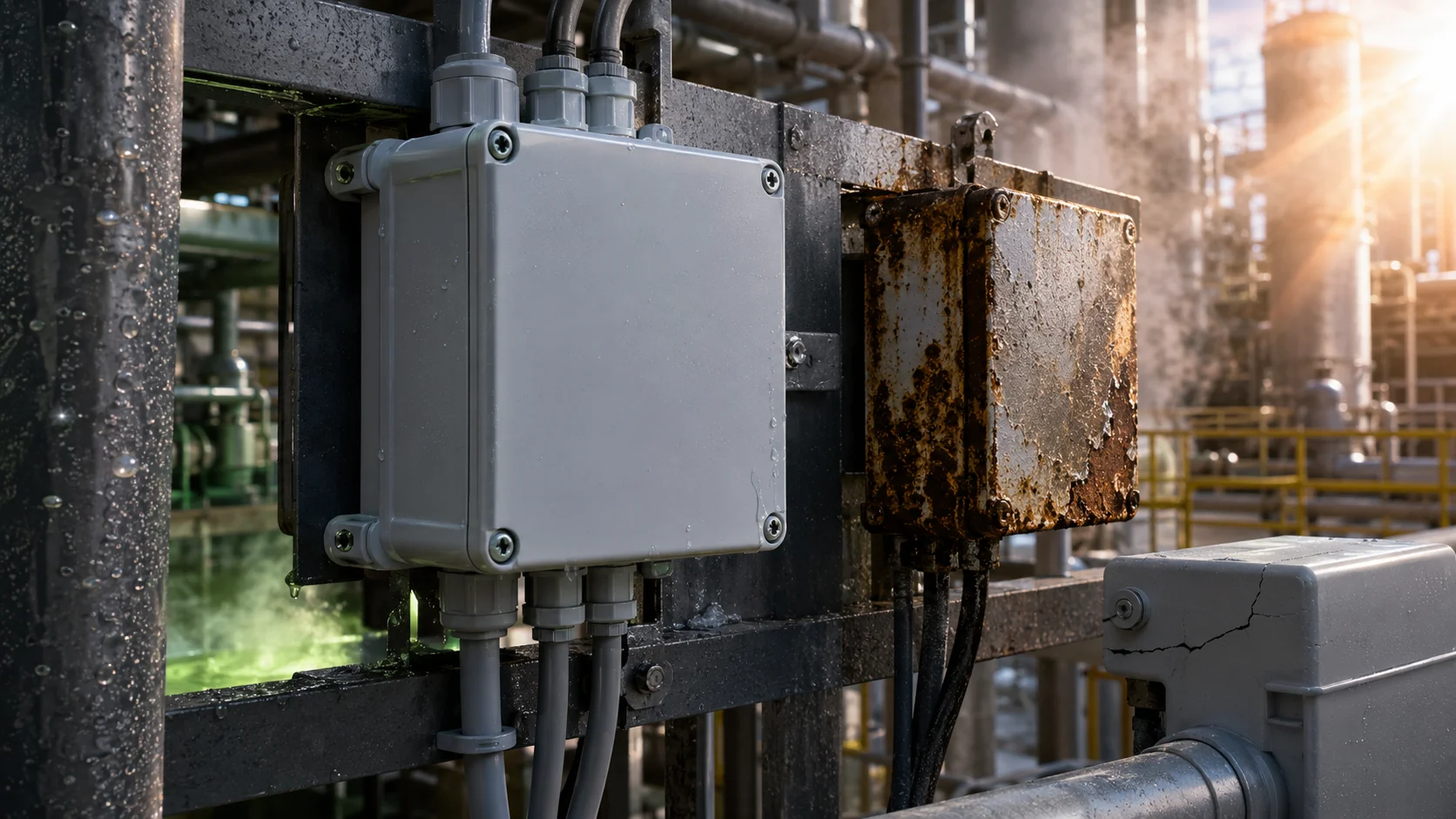
What is the performance of PVC when subjected to chemical attack? The answer to this question depends on three key parameters: concentration, temperature, and exposure time. In many cases, PVC maintains its physical properties in acidic environments that very quickly degrade metal enclosures. Sulfuric acid at concentrations up to 70% typically does not attack PVC at room temperature but if the temperature is increased to 60°C, PVC will degrade much more rapidly. Stress cracking is also an issue when mechanical stress is combined with chemical attack on PVC junction boxes; cracks may form, even with compatible chemicals, due to the interaction of mechanical stress and chemical attack. Proper mounting and support will eliminate points of concentrated stress that could lead to failure. UV exposure will cause degradation of the PVC (brittleness and colour change), so if your junction box is to be exposed to sunlight, look for UV-stabilised formulations or protect with coatings.
Cost Analysis: PVC vs CPVC Junction Boxes
The cost of materials can often dictate what is selected; however, when the decision is based solely on up-front cost (the lowest-cost materials), it could ultimately cost you more over time. An example would be comparing PVC and CPVC junction boxes. On the average, the cost of a standard PVC junction box is approximately 30 to 40 percent less than its equivalent in CPVC. When the total cost for large projects is considered, this can create a sizeable difference in the amount of money saved; however, the benefit of selecting CPVC over PVC is that CPVC has a higher temperature resistance and greater compatibility with some chemicals. CPVC is rated to handle temperatures up to approximately 95 degrees Celsius versus 60 degrees Celsius for PVC. Therefore, if your electrical components produce considerable heat, or the ambient temperatures in which they are installed are very high, using CPVC will help prevent failure of your electrical components. Another benefit of CPVC over PVC is its improved chemical resistance. The higher level of chlorine in the polymer chain give CPVC a higher level of resistance to organic chemicals that may attack and damage standard PVC. This improved performance does come at a higher price than PVC; however, you need to consider the total cost of the ownership when making your material selection, as a PVC junction box that fails due to exposure to chemical substances will cost you more in terms of replacement products and downtime than investing in CPVC initially.
Residential Installation Code Compliance
While most residential applications do not call for industrial enclosure extreme chemical resistance, they do require code compliance. There are specific code requirements related to the use of PVC junction boxes for residential purposes; hence, there are important electrical code requirements related to PVC junction box use as per the NEC. PVC enclosures can be used for most residential applications if they are rated for the electrical load and the environmental conditions (e.g., Wet locations will need IP rated enclosures; IP65 or IP67 for outdoor use). Local codes may place additional requirements on the enclosure use. Some areas may prohibit the use of PVC for some applications due to fire safety concerns; therefore, it is important to always verify local regulations prior to using them. When using a junction box in a wet location, GFCI protection is typically required when using PVC junction boxes. Grounding issues can complicate the proper use of PVC due to its insulating properties, so proper electrical design is paramount.
Industrial Process Integration Strategies
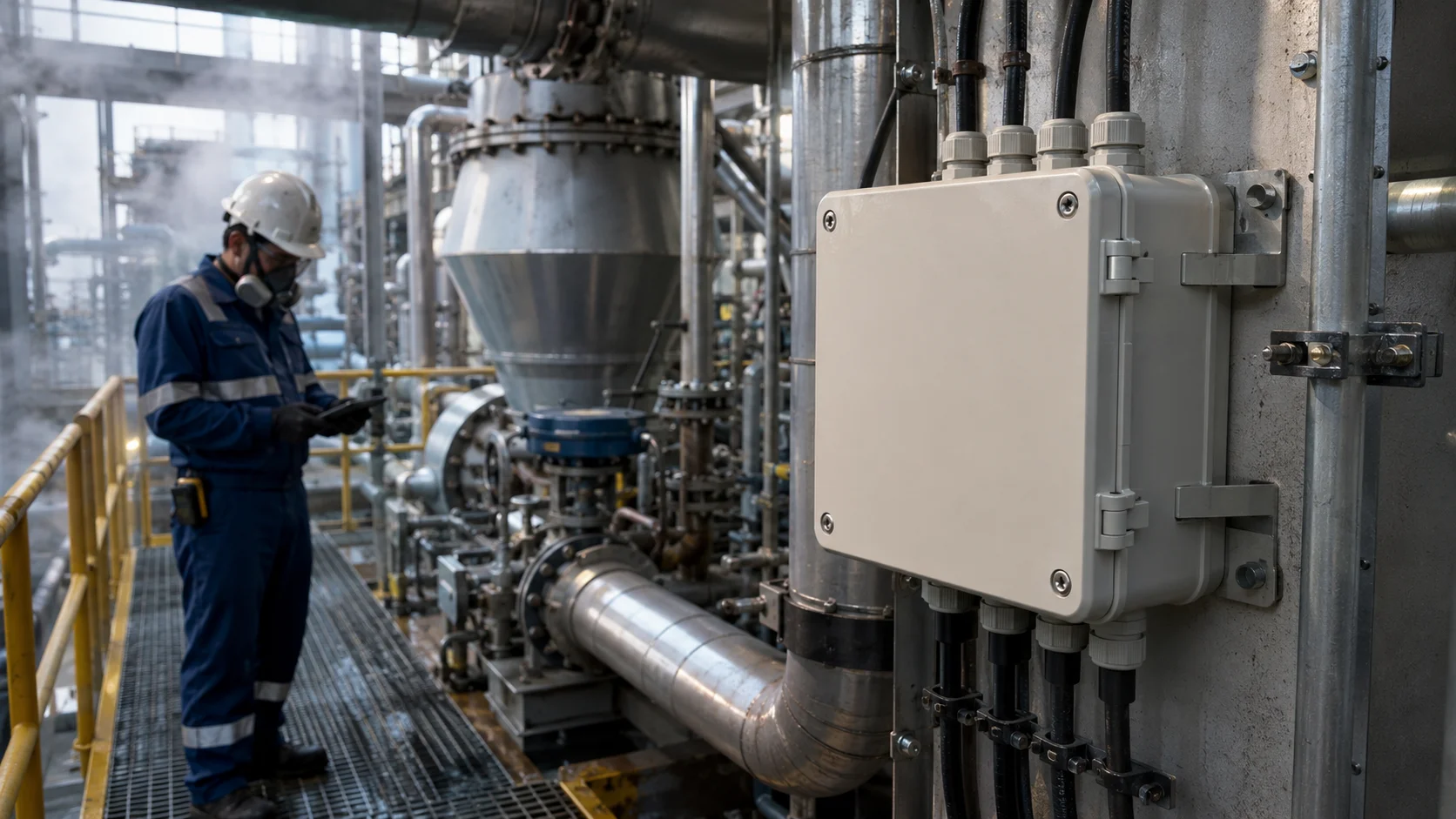
When integrating PVC Junction Boxes into industrial processes, proper planning must take place. The junction box enclosure should provide protection for the electrical components and also allow process efficiency to be maintained. Consideration should be given to how easy it is to perform maintenance tasks from the location you choose to locate your junction boxes. Equipment involved in chemical processing, in most cases, requires frequent inspections, and many components need replacing. Locating the junction boxes too high or in a confined area creates an unwanted risk of injury to maintenance personnel. Seal integrity is extremely important when dealing with chemical environments. Any amount of leakage from your junction box could allow corrosive vapors to enter the junction box enclosure and damage the electrical components within. Regular maintenance programs should include inspection of your junction boxes and replacement of any seals as required. Daily temperature swings will create temperature cycles in PVC junction boxes. Daily temperature swings will create expansion and contraction of the junction boxes that will cause damage to the seals and mounting hardware due to stress placed upon them by the movement. The mounting system design must accommodate any thermal movement in the junction box. Ventilation requirements will vary depending on the application of the chemical process. Whether it is a chemical process that generates vapors that need to be contained, or a chemical processing that needs ventilation to prevent the accumulation of heat, the junction box must be selected as per the process requirements.
Making the Right Choice for Your Application
As a low-cost option for a wide variety of applications with moderate chemical resistance, PVC junction boxes appear as a good choice for applications such as water treatment plants, swimming pool systems, and residential uses where cost is a major concern; however, they’re not a viable choice in high-temperature applications or when subject to exposure to organic solvents; other materials may need to be used for those two scenarios. In more demanding environments, polycarbonate enclosures or other polycarbonate/ABS combination enclosures offered by IDIS India will provide better performance.
When evaluating which type of material best meets your needs, it’s important to consider all of the factors that affect material choice, including chemical compatibility, temperature range, mechanical stress and budget, etc. If you’re unsure about which enclosure and/or material to use, contact the manufacturer to obtain detailed chemical compatibility information about that particular product.
I-closure is committed to helping you find the right solution for your project. Although we don’t manufacture PVC enclosures, we do offer ABS and polycarbonate alternatives with both an IP65 and IP67 rating, which may be better suited for your chemical-resistant enclosure needs. If you have questions or would like to discuss your individual needs, please contact IDIS India to explore options that will provide performance and value for your project.
Need Help Choosing the Right Enclosure? Get in Touch!