
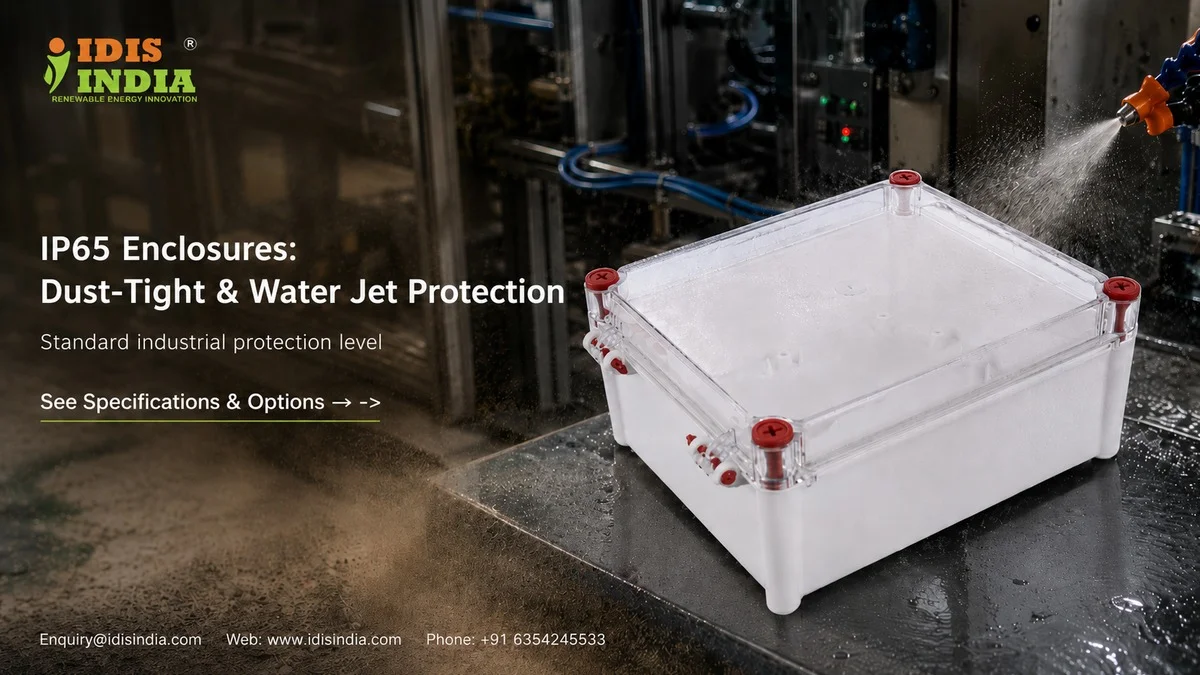
The equipment you use will require some level of protection with respect to contaminants, such as dust and moisture. Many organizations consider the use of an IP65 rating to provide complete dust seal protection and the ability to withstand low-pressure water jets in most applications in an industrial environment. However, what does the IP65 rating mean for your application? At IDIS India, we produce IP65 (I-closure) rated enclosures, which are designed with industrial-grade electrical protection features to keep your electronics safe and secure in factory settings, other indoor environments, and light-duty outdoor conditions. Let’s examine the advantages of selecting the IP65 rating for your application as well as comparing it with other protection levels.
Understanding IP65 Testing Standards
In the IP65 rating, there are two numbers that indicate what level of protection you are provided. The first digit (6) indicates that the unit is completely protected against the penetration of any dust particles, regardless of the conditions of use. The second digit (5) indicates that the item has been tested to withstand low-pressure water being projected from any angle.
The testing process to determine whether or not a unit meets these standards is as follows:
1. **Dust Test (Level 6):** The enclosure is subjected to continuous air circulation in a dust chamber for 8 hours. At the end of the test, no dust should have penetrated the enclosure.
2. **Water Test (Level 5):** Water will be projected from a 6.3mm nozzle at 12.5 liters per minute (LPM), from a distance of 3m and at all angles, for approximately 15 minutes.
These tests confirm that your equipment is safe and protected in real-world conditions. All I-closure enclosures are regularly tested to meet these same quality levels.
Dust-Tight Seal Verification Methods
To create a truly dust-tight environment, more than just putting together a box is needed. The gasket system (when you have the gasket on both surfaces) must have the correct tolerances to keep the materials from moving out of place during assembly. It is important to know how a manufacturer confirms their dust-tight seal. There are two types of methods that manufacturers can use to confirm that their seal is dust-tight; negative pressure testing and fluorescent powder testing.
Negative pressure testing is completed by connecting the enclosure to a vacuum system and recording the time it takes to drop the vacuum in the enclosure. If there is no drop in pressure over a certain period, then you have a dust-tight seal.
Fluorescent powder testing is completed by applying fluorescent powder around the area where the seal of two surfaces is. Once the powder is applied, you then shine UV light on the powder. The powder will show you where any of the powder has penetrated past the seal.
At IDIS India, we have multiple methods of verification to assure you that our products will provide a consistent level of performance. As part of our quality control process, we perform random samplings of product and maintain documentation of the samplings to assure our certification will be upheld.
Water Jet Protection Performance Limits
It’s important to understand the limitations of IP65 water protection. An IP65 rating offers protection against water jets—not immersion or high-pressure washing. Water hitting the unit at a rate of 12.5 litres (or more) from any angle should not affect the internal components. However, if water pressure exceeds 12.5 litres, the sealing system could potentially fail, which will allow moisture to enter into the inside of the unit. Therefore, it is important that you know what your actual environment is, as opposed to merely selecting an IP rating, before deciding whether or not your application will meet an IP65 water protection rating.
Here are some common scenarios where IP65 Water Protection would be acceptable: Rain and splash in a covered, outdoor environment; Washdown procedures using an average garden hose (1″); Condensation formation due to temperature differences; Incidental water exposure during maintenance, etc.
Please note: An IP65 rated product is NOT suitable for protection from direct high pressure cleaning or temporary immersion. If your application involves these conditions, please discuss with us to determine the appropriate level of protection.
Key Differences from IP66 Protection
IP65 and IP66 are two commonly used International Protection (IP) ratings of electrical enclosures. Both enclosures can be used in an environment where dust is a concern because both ratings provide complete protection from ingress of dust. Enclosures rated as IP66, however, are designed to withstand heavy streams of water (100 litres/minute) from a nozzle size of 12.5 mm (or 0.5 inch). In fact, the total amount of water that can be used for testing an IP66-rated enclosure is nearly 8 times greater than that of IP65 rated enclosure tests; because of this, the differences between IP65 and IP66 rated enclosures are very relevant when selecting an enclosure for use in an area that will be subjected to either high-pressure cleaning or harsh weather conditions. When should I choose IP65-rated enclosure vs. IP66-rated enclosure? IP65-rated enclosures are a suitable choice when: indoor usage with occasional direct exposure to water; projects where budgetary constraints are the primary consideration; applications where typical cleaning processes will not expose the enclosure to excessive amounts of water; areas where there is typical rainfall and splashing.
In cases like these, IDIS India offers both IP65 and IP67-rated enclosures as separate products to allow you to choose between standard water jet protection level and temporary submersion levels of protection.
Factory Automation Equipment Protection
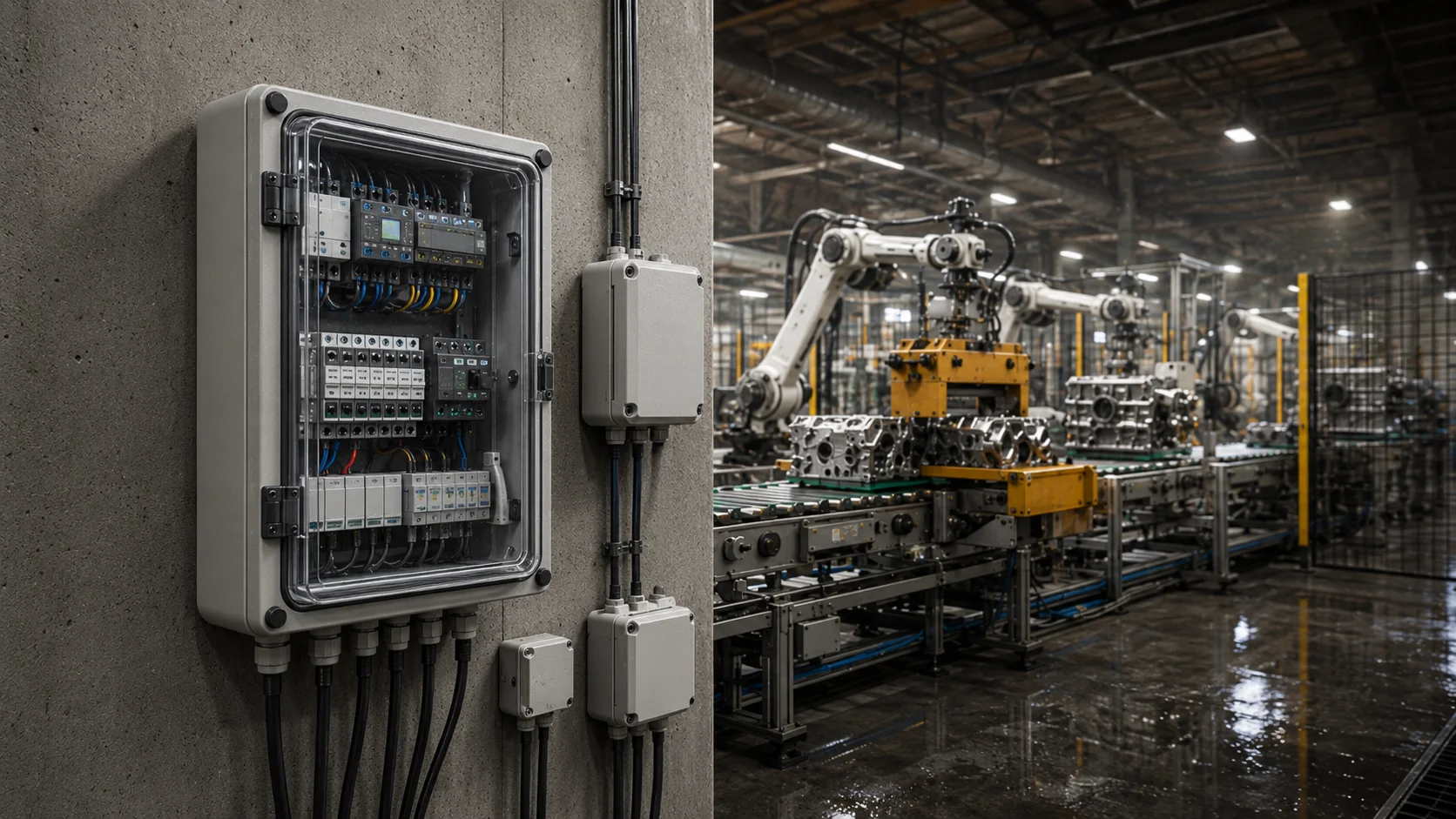
Electrical enclosures in factory automation systems have to deal with very tough situations. Dust from manufacturing processes, floor cleaning chemicals, and temperature changes all pose a threat to the operation of sensitive electronics. Most automation equipment can be adequately protected by the IP65 enclosure standard. Control panels can be especially helped by a dust-tight enclosure. The dust that would enter an enclosure if it did not have a dust-tight seal can also cause the failure of a cooling fan, oxidation of the contacts, and problems with the display screen. The complete dust protection of IP65 prevents these kinds of problems. Motor drives and variable frequency drives generate heat and create a source for dust to settle. An IP65 enclosure will allow a motor drive or variable frequency drive to dissipate heat correctly while keeping out contaminants which extends the life of the equipment and reduces the need for maintenance. Sensor junction boxes that are placed in factory environments are constantly exposed to airborne particles. IP65 provides certainty of a good signal and the prevention of erroneous readings due to the effect of dust buildup. Our I-closure enclosures are well suited for use with standard factory automation equipment and are available in a wide variety of sizes and mounting options to fit your specific installation requirements.
Indoor Industrial Installation Requirements
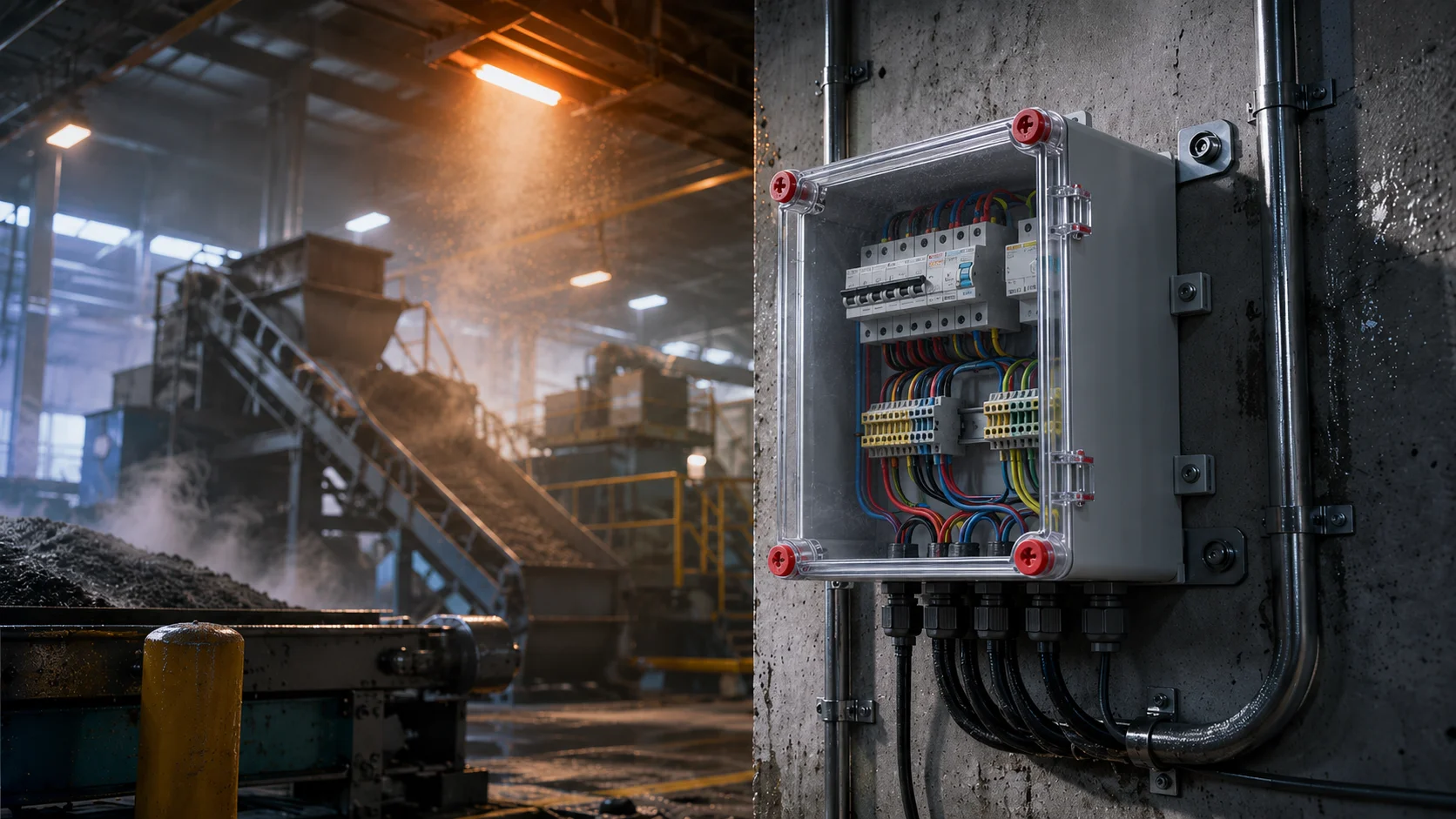
Indoor industrial locations pose distinct difficulties, but obstacles can be managed successfully with IP65 enclosures. The presence of high volumes of dust generated by material handling operations, rapid temperature changes caused by heating systems, and occasional contact with water due to cleaning processes all require suitable enclosure protection to keep equipment functioning optimally. Wall-mounted installations require secure mounting systems to maintain the integrity of their seals. The presence of vibration generated by nearby equipment may loosen connections over time, compromising the effectiveness of the end-seal. Correct installation techniques include:
Using vibration-dampening washers when possible Selecting mounting holes that distribute the load evenly over the wall surface Following required torque specifications for all fasteners Providing allowance for thermal expansion and contraction of properly sized and installed enclosures.
Cable entry systems must be designed carefully, particularly in dusty areas. Any gaps around the cable may provide sufficient space to permit the passage of dust into the enclosure. Use cable glands with proper compressive strength ratings to preserve the IP65 classification of the enclosure.
Ventilation may seem counterintuitive to provide in a dust-tight enclosure; however, many applications require the circulation of air within the space to alleviate the buildup of excessive heat in electronic components. Filtered ventilation systems permit the outgoing of warm air from an enclosure while still providing an adequate degree of contaminant removal, thereby preserving the integrity of the IP65 ratings of the enclosure.
Light Outdoor Application Guidelines
Weatherproofing may not be necessary for every outdoor application. Some sheltered areas, such as covered walkways, building overhangs and equipment rooms provide a barrier against direct weather exposure. Using IP65 enclosures is a good solution for light outdoor conditions. Temperature cycling will be more significant with an outdoor application since the temperature will fluctuate daily resulting in condensation forming on the inside of the enclosure and damaging the electronics inside. Using proper drainage designs or waterproof materials will help address this issue. UV exposure can also degrade plastics over time. Our I-closure will use only UV stabilized materials that will maintain their properties when exposed to the sun. In extreme climates or desert regions, additional protection may be necessary. The orientation of the enclosure when mounted can also play a role in draining water from the enclosure. Mounting the enclosure with cable access oriented down will help prevent water from pooling around the cable penetrations. Sustained wind driven rain will be the true test of the protection level afforded by an IP65 rated enclosure. While the rating covers the use of water jets, any sustained wind driven rain may find a way into the enclosure through untested openings. When selecting your level of protection, keep in mind the local climate for which you are designing your protection.
Material Selection for IP65 Applications
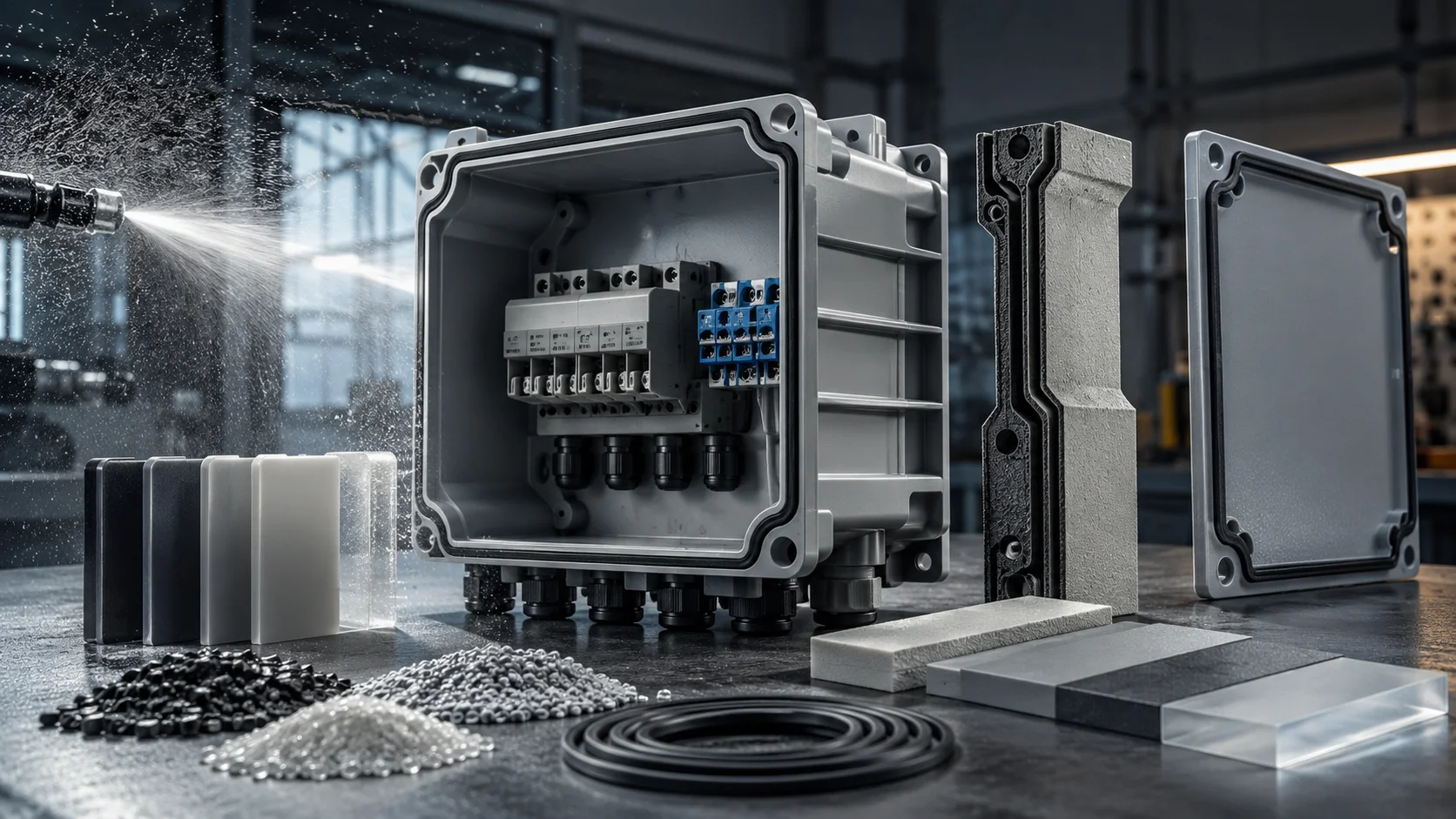
IP65 Performance and Longevity Are Impacted By Enclosure Material: The enclosures’ materials will affect the IP65 performance and longevity. The most economical way to achieve indoor-level protection is to use ABS materials for most indoor applications, whereas an impact-resistant and temperature-stable option is polycarbonate. When polycarbonate and ABS are combined, they provide a good balance between cost and performance for demanding applications. This type of combination offers increased resistance to chemicals while still providing reasonable dimensional stability. Gasket compatibility with the housing material will ensure long-term sealing performance. Gaskets made from rubber will typically work with most plastic enclosures; however, the compatibility of the gasket with the material should be evaluated in harsher environments due to the potential for chemical damage. In addition to gasket material, wall thickness also directly impacts the degree of protection and effectiveness of heat dissipation. Thicker walls will provide increased impact resistance; however, thick walls may also result in retaining more heat in the environment. Our I-closure designs incorporate an overall balance of these two items to provide optimal performance.
Maintenance and Inspection Protocols
Periodic maintenance is required to maintain the protective capabilities of even the most durable IP65 enclosure. Dust on the exterior surfaces, degraded gaskets, and loose fasteners can all cause deterioration of the enclosure’s ability to provide protection over time. A regular inspection schedule should include visual checks for condition and proper location of gaskets; measuring the torque of the fasteners; cleaning the exterior of the enclosure to prevent build-up of dust; and checking the tightness of the cable glands. When performing cleaning, the IP65 rating must always be verified. Cleaning with water jets will not affect the protection provided by the enclosure, but using high-pressure washers could exceed the IP65 rating specifications. Gaskets are generally replaced with complete disassembly and thorough cleaning of the sealing surfaces. Use of manufacturer approved gasket materials will provide the best protection over time. Maintenance records should be documented to allow for tracking of enclosure performance and to provide adequate notice for replacement planning. This will become increasingly important when enclosures are used in critical applications where failure could result in significant downtime. Are you ready to specify IP65 enclosures for your project? Contact IDIS India to receive detailed specifications, sizing assistance and application recommendations for IP65 enclosures. IDIS has an experienced engineering team that can assist in finding an I-closure enclosure that meets your protection needs.
Need Help Choosing the Right Enclosure? Get in Touch!